


1 Phase to 3 Phase Converter: The Key to Unlocking Industrial and Commercial Solar Potential
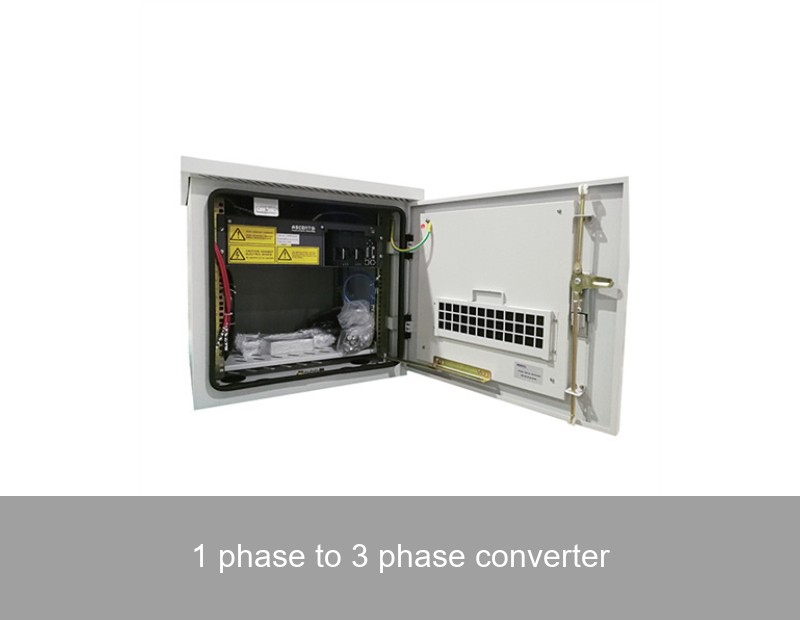
If you're exploring solar or battery storage for a business, farm, or larger residential property, you've likely encountered a puzzling electrical roadblock: your site has a three-phase power supply, but many powerful, cost-effective solar inverters and energy systems are designed for single-phase connections. This is where a 1 phase to 3 phase converter (or phase converter) becomes a critical piece of the energy puzzle. It's not just a piece of hardware; it's a gateway that allows you to integrate advanced, single-phase renewable energy technology into a three-phase electrical environment, often unlocking significant savings and efficiency. In this article, we'll demystify this technology, explore its role in modern energy systems, and show you how it fits into a complete smart power solution.
Table of Contents
- What is a 1 Phase to 3 Phase Converter?
- Why is a Phase Converter Necessary for Solar & Storage?
- Solution Approaches: Converters vs. Native 3-Phase Systems
- A Real-World Case Study: The Bavarian Dairy Farm
- Highjoule's Integrated Approach to Phase Conversion & Energy Management
- Making the Right Decision for Your Site
What is a 1 Phase to 3 Phase Converter?
Let's break down the basics. Electrical power can be delivered in different "phases."
- Single-Phase Power (1-Phase): Common in most homes. It uses two wires (one active, one neutral) to deliver a voltage that peaks and dips in a single wave. It's perfect for lower-power applications.
- Three-Phase Power (3-Phase): The standard for industry, commercial buildings, farms, and larger facilities. It uses three active wires (and one neutral), with each wire's voltage wave offset by 120 degrees. This creates a constant, smooth power delivery capable of running heavy machinery and motors efficiently.
A 1 phase to 3 phase converter does exactly what its name suggests: it takes a single-phase electrical input (like from a single-phase solar inverter) and synthesizes a balanced three-phase output to feed into your main switchboard or specific three-phase equipment.
The Technical Heart: How Modern Converters Work
Today's advanced converters are typically Static Phase Converters or, more commonly, Digital/Rotary Converters that use power electronics (IGBTs and sophisticated control algorithms). They digitally generate the missing voltage phases, creating a stable and balanced three-phase supply. Key specifications to look for include:
| Specification | Why It Matters |
|---|---|
| Output Power (kVA/kW) | Must match or exceed the total load of the equipment you need to run. |
| Input Voltage (e.g., 230V) | Must match your single-phase source voltage. |
| Output Voltage Balance | Critical for motor health; a good converter maintains <±2% voltage imbalance. |
| Efficiency (%) | Higher efficiency (95%+) means less energy loss in the conversion process. |
Why is a Phase Converter Necessary for Solar & Storage?
Here's the core dilemma driving the need for converters: economics and technology availability. The global solar inverter market is heavily optimized for residential, single-phase systems. This scale of production makes high-quality, high-power single-phase inverters significantly more affordable and technologically advanced than their three-phase counterparts for certain power ranges.
For a business owner, this presents a unique opportunity. By choosing a state-of-the-art single-phase inverter paired with a reliable phase converter, you can often achieve a lower total system cost and higher efficiency than opting for a native three-phase inverter solution. This is especially true for systems in the 20kW to 100kW range, common for small to medium enterprises (SMEs). Furthermore, it opens up access to the latest battery storage technologies that are frequently rolled out in single-phase configurations first.

Image Source: Unsplash (Photographer: American Public Power Association)
Solution Approaches: Converters vs. Native 3-Phase Systems
So, when you face the phase mismatch, you have two primary paths:
- Path A: The Converter-Enabled System. This involves installing your chosen single-phase solar array and inverters, then connecting their output to a phase converter. The converter then feeds the newly created three-phase power into your main distribution board. The advantage is cost and component choice. The consideration is adding another piece of equipment to manage and maintain.
- Path B: Native Three-Phase Inverters. Here, you install inverters that are specifically designed for three-phase connection from the start. This is often the preferred, more elegant solution for very large commercial or industrial installations where the inverters are available and cost-effective at that scale. It simplifies the system architecture.
The choice isn't always clear-cut. This is where expertise from a provider like Highjoule becomes invaluable. Since 2005, we've specialized in designing tailored energy systems that consider not just the electrical engineering, but the total lifetime value and operational goals of your business.
A Real-World Case Study: The Bavarian Dairy Farm
Let's look at a concrete example from our European operations. A mid-sized dairy farm in Bavaria, Germany, wanted to achieve energy independence. They had a three-phase grid connection (400V) to run milking machines, cooling tanks, and ventilation. Their goal was a 45kW solar PV system with a 60kWh battery for backup during storms and to shift energy to high-price periods.
The Challenge: The most reliable and cost-effective battery storage system (BESS) for their needs and budget was a single-phase system. A native three-phase BESS would have blown their budget.
The Highjoule Solution: Our engineers designed a hybrid system. We installed a bank of single-phase solar inverters and connected our Highjoule H-Store Pro battery system. The combined single-phase output was then fed through a high-efficiency digital phase converter, which created a perfectly balanced three-phase supply for the farm's entire electrical load. The system was governed by our Highjoule Energy Management System (EMS), which intelligently decided when to use solar power directly, charge the batteries, or draw from the grid.
- Energy Self-Consumption Rate: Increased from 35% to 82%.
- Grid Energy Costs: Reduced by €6,800 annually.
- Payback Period: Estimated at 7.2 years, 1.8 years faster than the three-phase BESS alternative would have been.
- Reliability: Provided three full-day power outages during winter storms without disrupting the milking schedule.
This case shows that a well-integrated 1 phase to 3 phase converter isn't a compromise; it's an enabler for superior financial and operational outcomes. (U.S. Department of Energy - PV Pricing Trends)
Highjoule's Integrated Approach to Phase Conversion & Energy Management
At Highjoule, we don't just sell components; we provide intelligent, integrated power solutions. When a phase converter is part of the equation, we treat it as a core component of the energy ecosystem, not an afterthought.
Our Highjoule EMS is the brain that coordinates this. It communicates with the solar inverters, the battery system, and the phase converter (if equipped with smart controls) to ensure:
- Load Balancing: The EMS can subtly shift non-critical loads to ensure the phase converter operates within its most efficient range, prolonging its life.
- Seamless Backup Transition: In the event of a grid outage, the EMS instructs the battery system to power the phase converter, maintaining three-phase power to critical machinery without interruption.
- Predictive Analytics: Our system monitors the health and performance of all components, including the converter, alerting technicians to potential issues before they cause downtime.
For projects where a converter is not the optimal path, our portfolio includes native three-phase inverters and storage solutions. Our expertise lies in performing the detailed techno-economic analysis to determine which path—converter-enabled or native three-phase—delivers the best return on investment and reliability for your specific site. (International Energy Agency - Role of Energy Storage)

Image Source: Unsplash (Photographer: American Public Power Association)
Making the Right Decision for Your Site
Considering a solar or storage upgrade for your three-phase property? Ask yourself and your potential provider these key questions:
- What is the exact breakdown of single-phase vs. three-phase loads in my facility? (A detailed energy audit is crucial).
- Does the financial model clearly compare the Total Installed Cost (TIC) of a converter-based system vs. a native three-phase system over 15+ years?
- How will the phase converter or three-phase inverter be integrated into a broader energy management strategy for peak shaving or backup power?
- What are the warranty, service, and monitoring provisions for the entire system, including the phase converter?
The world of energy is shifting from simple generation to intelligent management. The phase converter, in the right context, is a brilliant tool that provides flexibility and access to the best technology. (International Electrotechnical Commission - Three-Phase Power)
Your Next Step
Has your business encountered the single-phase vs. three-phase challenge, and how are you currently navigating the trade-offs between technology choice, cost, and your long-term sustainability goals?
 Inquiry
 Online Chat