


Demystifying the 100 Amp Solar System Cost: A Comprehensive Investment Guide
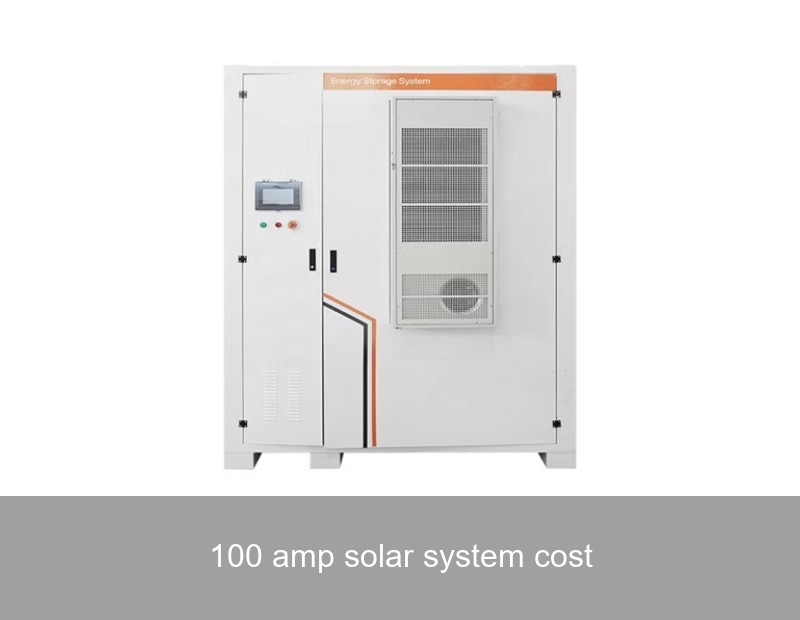
If you're exploring solar power for your home or business, you've likely encountered the term "100 amp solar system." It sounds technical, but understanding what it means is the first step to unlocking significant energy independence. In essence, this refers to a solar energy setup designed to integrate with or upgrade a standard 100-amp electrical service panel, common in many homes, especially in the US and older European properties. But the burning question for most homeowners is: what is the real 100 amp solar system cost? The answer isn't a single number. It's a story woven from equipment, labor, location, and—most importantly—the intelligence of the system's design. Let's peel back the layers and transform this complex question into a clear roadmap for your renewable energy investment.
Key Cost Components of a 100 Amp Solar System
Thinking of a solar system as just panels on the roof is like thinking of a car as just an engine. The total 100 amp solar system cost is a sum of several interconnected parts. A robust system for a typical family home with a 100-amp main panel often ranges between a 6kW to 10kW solar array. Here’s what you’re investing in:
- Solar Panels (The Generators): Typically 40-50% of the pre-incentive cost. High-efficiency monocrystalline panels cost more but produce more power in limited space.
- Inverter (The Brain of the Solar Side): This converts DC from panels to usable AC for your home. A standard string inverter is cost-effective, while microinverters (one per panel) optimize performance in shaded conditions but increase cost.
- Mounting, Racking, and Electrical Hardware: The unsung heroes that secure everything safely to your roof and connect it to your electrical system.
- Professional Installation & Permitting: Labor, engineering, and navigating local building and utility permits are crucial. This ensures safety, compliance, and system longevity.
- The Critical Upgrade: Energy Storage. This is where the conversation evolves. While you can install solar without it, pairing it with a battery transforms the system's value. We'll dive deeper into this below.
Image: A professional solar installation is key to long-term performance and safety. Source: Unsplash
Real-World Case Study: A German Family's Journey to Energy Resilience
Let's move from theory to practice. Consider the Müller family near Hamburg, Germany. Their 1970s home had a 100-amp grid connection. Their goal: reduce a €2,800 annual electricity bill and gain backup power during frequent winter grid fluctuations.
Their initial quote for a standard 8.2kW solar-only system was approximately €18,500 before incentives. However, after analyzing their energy usage patterns—peak consumption in the evenings when solar production is zero—they realized a solar-only system would only cover about 65% of their consumption and offered no backup. They expanded their plan to include a 10kWh battery storage system. The total project cost rose to around €28,000. After leveraging the German federal incentives for solar-plus-storage, their net investment was reduced significantly. The result? Their grid electricity purchases dropped by 92%, and they now have a reliable 12-hour backup power supply for essential loads. The peace of mind during a storm-induced blackout, they said, was "priceless."
Beyond the Inverter: The Critical Role of Energy Storage
The Müller family's case highlights a pivotal shift in how we view solar systems. The true modern "solar system" is incomplete without storage. Why? Solar panels produce energy only during the day. Without a battery, excess energy is sold to the grid (often at a low rate), and you buy it back at night (at a high rate). A battery breaks this cycle, storing your surplus solar energy for use when you need it most. This is called self-consumption optimization, and it's the single biggest factor in maximizing the return on your solar investment, directly impacting the long-term value proposition of your 100 amp solar system cost.
Furthermore, for homes with 100-amp service, adding high-demand appliances like heat pumps or EV chargers can push the main panel to its limit. A sophisticated battery system with smart load management can act as a "buffer," preventing overloads and potentially deferring the cost of a full panel upgrade—a significant additional expense.
The Highjoule Intelligent Solution: Where Your Investment Gains a Brain
This is where choosing the right technology partner moves you from simply having solar to owning a truly intelligent energy asset. At Highjoule, we don't just sell components; we provide integrated, smart power solutions. For a homeowner evaluating the 100 amp solar system cost, our Highjoule Harmony Home Ecosystem is designed to address the very challenges outlined above.
Our system centers on the Harmony Hybrid Inverter and H-Cube Modular Battery Series. Unlike conventional setups where the inverter, battery, and energy manager are separate units, the Harmony integrates these functions. This seamless integration means higher efficiency, simpler installation, and a unified interface to control your entire energy flow.
- Maximized Self-Consumption: Our AI-driven energy management software learns your household patterns and automatically decides the most economical moment to store solar energy, power your home, or export to the grid.
- Panel-Load Management (PLM): A game-changer for 100-amp panels. The Harmony system can intelligently monitor your home's total power draw. If you're charging an EV, running the A/C, and using the oven, it can seamlessly supplement power from the battery to prevent tripping the main breaker, ensuring comfort without costly electrical upgrades.
- Scalable & Future-Proof: Starting with a 10kWh H-Cube battery? You can easily add more modules later as your needs grow (e.g., adding a second EV). This modularity protects your initial investment.

Image: A modern home battery system, like Highjoule's H-Cube, is key to energy independence. Source: Unsplash
Optimizing Your Investment: Key Considerations Beyond the Sticker Price
When evaluating quotes for your system, look beyond the total 100 amp solar system cost. Ask these critical questions:
| Consideration | Why It Matters | Highjoule's Approach |
|---|---|---|
| System Intelligence & Software | Determines how much of your solar energy you actually use and how well the system adapts to your life. | Proprietary AI for predictive energy scheduling and real-time optimization. |
| Hardware Longevity & Warranty | Solar panels last 25+ years. Your inverter and battery should have a lifespan that matches. | Harmony Inverter comes with a 12-year warranty, H-Cube batteries are rated for 6,000+ cycles with a 10-year warranty. |
| Grid Services & Future Revenue | In some markets (e.g., parts of the US and EU), you can earn money by allowing the grid to use your battery's power during peak demand. | Our systems are software-upgradable to participate in virtual power plants (VPPs) as regulations evolve. |
| Installation Expertise | A poorly installed system can underperform and be unsafe. | We work with a certified network of installers trained specifically on Highjoule integrated systems. |
FAQ: Your 100 Amp Solar System Cost Questions Answered
Will I need to upgrade my 100-amp main electrical panel?
Not always. With a smart, storage-integrated system like Highjoule's Harmony, the battery can provide supplemental power to prevent overloads. However, if your home's existing electrical demand is already very close to 100 amps, a local electrical assessment is necessary. A qualified installer can perform a load calculation to be sure.
What is the typical payback period?
This varies dramatically by location (solar irradiance), local electricity rates, and available incentives. In sun-rich areas with high utility rates (like California or parts of Southern Europe), payback for a solar-plus-storage system can be 7-10 years. In regions with lower rates, the primary value may shift more towards energy resilience and backup power. Using tools like the NREL's PVWatts Calculator can provide a preliminary estimate for solar production in your area.
Are there financing options or incentives?
Absolutely. In the US, the federal Investment Tax Credit (ITC) currently covers 30% of the cost of a solar-plus-storage system. Many states have additional rebates. In Europe, countries like Germany, Italy, and the UK offer various grants, tax benefits, or favorable feed-in tariffs. Your Highjoule-certified installer can provide the most current local incentive information.
How does adding an EV charger affect the system?
An EV charger significantly increases your home's electrical load. An intelligent system is crucial. The Highjoule ecosystem can be configured to prioritize using solar surplus or battery power for EV charging, minimizing grid draw. Our smart load management can also sequence charging to avoid overloading your 100-amp panel.

Image: Pairing solar, storage, and EV charging creates a holistic home energy ecosystem. Source: Unsplash
As you weigh the initial 100 amp solar system cost against a future of rising and unpredictable utility bills, what value would you place on having a personal, resilient power station on your property that not only saves you money but also provides unwavering security for your family?
 Inquiry
 Online Chat