


Unlocking Energy Freedom: The Ultimate Guide to the 12V 800Ah Lithium Battery
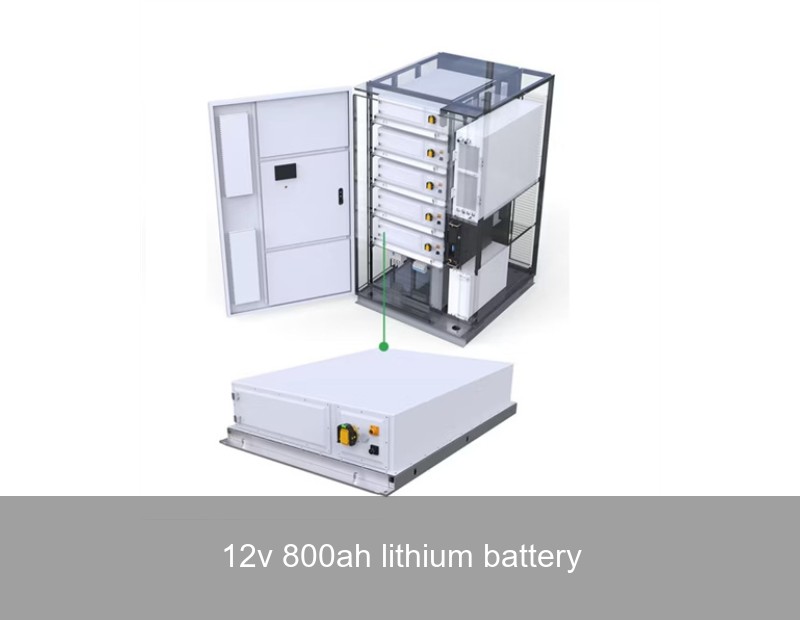
Imagine having a silent, robust power bank that can run your essential appliances for days, recharge rapidly from the sun, and do it all for a decade or more. This isn't a future dream; it's the reality offered by modern 12V 800Ah lithium battery systems. For homeowners, adventurers, and businesses across Europe and the US seeking reliable off-grid or backup power, this specific capacity—representing a substantial 10.24 kWh of usable energy—has become a gold standard. But what makes it so special, and how do you ensure you're investing in a system that delivers on its promise? Let's dive in.
The Phenomenon: Why 12V 800Ah is the New Sweet Spot
You might be wondering, "Why 12V? And why 800Ah?" The 12-volt platform is the backbone of mobile and off-grid power. It's compatible with a vast ecosystem of equipment—from RV and marine systems to solar charge controllers and inverters. Pairing this voltage with an 800Ah capacity creates a powerhouse. To put it in perspective, a traditional 800Ah lead-acid bank might only give you about 4 kWh of power before risking damage, whereas a lithium Lithium-ion battery like LiFePO4 can safely deliver over 10 kWh, thanks to its ability to use nearly 100% of its rated capacity.
This capacity is ideal for:
- Sustainable Off-Grid Homes: Powering lighting, refrigeration, water pumps, and electronics overnight and through cloudy periods.
- Large RVs and Marine Vessels: Enabling extended boondocking or cruising without generator dependency.
- Critical Backup Power: Keeping essential circuits in a home office or small business running during outages.
- Microgrid & Industrial Applications: Serving as a core storage block for remote telecom sites or agricultural operations.

Image Source: Unsplash - Example of an off-grid application ideal for a robust battery system.
The Data: Lithium vs. Traditional - A Clear Winner
Let's move beyond theory and look at the hard numbers. Choosing a battery is a long-term financial and operational decision. The following table compares a typical 12V 800Ah LiFePO4 (Lithium Iron Phosphate) system with its lead-acid counterpart.
| Parameter | 12V 800Ah LiFePO4 Battery | 12V 800Ah Flooded Lead-Acid Battery |
|---|---|---|
| Usable Depth of Discharge (DoD) | ~95% | ~50% (to prevent damage) |
| Usable Energy | ~10.24 kWh | ~4.8 kWh |
| Cycle Life (to 80% capacity) | 3,500 - 6,000+ cycles | 500 - 1,000 cycles |
| Weight | Approx. 80-90 kg (per bank) | Approx. 200-250 kg (per bank) |
| Charge Efficiency | >98% | ~70-85% |
| Maintenance | Virtually none | Regular watering, terminal cleaning |
The data speaks volumes. The lithium option provides over twice the usable energy, lasts 5-10 times longer, and does so with half the weight and zero maintenance. The higher upfront cost is quickly offset by the total cost of ownership over its lifespan.
A Real-World Case: Off-Grid Living in the Swedish Wilderness
Consider the experience of the Karlsson family, who built a year-round home in northern Sweden. Their challenge: complete energy self-sufficiency through dark, cold winters with only 3-4 hours of sunlight. Their initial lead-acid battery bank (12V 1000Ah) struggled, requiring frequent generator top-ups and replacement every 3 years.
In 2021, they upgraded to a modular 12V 800Ah LiFePO4 system. The results, monitored over two years, were transformative:
- Energy Security: The usable storage increased from ~6 kWh to over 10 kWh, allowing them to weather 5 consecutive cloudy days without generator use.
- Solar Efficiency: The high charge efficiency (98% vs. 80%) meant more of their precious winter solar harvest was stored, reducing generator runtime by 70%.
- Long-Term ROI: While the lithium investment was 2.2x the cost of lead-acid, the projected lifespan of 15+ years (vs. 3) and eliminated fuel costs created a payback period of under 6 years.
"It's not just about the numbers," Mrs. Karlsson noted. "It's the peace of mind. The system just works silently in the background. We no longer 'manage' our power; we simply live our lives."
Expert Insights: Choosing and Maintaining Your System
Not all 12V 800Ah lithium battery banks are created equal. Here are critical factors we at Highjoule emphasize:
- Chemistry is Key: Insist on LiFePO4 (Lithium Iron Phosphate). It's inherently safer and more stable than other lithium chemistries, with a much longer cycle life.
- Built-In Intelligence (BMS): The Battery Management System is the brain. A high-quality BMS protects against overcharge, deep discharge, temperature extremes, and cell balancing. It's non-negotiable.
- Modular Design vs. Monolithic Block: A system built from smaller, manageable modules (e.g., 4x 12V 200Ah) is easier to install, transport, and service. If one module has an issue, the rest can continue operating.
- Thermal Management: Lithium batteries perform best within a specific temperature range. For harsh climates, look for systems with optional heating or active cooling capabilities.

Image Source: Unsplash - Technician handling modular lithium battery cells.
Highjoule's Smart Solution: Beyond the Basic Battery
At Highjoule, with nearly two decades of experience, we see the 12V 800Ah lithium battery not as a commodity, but as the intelligent heart of a broader energy ecosystem. Our H-Joule Modular PowerCube Series is engineered for this exact demand.
Our solution transcends the basic battery by offering:
- True Modularity: Start with a 12V 200Ah cube. Stack them seamlessly to build your perfect capacity—800Ah, 1000Ah, and beyond—all managed as a single, unified system.
- Industry-Grade BMS: Our proprietary BMS features real-time cellular/IoT connectivity. You can monitor state-of-charge, health, and performance from your smartphone, and Highjoule's support team can perform proactive diagnostics.
- All-Climate Ready: With an integrated operational range from -20°C to 60°C and optional self-heating pads, the PowerCube is built for Scandinavian winters and Arizona summers alike.
- System Integration: We don't just sell batteries. We provide complete, compatible power solutions—from MPPT solar chargers and hybrid inverters to system design support—ensuring every component speaks the same language for optimal efficiency and safety.
This integrated approach is what enabled a remote microgrid at a California wildfire observation station to achieve 99.98% uptime, relying on a Highjoule 24V/800Ah system charged solely by solar. The data from such projects continuously informs our product development, creating a virtuous cycle of innovation. You can explore more about system design principles from resources like the National Renewable Energy Laboratory.
The Future of Your Energy Independence
The journey to energy independence is filled with technical choices. The 12V 800Ah lithium battery represents a pivotal point where capacity, longevity, and technology converge to create a truly viable solution. It answers the critical question: "How do I store enough clean energy to live comfortably and reliably?"
But the final question is more personal. What does true energy resilience look like for your home, business, or next adventure, and what's the first step you'll take to design a system that doesn't just store power, but empowers your life?
 Inquiry
 Online Chat