


Powering a 15 HP Motor with Solar Energy: A Complete Guide to System Design and Benefits
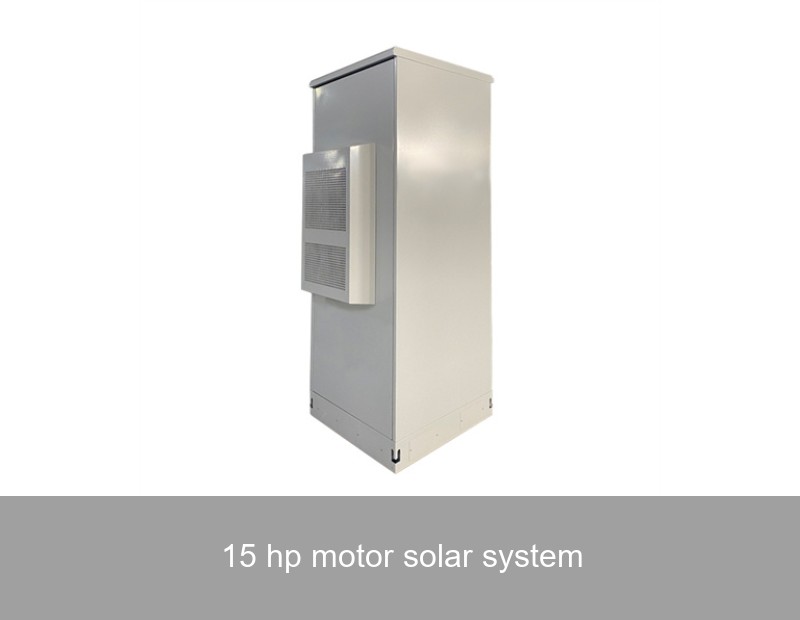
Have you ever watched a robust industrial motor hum to life and wondered, "Could this run on sunshine?" For farms, workshops, and small factories, the 15 horsepower (HP) motor is a workhorse, driving everything from irrigation pumps to conveyor belts. Traditionally, this power comes with a hefty and unpredictable electricity bill. But what if you could harness the sun to run your essential operations? Designing a 15 hp motor solar system is not only feasible but is becoming a strategic move for businesses seeking energy independence and cost control. This guide will walk you through the key considerations, from system sizing to real-world benefits, and introduce how companies like Highjoule are making this transition smarter and more reliable than ever.
Table of Contents
- Understanding the 15 HP Motor Load
- Solar System Basics for Motor Applications
- The Critical Role of Energy Storage
- A Real-World Case Study: Vineyard Irrigation in California
- Highjoule's Integrated Solutions for Industrial Solar
- Financial Incentives and ROI
- Getting Started with Your Project
Understanding the 15 HP Motor Load
First, let's demystify the power requirement. A 15 HP motor is a significant load. In electrical terms, 1 horsepower equals approximately 746 watts. Therefore, a 15 HP motor has a nameplate rating of about 11.2 kilowatts (kW). However, this is just the starting point. You don't simply need 11.2 kW of solar panels. Three critical factors dramatically increase the system size needed:
- Starting Surge (Inrush Current): An electric motor can draw 5 to 7 times its running current for a few seconds when starting. For a 15 HP motor, this surge can briefly demand 50-75 kW of power.
- Motor Efficiency: No motor is 100% efficient. Depending on age and type, efficiency can range from 85% to 95%, meaning you need to supply more input power to get the rated mechanical output.
- Operational Hours and Duty Cycle: Does the motor run 2 hours a day or 10? Is it continuous or intermittent? This determines your total daily energy consumption in kilowatt-hours (kWh).
Ignoring these factors is the most common mistake in planning. A system sized only for the running wattage will fail every time the motor tries to start.
Solar System Basics for Motor Applications
A functional 15 hp motor solar system consists of more than just panels on a roof. It's a carefully engineered ecosystem. The core components are:
- Solar Photovoltaic (PV) Array: The primary energy source. For a motor this size, you're looking at a large array, often ground-mounted.
- Energy Storage System (Battery): Crucial for handling the motor's starting surge and providing power when the sun isn't shining. This is the heart of a reliable off-grid or hybrid system.
- Solar Inverter: Converts the DC electricity from the panels and batteries into the AC power the motor requires. For motor applications, a "high surge" or "industrial" inverter is mandatory.
- Motor Starter/Controller: Soft starters or Variable Frequency Drives (VFDs) can be integrated to dramatically reduce the starting surge, making the system more efficient and cost-effective.

Image: A ground-mounted solar array, typical for powering agricultural loads like motors. Source: Unsplash
Sizing Your 15 HP Motor Solar System: A Simplified Example
Let's assume a 15 HP (11.2 kW) motor runs for 6 hours a day with a VFD that limits the starting surge.
| Parameter | Calculation | Result |
|---|---|---|
| Daily Energy Need | 11.2 kW * 6 hours | 67.2 kWh |
| Solar Array Size (accounting for losses) | 67.2 kWh / (4.5 avg sun hours) / 0.85 (system efficiency) | ~17.5 kW DC Array |
| Battery Storage (for 1 day backup) | 67.2 kWh / 0.95 (inverter eff.) / 0.8 (DoD) | ~88 kWh usable battery capacity |
| Inverter & Surge Rating | Running: 11.2 kW, Surge: 2x running current with VFD | Inverter rated >12 kW continuous, >24 kW surge |
As you can see, the total system size (~17.5 kW solar, ~88 kWh battery) is much larger than the motor's nameplate rating. This ensures reliable, all-day operation.
The Critical Role of Energy Storage
Batteries are non-negotiable for a standalone system. They provide the instantaneous "punch" to meet the motor's starting surge—something solar panels alone cannot do reliably. Furthermore, they enable operation during cloudy periods, early mornings, or evenings. Modern lithium-ion phosphate (LFP) batteries, like those used in Highjoule's H-Stack Commercial Energy Storage systems, are ideal for this application. They offer high discharge rates for surge demands, long cycle life, and superior safety compared to older battery technologies. Integrating smart battery management with the solar inverter creates a seamless power platform that can prioritize solar use, manage grid charging (if available), and ensure the motor always has the power it needs.
A Real-World Case Study: Vineyard Irrigation in California
Let's look at a practical application. A 50-acre vineyard in Sonoma County, California, was using a 15 HP submersible pump for irrigation. Their remote location made grid connection prohibitively expensive, and they relied on a noisy, polluting diesel generator.
- Challenge: Power the 15 HP pump for 5-8 hours daily, eliminate diesel, and ensure reliable water for the vines.
- Solution: A custom off-grid solar system was installed:
- 20 kW DC solar array (ground-mounted)
- Highjoule H-Stack battery system with 100 kWh usable LFP storage
- A high-surge, industrial hybrid inverter with integrated VFD functionality
- Results:
- Completely eliminated diesel consumption (~5,000 gallons/year).
- Reduced operating costs by over 90% after system payback.
- Provided silent, automatic operation, allowing for irrigation during optimal cooler hours without manual generator start-up.
- Achieved a full return on investment in under 6 years, factoring in state and federal incentives.
This case exemplifies the tangible benefits of transitioning to a solar-powered motor system, particularly in agriculture—a sector with high energy demands often in off-grid locations. For more on the growth of solar in agriculture, see this report from the National Renewable Energy Laboratory (NREL).
Highjoule's Integrated Solutions for Industrial Solar
At Highjoule, we understand that powering critical industrial equipment like a 15 HP motor requires more than just components; it demands an integrated, intelligent system. Our approach combines high-performance hardware with smart energy management software. For motor-driven applications, we often recommend our H-PowerCube Industrial solution. It packages a high-surge inverter/charger, a scalable LFP battery bank (from 30 kWh to over 500 kWh), and a sophisticated energy management system (EMS) into a single, UL-certified enclosure.
The EMS is the brain of the operation. It can be programmed to:
- Sequence motor starts to manage battery surge loads.
- Blend power from solar, battery, and a backup generator (if present) for ultimate reliability.
- Monitor performance and provide remote diagnostics, giving you peace of mind that your vital operations are running smoothly.

Image: A modern containerized battery energy storage system for industrial applications. Source: Unsplash
Financial Incentives and ROI
The initial investment for a robust 15 hp motor solar system is significant, but the financial landscape is favorable. In the United States, the Investment Tax Credit (ITC) currently offers a 30% tax credit on the total installed cost of a solar-plus-storage system. Many states have additional rebates or performance-based incentives. In the European Union, similar grant programs and favorable net-metering policies exist, particularly for agricultural and industrial decarbonization projects. When you calculate the lifetime cost—factoring in zero fuel costs, minimal maintenance, and protection from volatile electricity prices—the total cost of ownership often beats conventional power sources hands down.
You can explore current US federal incentives on the Department of Energy's official page.
Getting Started with Your Project
Embarking on a solar project for a critical motor load requires careful planning. Start by gathering data: log the motor's exact nameplate details, its daily operating schedule, and your site's solar potential (tools like NREL's PVWatts Calculator are excellent for initial estimates). Then, engage with a specialist who understands both solar technology and industrial power systems. They will conduct a detailed load analysis and site survey to design a system that guarantees performance, not just on paper, but when your motor needs to start on a cloudy Monday morning.
Ready to Explore Your Options?
What's the first piece of machinery you would power with the sun if energy costs and reliability were no longer a concern? Contact Highjoule's engineering team today for a free, preliminary assessment of your 15 HP motor application. Let's discuss how to turn your sunny days into productive, cost-saving ones.
 Inquiry
 Online Chat