


Understanding the 150 Watts Solar Panel Price in Kenya and Its Role in Modern Energy Systems
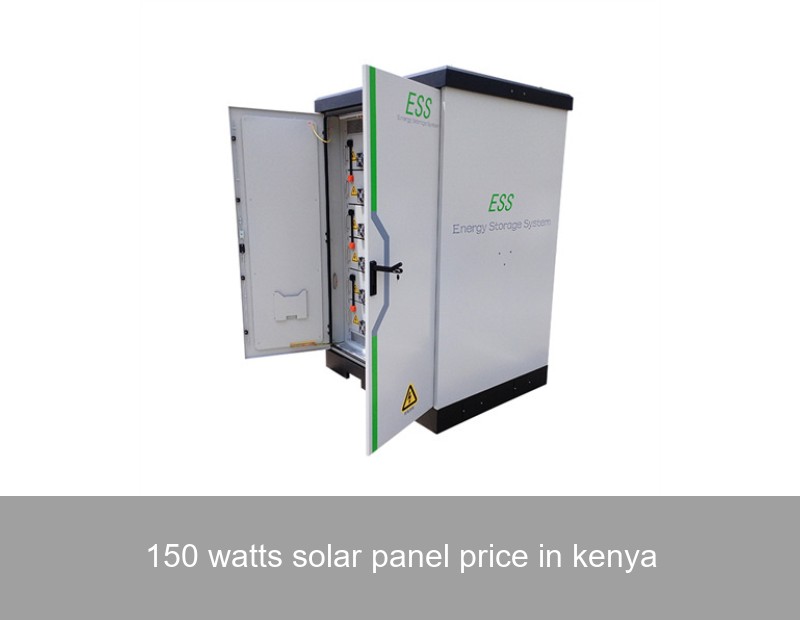
When researching the 150 watts solar panel price in Kenya, you're looking at more than just a product cost. You're exploring a key component in a global shift towards decentralized, resilient, and sustainable energy. For homeowners, businesses, and communities, a 150W panel represents a practical entry point into solar power. But the true value isn't locked in the panel's sticker price; it's realized when integrated into a well-designed, reliable system that stores and manages that energy intelligently. This is where understanding both the component and the complete solution becomes critical for long-term success.
Table of Contents
The Real Cost: Breaking Down the 150W Solar Panel Price
In Kenya, the price for a standalone 150W monocrystalline solar panel can range from KES 15,000 to KES 25,000. This variation depends on brand, quality, warranty (often 25-year linear performance), and the supplier's location. However, focusing solely on this figure is a common pitfall. The panel is just one piece of the photovoltaic (PV) puzzle. To make the sunlight usable, you need a balance of system (BOS), which typically costs 2-3 times the panel price itself.
- Mounting Structure: Robust racks to secure panels on rooftops or ground.
- Charge Controller: Protects your battery by regulating voltage and current from the panel.
- Energy Storage (Battery): The heart of off-grid and hybrid systems, allowing power use at night.
- Inverter: Converts the DC electricity from panels/batteries to AC for household appliances.
- Wiring, Switches, and Safety Gear: Essential for efficient and safe operation.
Therefore, a functional 150W solar system for a small home or business in Kenya might represent a total investment of KES 70,000 to KES 120,000. This system could power LED lights, charge phones, run a small TV, or a refrigerator for several hours daily. The return on investment is measured not just in shillings saved from the utility, but in uninterrupted productivity, security, and comfort.
Beyond the Panel: The System is What Truly Powers Your Life
Think of it this way: a solar panel is like a rain catchment roof. It's excellent at collecting a resource (sunlight/water), but without a tank, filter, and pump (battery, inverter, controller), you can't reliably use that resource on demand. This is especially true in regions with intermittent grid power or for critical applications. The sophistication of your "tank and pump"—your energy storage and management system—defines your energy independence.
This is the core philosophy at Highjoule. While we provide high-efficiency solar components, our expertise lies in advanced Battery Energy Storage Systems (BESS). We design systems that do more than just store power; they intelligently manage it. Our HI-Stack commercial and industrial BESS and HI-Home residential units integrate seamlessly with solar arrays of any size, including those built around 150W panels. They use sophisticated software to optimize charging cycles, prolong battery life (often using superior Lithium Iron Phosphate - LFP chemistry), and allow users to prioritize loads or even participate in grid services where available.

Credit: A solar installation with storage is key for reliable power in diverse settings. (Photo: Babatunde Olajide/Unsplash)
A Kenyan Case Study: From Intermittent Power to Reliable Productivity
Let's look at a real-world application. A small-scale dairy chilling cooperative in Nakuru County was struggling with inconsistent grid power, jeopardizing the cooling of milk and leading to spoilage losses. They installed a 3kW solar array (using 20 x 150W panels) coupled with a Highjoule HI-Stack 10kWh storage system.
| Metric | Before Installation | After Installation |
|---|---|---|
| Daily Milk Spoilage | 15-20% | <2% |
| Reliance on Diesel Generator | 8 hours/day | 0 hours/day |
| Monthly Energy Cost | KES 40,000 (Grid + Fuel) | KES 5,000 (Grid Backup) |
| Payback Period | Estimated 3.5 years | |
The system was designed to prioritize the chilling unit. The Highjoule BESS automatically switches to solar/battery power during grid outages, ensuring uninterrupted cooling. The cooperative's income stabilized, and they've since expanded their capacity. This case underscores that the value is delivered by the reliable system, not the panels alone. For deeper insights into solar's impact in Africa, the International Energy Agency's Africa region reports provide excellent context.
Future Trends: Smart Storage and Energy Independence
The conversation globally is moving from simple solar kits to smart, connected home and microgrid energy systems. In Europe and the US, systems like those Highjoule provides are increasingly integrated with smart meters and grid signals, allowing for "peak shaving" (reducing grid use during expensive periods) and enhancing grid stability.
This trend is equally relevant in Kenya and across Africa. As mini-grids and standalone systems proliferate, the intelligence of the storage system becomes paramount. Future-proofing your investment means choosing storage that can adapt—whether it's adding more battery capacity, integrating with a growing mini-grid, or managing multiple energy sources. LFP battery technology, a standard in Highjoule systems, is central to this due to its safety, long cycle life, and stability, as noted by the National Renewable Energy Laboratory.

Credit: Modern BESS units are compact, safe, and highly intelligent. (Photo: American Public Power Association/Unsplash)
Making the Right Decision for Your Energy Needs
So, when you inquire about the 150 watts solar panel price in Kenya, ask the more important questions:
- What is my daily energy need in watt-hours?
- How many days of autonomy (backup) do I require during cloudy periods?
- Does the storage system use safe, durable LFP chemistry?
- Can the system be easily expanded if my needs grow?
- Is the provider offering a complete, integrated solution with a single point of warranty?
Companies like Highjoule excel by providing this holistic service—from design and commissioning to long-term monitoring and support. We ensure that every component, from the 150W panel to the central BESS controller, works in perfect harmony for years.
Your Energy, Your Future
The journey to energy independence starts with the right information. While component prices are a necessary consideration, the empowerment comes from a system that works reliably day-in and day-out. Whether you're powering a remote clinic, a thriving agri-business, or a family home, the goal is the same: seamless, clean, and controllable power.
Given the rapid evolution of energy technology, what specific challenge in your home or business—be it unpredictable bills, unreliable supply, or a desire for sustainability—are you hoping a well-designed solar and storage system will solve for you in the long term?
 Inquiry
 Online Chat