


Finding the Right 1p4s Battery Supplier: Your Key to Reliable and Scalable Energy Storage
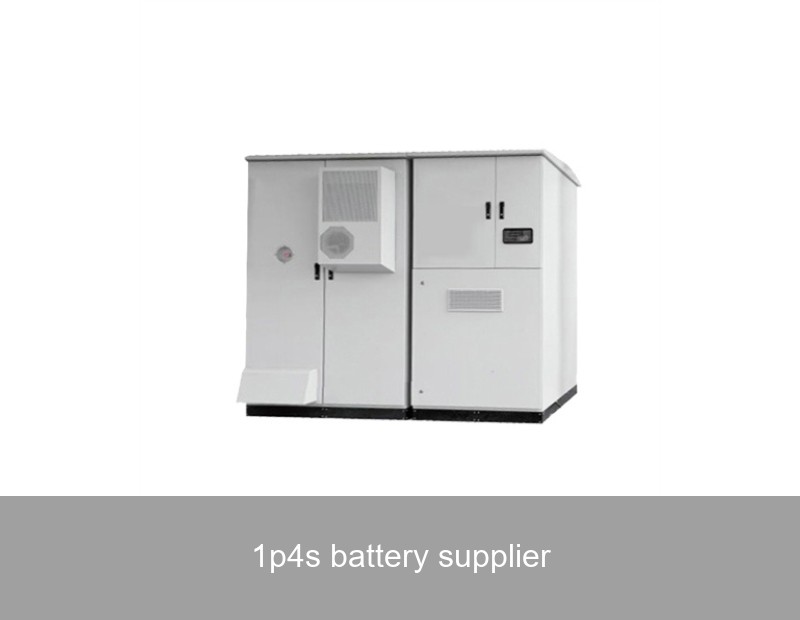
If you're designing or maintaining a battery energy storage system (BESS), you've likely encountered the term "1p4s." It sounds technical, but it's a fundamental concept that directly impacts your system's performance, safety, and cost. Choosing the right 1p4s battery supplier isn't just about buying cells; it's about securing a partnership for long-term reliability. This article will demystify 1p4s configurations and guide you on what to look for in a supplier, blending essential knowledge with real-world insights for commercial and industrial projects.
Table of Contents
What is a 1p4s Battery Configuration?
Let's break down the jargon. "1p4s" stands for 1 Parallel, 4 Series. It describes how individual lithium-ion battery cells are connected within a module.
- Series (4s): Four cells are connected end-to-end, positive to negative. This adds up their voltages. If each cell is 3.2V (common for LiFePO4), the module's total voltage is 12.8V.
- Parallel (1p): These four series-connected strings are then connected side-by-side, positive to positive, negative to negative. In a "1p" setup, there's only one string. This means the module's capacity (in Amp-hours, Ah) stays the same as a single cell, but its voltage is higher.
Think of it like organizing batteries in a flashlight. Putting cells in series (end-to-end) makes the light brighter (higher voltage). Putting them in parallel (side-by-side) makes the light last longer (higher capacity). A 1p4s module prioritizes a higher voltage output with a standard capacity, making it a fundamental building block for larger systems.

Image Source: Electrical4U (Illustrative diagram for educational purposes)
Why Your Battery Configuration Matters
You might ask, "Why not just buy a ready-made battery pack?" For small-scale applications, that's fine. But for commercial, industrial, or microgrid use, the configuration is a strategic decision.
The Balancing Act: Performance vs. Management
A 1p4s module is simpler to manage from a cell balancing perspective than configurations with multiple parallel strings. With only one string, the Battery Management System (BMS) focuses on ensuring the four cells in series have identical voltage levels. This precise control is crucial for safety and longevity. According to a 2021 study in the Journal of Energy Storage, effective cell balancing can extend cycle life by up to 30% in series-connected strings.
The Scalability Advantage
1p4s modules are the perfect "LEGO bricks" for large-scale storage. They can be easily connected in parallel (e.g., 10p4s) to dramatically increase capacity without changing the system voltage. This modularity allows for flexible system design and easier maintenance—a single module can be replaced without shutting down the entire array. This is where your choice of 1p4s battery supplier becomes critical. You need modules that are not only high-quality individually but also designed to perform consistently when hundreds are stacked together.
The Ultimate 1p4s Battery Supplier Checklist
Not all suppliers are created equal. Here’s what to prioritize when selecting a partner for your 1p4s battery modules.
| Criteria | What to Look For | Why It Matters |
|---|---|---|
| Cell Grade & Consistency | Automotive-grade (A-grade) cells with tight internal resistance and capacity tolerances. | Ensures uniform performance and minimizes imbalance in the series string, preventing premature failure. |
| Integrated BMS | A module-level BMS with passive or active balancing, temperature monitoring, and communication protocols (CAN, RS485). | This is the brain of the module. It protects the cells, enables system integration, and is non-negotiable for safety. |
| Thermal Management Design | Modules designed for efficient heat dissipation, compatible with system-level cooling. | Heat is the enemy of lithium-ion batteries. Proper design maintains efficiency and lifespan. |
| Scalability & Compatibility | Mechanical and electrical design that supports safe, easy paralleling into larger racks. | Your system will likely grow. The modules must be future-proof and integrate seamlessly. |
| Technical Support & Documentation | Comprehensive datasheets, system integration guides, and accessible engineering support. | A sign of a true partner, not just a vendor. It reduces your design risk and deployment time. |
Case Study: 1p4s in Action for a European Retail Chain
Let's look at a real application. A major supermarket chain in Germany aimed to reduce its peak grid demand charges and integrate on-site solar PV. The challenge was space constraints in the warehouse and the need for a highly reliable system with predictable performance.
The Solution: The integrator chose to build a 500 kWh system using high-quality, standardized 1p4s LiFePO4 modules. The 1p4s architecture was selected for its management simplicity and the ability to create a high-voltage DC bus by connecting many modules in series, improving inverter efficiency.
The Results (Data from the first 18 months of operation):
- Peak Demand Reduction: Achieved a consistent 22% reduction in peak power draw from the grid.
- Solar Self-Consumption: Increased the consumption of on-site solar generation from 55% to over 80%.
- System Availability: Maintained 99.7% uptime, with zero safety incidents.
- Maintenance Efficiency: A single underperforming module was identified by the BMS and replaced in under 30 minutes without system downtime, showcasing the benefit of modular 1p4s design.
This case, documented in part by the International Renewable Energy Agency (IRENA) in their case study library on commercial storage, highlights how the right foundational technology enables tangible business outcomes.
Highjoule's Intelligent Approach to 1p4s Solutions
At Highjoule, we understand that a 1p4s module is more than a component; it's the heart of a reliable storage system. Since 2005, we've evolved our product philosophy around this principle.
Our H-Series Modular Battery Units are built on an optimized 1p4s architecture. We use only top-tier LiFePO4 cells, which are renowned for their safety and long cycle life, and pair them with our proprietary, multi-layer BMS. This system performs cell-level monitoring and active balancing within each 1p4s module, ensuring every cell ages evenly.
But we go beyond the hardware. For our commercial and industrial clients, we provide these intelligent modules as part of a complete, containerized or rack-mounted storage solution. Our energy management software treats the entire bank of 1p4s modules as a cohesive asset, optimizing it for peak shaving, frequency regulation, or backup power. This means you get the robustness of a well-designed foundational block (the 1p4s module) with the intelligence of a system-level controller, all from a single, accountable 1p4s battery supplier and solution provider.

Image Source: Highjoule Product Gallery (Example of scalable rack design using modular units)
Future-Proofing Your Investment
The energy landscape is shifting. With the rise of electric vehicle charging depots and more volatile energy markets, your storage system may need to serve multiple revenue streams or applications over its 15+ year life. A system built with high-quality, well-managed 1p4s modules is inherently more adaptable. Its granular monitoring allows for precise health assessment, and its modularity facilitates capacity upgrades or technology refreshes down the line.
When you evaluate a 1p4s battery supplier, you're really evaluating a partner for this long-term journey. Are they just selling today's cells, or are they providing a platform for the energy challenges and opportunities of the next decade?
 Inquiry
 Online Chat