


Understanding the 200Ah Lithium Phosphate Battery: Power, Safety, and Longevity
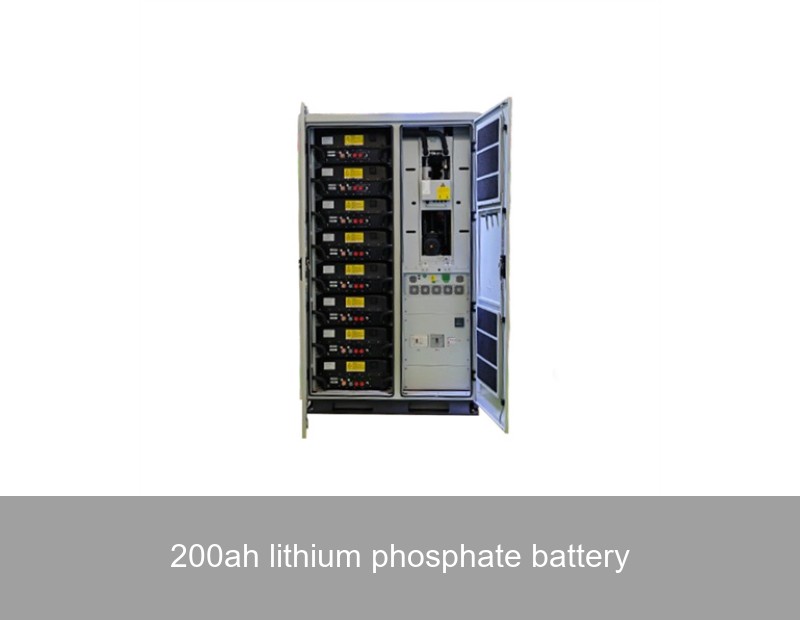
You're planning an energy storage system, and the term "200Ah lithium phosphate battery" keeps coming up. It sounds impressive, but what does it actually mean for your home, business, or community project? More importantly, how do you ensure you're investing in a solution that delivers on its promises of safety, durability, and true cost savings? Let's demystify this technology and explore why it's become the cornerstone of modern renewable energy systems.
Table of Contents
- What is a 200Ah Lithium Phosphate (LiFePO4) Battery?
- Why Choose a 200Ah LiFePO4 Battery? The Core Advantages
- Real-World Applications: Where Does a 200Ah Battery Shine?
- Case Study: A German Dairy Farm's Energy Independence
- Choosing the Right System: Beyond the Bare Cell
- Future Trends and Your Next Steps
What is a 200Ah Lithium Phosphate (LiFePO4) Battery?
Let's break down the name. "200Ah" stands for 200 Ampere-hours. This is the unit of capacity, meaning the battery can, in theory, deliver 200 amps of current for one hour, 10 amps for 20 hours, and so on. In practical terms, when paired with a common 48V system voltage, a single 200Ah battery provides roughly 9.6 kilowatt-hours (kWh) of usable energy (48V * 200Ah = 9600Wh). That's enough to power the average European household's essential loads (refrigeration, lighting, communications) for a significant portion of a day.
The "Lithium Phosphate" part refers to the battery's chemistry: Lithium Iron Phosphate (LiFePO4 or LFP). This is distinct from the older Lithium-ion chemistries (like NMC) you find in many early electric vehicles. The LFP chemistry is inherently more stable due to its strong molecular bonds, which brings us to its most celebrated benefits.

Image Source: Unsplash - A visual of advanced battery cell technology.
Why Choose a 200Ah LiFePO4 Battery? The Core Advantages
Why has this specific capacity and chemistry become a gold standard? The advantages are quantifiable and directly impact your return on investment and peace of mind.
- Unmatched Cycle Life: While a standard lead-acid battery might offer 500-1000 deep cycles, a quality 200Ah LiFePO4 battery can deliver 3,000 to 6,000 cycles to 80% of its original capacity. This translates to 10-15 years of daily use, effectively multiplying its lifespan.
- Inherent Safety: LFP chemistry is far more resistant to thermal runaway (the chain reaction that can cause fires). It can withstand higher temperatures without degrading, making it a preferred choice for residential and enclosed spaces. This safety profile is a primary reason companies like Highjoule build their residential and commercial systems around LFP technology.
- Depth of Discharge (DoD): You can safely use 90-95% of a LiFePO4 battery's rated capacity without damaging it. Compare this to lead-acid, where using more than 50% regularly drastically shortens its life. That 9.6 kWh battery effectively gives you 9+ kWh, not 4.8.
- Efficiency & Space: These batteries boast round-trip efficiency of 95-98%, meaning you lose very little energy to heat during charge/discharge. They are also significantly lighter and more compact than their lead-acid equivalents, simplifying installation.
For a deeper dive into the safety science of LFP batteries, the U.S. Department of Energy provides authoritative resources.
Real-World Applications: Where Does a 200Ah Battery Shine?
A single 200Ah battery is a powerful building block. Its applications scale from a single-unit solution to multi-bank systems:
| Application | Typical Configuration | Key Benefit |
|---|---|---|
| Residential Solar + Storage | 2-4 batteries in series/parallel | Energy self-consumption, backup power during outages |
| Commercial Critical Load Backup | Rack of multiple 200Ah modules | Ensures continuity for servers, refrigeration, or medical equipment |
| Off-Grid Cabins & Remote Sites | 1-2 batteries with solar/wind | Provides reliable power where grid connection is impossible or prohibitively expensive |
| Marine & RV Applications | Single or dual battery setup | Lightweight, stable power for appliances and navigation systems |
Case Study: A German Dairy Farm's Energy Independence
Let's look at a concrete example from Bavaria, Germany. The Müller Hof, a mid-sized dairy farm with 120 cattle, faced rising grid electricity costs and sought to stabilize its operational budget. Their loads included milking machines, cooling tanks, and general farmstead power.
Phenomenon: High daytime energy costs and a desire to use their substantial rooftop space effectively.
Data & Solution: They installed a 45 kWp solar array paired with an energy storage system centered on a 48V battery bank comprising sixteen 200Ah LiFePO4 modules from a trusted provider. This created a total storage capacity of approximately 153 kWh (16 * 200Ah * 48V / 1000).
Outcome: The system was designed to ensure the cooling tanks could run continuously, even at night or during grid interruptions—a critical requirement for product quality. Within the first year, the farm achieved 81% grid independence and reduced its annual electricity bill by over €8,500. The long cycle life of the LFP batteries meant the payback period was calculated at under 7 years, with over a decade of nearly free energy thereafter. The farm manager noted the system's automatic operation and the peace of mind from the battery's stable chemistry as key non-financial benefits.

Image Source: Unsplash - Solar panels on a farm, similar to the case study.
Choosing the Right System: Beyond the Bare Cell
Purchasing a 200Ah lithium phosphate battery is not just about buying a cell. It's about investing in an integrated Battery Energy Storage System (BESS). This is where the expertise of a system integrator like Highjoule becomes critical. A quality BESS includes:
- Advanced Battery Management System (BMS): The brain of the operation. It monitors each cell for voltage, temperature, and state of charge, ensuring balance, safety, and longevity. A weak BMS can ruin even the best cells.
- Robust Thermal Management: While LFP is tolerant, maintaining an optimal temperature range extends life. Systems may use passive or active cooling.
- Grid-Forming Inverter Compatibility: Modern systems need to "island" – creating a microgrid during a blackout. This requires seamless communication between the battery and inverter.
- Scalability and Warranty: Can you easily add more 200Ah modules later? Does the warranty cover both performance (capacity retention) and defects for a decade or more?
At Highjoule, our HPS Series for commercial and industrial applications and HomePower Stack for residential use are built around high-quality 200Ah-class LFP cells. However, we deliver them as fully integrated, UL/Certified systems with our proprietary AI-driven energy management platform. This ensures our clients get the full potential of the chemistry—maximizing cycle life, safety, and return on investment through intelligent software that learns and adapts to energy usage patterns. The International Renewable Energy Agency (IRENA) emphasizes the importance of such system-level innovation for the energy transition.
Future Trends and Your Next Steps
The landscape is evolving. We're seeing trends towards even higher energy density within the LFP chemistry, lower costs per cycle, and enhanced software for grid services (like virtual power plants). The 200Ah module is becoming a standard "LEGO brick" for building larger systems.
So, your next step isn't just to search for a "200ah lithium phosphate battery for sale." It's to ask the right questions: How is the BMS engineered? What is the real-world tested cycle life under my climate conditions? Can the system integrate with my existing solar and future expansion plans? How does the software optimize my energy flows to save the most money?
What specific energy challenge—be it unpredictable bills, grid instability, or a commitment to sustainability—is driving you to explore energy storage today, and how can the right partner help you model the perfect solution?
 Inquiry
 Online Chat