


Understanding the 200MWh BESS Battery Price: A Guide to Utility-Scale Storage Costs
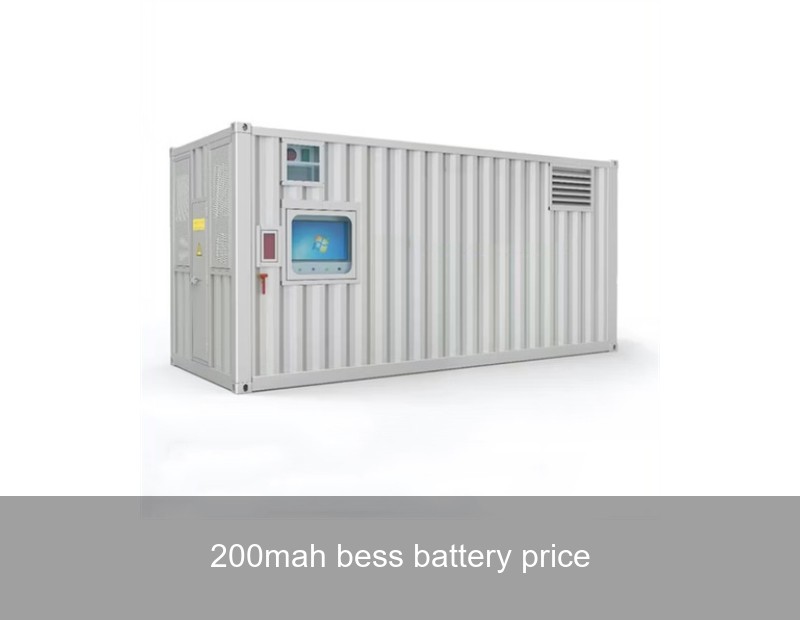
If you're exploring the world of large-scale energy storage, you've likely encountered the term "200MWh BESS battery price." It's a figure that pops up in feasibility studies and project bids, but what does it really encompass? The quoted price for a 200-megawatt-hour Battery Energy Storage System (BESS) is far more than just the cost of battery cells. It represents the total capital expenditure for a complete, grid-ready solution that includes power conversion, safety systems, thermal management, and sophisticated software. For utilities, developers, and large commercial entities across Europe and the U.S., understanding this total system cost is the first step toward unlocking grid resilience, renewable integration, and new revenue streams.
Table of Contents
- The Real Breakdown of a 200MWh BESS Price Tag
- Market Dynamics: Why Prices Vary Across Regions
- Case Study: A 200MWh Project in Action
- Looking Beyond the Initial Price: TCO is King
- The Highjoule Approach: Engineering for Value and Performance
- What's Next for BESS Pricing?
The Real Breakdown of a 200MWh BESS Price Tag
Let's demystify the cost structure. When a provider gives you a price for a 200MWh system, they are typically quoting an all-in, turnkey solution. Here’s a simplified breakdown of where your investment goes:
| Cost Component | Approx. Share of Total Cost | What It Includes |
|---|---|---|
| Battery Cells & Modules | 30-40% | The core Li-ion (e.g., LFP) cells assembled into modules. This is the "200MWh" of energy storage capacity. |
| Power Conversion System (PCS) | 15-25% | Inverters and transformers that convert DC battery power to AC grid power and vice versa. |
| Balance of Plant (BOP) & Integration | 25-35% | This is where system integration expertise shines. It includes the containerization, climate control, fire suppression, switchgear, site construction, and electrical interconnection. |
| Energy Management System (EMS) & Software | 5-10% | The "brain" of the BESS. This intelligent software controls charging/discharging, optimizes for market signals, and ensures safe operation. |
As you can see, the battery cells themselves are only one part of the equation. The integration, safety, and intelligence built around them are critical to performance and directly impact the final 200MWh BESS battery price. A lower upfront quote might compromise on these areas, leading to higher long-term costs.
Market Dynamics: Why Prices Vary Across Regions
You might get different quotes for a project in Texas versus one in Germany. Why? Several key factors are at play:
- Grid Connection Requirements: Interconnection standards, grid codes, and permitting processes vary significantly between the U.S. (FERC, CAISO, ERCOT) and Europe (ENTSO-E national codes). Meeting these can add engineering and equipment costs.
- Logistics & Labor: Shipping 200MWh of equipment is a massive undertaking. Port access, local labor rates for installation, and civil works all influence the final price.
- Supply Chain & Commodities: Prices for lithium, steel, and semiconductors fluctuate. Providers with strong, diversified supply chains, like Highjoule, are better positioned to offer stable, competitive pricing.
- Market Incentives: In the U.S., the Investment Tax Credit (ITC) under the Inflation Reduction Act effectively reduces the net system cost. In Europe, various national grant schemes and capacity market mechanisms can improve project economics.
Case Study: A 200MWh Project in Action
Let's look at a real-world application to see how price translates to value. In 2023, a utility in Southern Europe needed to defer a €50 million investment in upgrading a transmission line constrained by peak summer demand. Instead, they opted for a distributed storage solution.
Image Source: Unsplash - Representative image of a utility-scale BESS installation.

The project involved deploying a total of 200MWh of storage across four strategic substation sites. Each site featured a Highjoule GridMax Utility BESS, renowned for its high-cycle life and advanced grid-support functions. The total turnkey price for the systems, including installation and grid integration, was approximately €70 million.
The result? The utility avoided the transmission upgrade, saving tens of millions in capital. The BESS now provides peak shaving, frequency regulation, and renewable firming services. Projections show a full return on investment within 7 years, after which the asset will generate pure positive cash flow for its remaining 13+ year lifespan. This case highlights that the true metric isn't just the 200MWh BESS battery price, but the value it creates in avoiding costs and generating revenue.
Looking Beyond the Initial Price: TCO is King
For a 200MWh asset meant to last 20 years, the initial capital expenditure (CapEx) is just the entry ticket. The smarter financial metric is Total Cost of Ownership (TCO). This includes:
- Degradation Cost: How much capacity is lost per cycle? A cheaper battery with faster degradation will need earlier replacement.
- Operating & Maintenance (O&M): Costs for monitoring, preventative maintenance, and potential repairs.
- Efficiency Losses: Every round-trip (charge/discharge) has energy losses. A system with 95% efficiency vs. 88% will save significant money over time.
- Warranty & Support: Does the warranty guarantee performance and capacity, or just replace faulty parts? Comprehensive, long-term support is crucial.
This is where Highjoule's design philosophy delivers. Our systems are engineered for low TCO. We use premium Lithium Iron Phosphate (LFP) chemistry for longer life, design our own efficient power conversion modules, and bundle a 10-year performance warranty with proactive remote monitoring. The goal is to maximize your lifetime energy throughput for every dollar of that initial 200MWh BESS battery price.
The Highjoule Approach: Engineering for Value and Performance
At Highjoule, we believe a 200MWh BESS should be a resilient, revenue-generating asset, not just a cost line item. Our product suite, including the GridMax Utility and GridMax Commercial lines, is built on three pillars:
- Intelligent Architecture: Our modular, containerized solutions scale seamlessly from 2MWh to 200MWh+. They feature integrated safety systems that exceed UL 9540A and IEC standards, giving developers and financiers peace of mind.
- Adaptive Software: The Highjoule Apex EMS doesn't just operate the battery; it optimizes it. It can stack revenue streams—arbitraging energy prices, providing frequency response, and managing peak demand—based on real-time market data and forecasts.
- Full Lifecycle Partnership: From initial site feasibility and financial modeling to commissioning, long-term O&M, and end-of-life recycling programs, we partner with our clients for the entire journey.
Image Source: Unsplash - Representative image of energy management system control.

For a client considering a 200MWh project, we don't just provide a quote. We provide a detailed proforma showing projected lifetime revenues, TCO analysis, and a clear path to bankability, often collaborating with our network of trusted EPC and financing partners.
What's Next for BESS Pricing?
The landscape is evolving rapidly. While battery cell prices have seen volatility, long-term trends point to continued reduction in $/kWh for storage. However, the future value of a BESS will increasingly come from software and grid services. According to a U.S. Department of Energy report, the ability to provide multiple services is key to improving project economics.
Furthermore, innovations like cell-to-pack designs and alternative chemistries (e.g., sodium-ion) may influence future cost structures. At Highjoule, our R&D is focused not just on cost reduction, but on value enhancement—increasing system lifespan, improving response times, and ensuring our EMS can adapt to future market signals.
Ready to Move Beyond the Sticker Price?
Evaluating a 200MWh BESS project is a complex but rewarding endeavor. The initial "battery price" is a starting point for a deeper conversation about your specific energy challenges, grid constraints, and revenue opportunities. What grid service in your local market—be it the UK's Capacity Market, Germany's primary control reserve, or California's CAISO markets—holds the most potential for your project's success?
We invite you to discuss your project's parameters with our technical team. Let's build a model that goes beyond the simple 200MWh BESS battery price and maps out the full value proposition for your next landmark storage investment.
 Inquiry
 Online Chat