


The 220Ah Havells Solar Battery: A Deep Dive into Capacity, Performance, and Smart Energy Storage
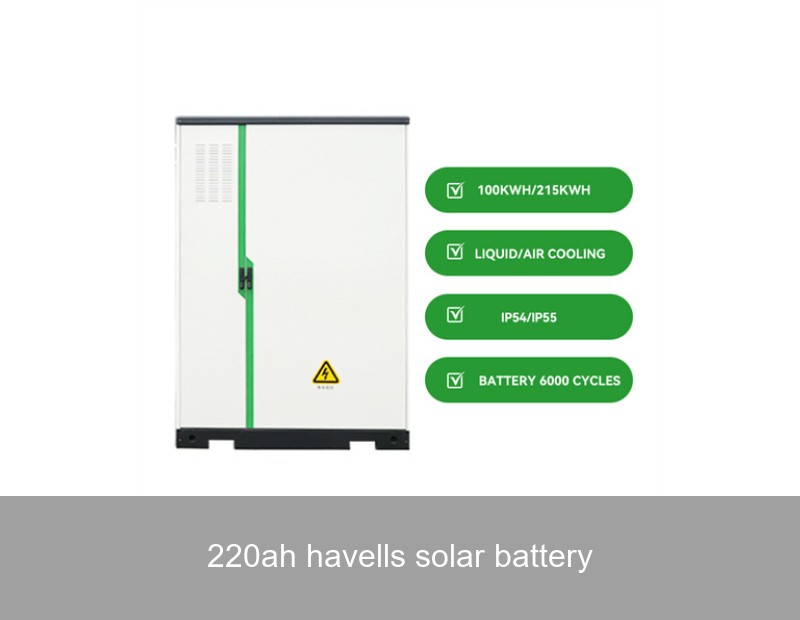
When you're researching solar energy storage, you'll quickly encounter specifications like "220Ah." It's a common benchmark, often seen in products like the 220Ah Havells solar battery. But what does this number truly mean for your home or business? Is it the definitive measure of a good battery? As a product technology expert at Highjoule, I spend my days looking beyond the basic specs to understand how storage components perform in real-world conditions. The Ah, or Amp-hour, rating is just the starting point of a much richer conversation about energy independence, efficiency, and long-term value. Let's unpack the reality behind the 220Ah label and explore what it takes to build a resilient and intelligent solar-plus-storage system.
Why the Ah Rating Matters for Your Solar System
Think of the 220Ah rating as the size of your energy "fuel tank." In simple terms, a 220Ah battery can, in theory, deliver 10 amps of current for 22 hours, or 20 amps for 11 hours, before it needs recharging. This capacity is crucial for determining how long your essential appliances can run when the sun isn't shining.
However, the raw Ah number tells only part of the story. Two critical factors immediately come into play:
- Battery Voltage: A 220Ah battery at 12V stores fundamentally less energy than one at 24V or 48V. Energy (kWh) is the real measure of work done, calculated as Voltage x Amp-hours. So, a 12V 220Ah battery stores 2.64 kWh, while a 48V 220Ah system stores a substantial 10.56 kWh.
- Depth of Discharge (DoD): You should never drain a battery completely. Lithium-ion batteries, for instance, can typically use 90-95% of their rated capacity. A lead-acid battery might only safely use 50%. So, the usable energy from a 220Ah battery varies dramatically by technology.
This is where choosing a partner like Highjoule makes a difference. We don't just sell batteries; we design integrated systems where the battery's specifications are perfectly matched with high-efficiency inverters and intelligent energy management software to maximize the utility of every single amp-hour stored.

Image Source: Unsplash - A professional installation ensures your battery's specifications translate to real-world performance.
Key Features to Look for in a 220Ah Solar Battery
When evaluating a 220Ah solar battery, whether it's a Havells model or another brand, here’s a checklist of what truly impacts performance and longevity:
| Feature | Why It's Important | What to Look For |
|---|---|---|
| Battery Chemistry | Determines lifespan, DoD, efficiency, and maintenance. | Lithium Iron Phosphate (LFP) is now the industry standard for safety, cycle life (often 6000+ cycles), and near 100% DoD. |
| Cycle Life | The number of charge/discharge cycles before capacity degrades significantly. | Aim for a warranty that guarantees a high number of cycles (e.g., 10,000) or a high retained capacity (e.g., 70%) after 10 years. |
| Round-Trip Efficiency | The percentage of energy put in that you can get back out. | Modern LFP systems should exceed 95%. Higher efficiency means less solar energy is wasted as heat. |
| Integrated Battery Management System (BMS) | The "brain" that protects the battery from overcharge, deep discharge, and overheating. | A robust, UL-certified BMS is non-negotiable for safety and longevity. It should provide clear communication with the inverter. |
| Scalability | The ability to add more battery capacity in the future. | Modular systems that allow you to stack or parallel additional units seamlessly. |
A Real-World Case Study: Off-Grid Living in Bavaria
Let's move from theory to practice. Consider a project we supported in the Bavarian Alps, Germany. A family building an off-grid holiday home needed a reliable power source. Their initial research focused on a high-capacity 220Ah lead-acid bank. However, after a detailed energy audit, we proposed a different solution: a modular Highjoule LFP system with an initial capacity of 15 kWh (scalable to 30 kWh).
The Challenge: Extreme temperature fluctuations (-10°C to 30°C) and the need for reliable power for heating pumps, lighting, and appliances without any grid connection.
The Highjoule Solution: We installed our Highjoule H-Stack modular lithium battery system paired with a hybrid inverter. The system's integrated thermal management kept the batteries operating efficiently in cold weather, a weakness of many standard batteries. The intelligent BMS optimized charging from both solar panels and a backup generator.
The Data-Driven Outcome: After two full years of operation:
- System Availability: 99.8% (vs. an estimated 92% with the lead-acid alternative due to maintenance and lower DoD).
- Energy Cost Savings: Zero grid costs, and a 40% reduction in generator runtime/fuel consumption compared to the projected lead-acid system.
- Capacity Retention: Battery monitoring shows 98% of original capacity retained, on track to exceed its 10-year warranty.
This case highlights that the right system, not just a standalone battery, delivers the promised resilience. You can read more about the importance of system design in off-grid applications from the National Renewable Energy Laboratory (NREL).
Thinking Beyond the Battery: The System is Key
A 220Ah battery is a component, not a solution. Its performance is inextricably linked to the other elements in your energy ecosystem. The inverter's efficiency, the solar charge controller's algorithm, and most importantly, the software that orchestrates it all are what turn stored electrons into reliable, cost-saving power.
For example, can your system perform "peak shaving" to automatically use battery power when grid electricity is most expensive? Can it provide backup power to critical loads within milliseconds of a grid outage? These features are enabled by the intelligence of the platform, not the battery's Ah rating alone.

Image Source: Unsplash - Intelligent software is the key to unlocking your battery's full potential.
Highjoule's Integrated Approach to Reliable Solar Storage
At Highjoule, our philosophy is centered on integration and intelligence. We engineer our battery systems, like the H-Stack series, to be the perfect citizen within a broader energy network. Our products are designed for:
- Seamless Communication: Using open standard protocols to ensure compatibility with a wide range of high-quality inverters and solar controllers.
- Advanced Energy Management: Our cloud-based platform, Highjoule Horizon, allows users to monitor performance, set preferences (like self-consumption or backup priority), and receive proactive maintenance alerts.
- Future-Proofing: Our modular design means you can start with a configuration that meets your current "220Ah-equivalent" needs and expand capacity as your family grows or you add an electric vehicle. This adaptability is a core tenet of sustainable technology, as discussed by the International Energy Agency (IEA).
Whether for a residential installation in California, a commercial facility in Italy, or a microgrid in Scandinavia, we provide the complete, optimized storage solution that a standalone battery component cannot.
Making the Right Choice for Your Energy Needs
So, is a 220Ah Havells solar battery the right choice for you? The answer depends entirely on your specific energy profile, location, and goals. The first step is never to buy a battery—it's to understand your consumption. I encourage every homeowner and business manager to start with a detailed look at their energy bills and to conduct an audit of their critical loads.
Ask yourself: What do I want to achieve? Is it pure backup for power outages, maximizing self-consumption of my solar power, or participating in a virtual power plant program? Your goal will dictate the required capacity, power output, and intelligence of the system.
As you embark on this journey, remember that the most cost-effective component is the one that lasts longer, performs better, and integrates seamlessly. It's about total cost of ownership, not just the upfront price per amp-hour.
What is the one appliance or system in your home or business that, if powered during an outage, would make the investment in solar storage immediately worthwhile?
 Inquiry
 Online Chat