


The 2kWh Portable Power Station: Your Ultimate Guide to Off-Grid Energy Freedom
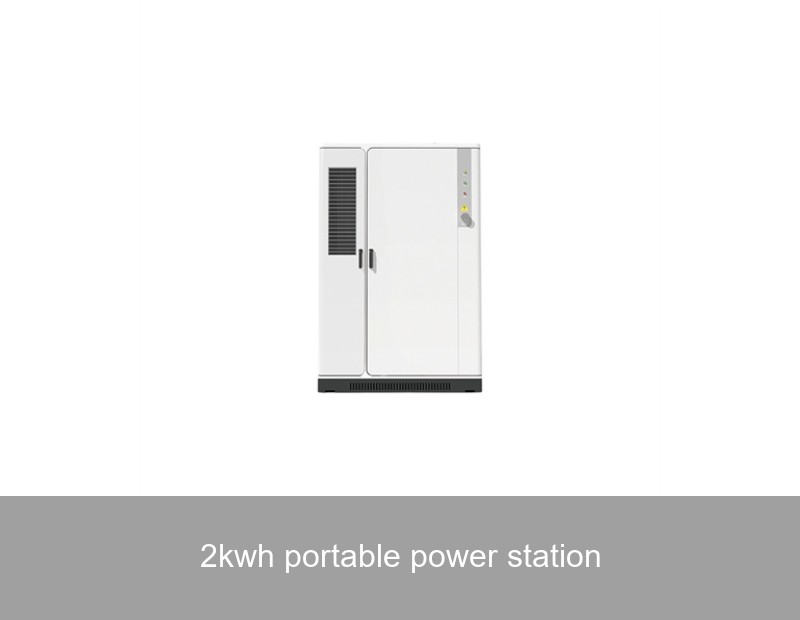
you're finally on that long-awaited camping trip, deep in the redwood forests of California or overlooking a serene Norwegian fjord. The sun is setting, and as you reach for your phone to capture the moment, you see the dreaded "low battery" icon. Or perhaps a sudden storm has knocked out the power to your home office, halting your critical work. In our hyper-connected world, losing power means more than just darkness—it means disconnection. This is where the modern 2kWh portable power station emerges not just as a gadget, but as a fundamental tool for resilience and freedom. It's a compact, silent, and fossil-fuel-free battery box that stores enough energy to keep your essential electronics running for hours or even days. But what makes this specific capacity so powerful? Let's dive in.
Why 2kWh is the Sweet Spot for Portable Power
The 2-kilowatt-hour (kWh) capacity isn't an arbitrary number. It sits perfectly at the intersection of portability and substantial power, a "Goldilocks zone" for most users. To understand its value, we need to look at the data. A typical smartphone requires about 0.01 kWh for a full charge. A 60W laptop might use 0.06 kWh per hour. A small camping fridge can draw around 0.5 kWh over 24 hours.
This means a 2kWh portable power station can theoretically:
- Recharge a smartphone over 150 times.
- Power a laptop for 25+ hours.
- Run a CPAP machine (50W) for two full nights.
- Keep a Wi-Fi router and modem online for 3-4 days during an outage.
- Power essential lights, a fan, and a small cooler for a weekend camping trip.
The beauty of this capacity is that it tackles the most common power anxieties without the bulk and weight of larger, industrial-sized units. It's powerful enough to be genuinely useful, yet compact enough to be carried by one person, often featuring handles and a design meant for mobility.

Image Source: Unsplash - A portable power station enables off-grid connectivity and comfort.
The Technology Inside: More Than Just a Big Battery
Modern 2kWh stations are marvels of energy density and smart management. They predominantly use Lithium Iron Phosphate (LiFePO4) batteries, a chemistry championed by industry leaders for its safety, longevity (3,000+ charge cycles), and stability. Unlike the noisy, fume-emitting generators of the past, these stations deliver clean, silent AC power through pure sine wave inverters, which are safe for sensitive electronics like medical devices and high-end cameras. The best units, like those engineered by Highjoule, integrate sophisticated Battery Management Systems (BMS) that monitor cell voltage, temperature, and current in real-time, ensuring optimal performance and safety.
A Real-World Case Study: Powering a Family Through a Winter Blackout
Let's move from theory to a tangible example. In February 2023, a severe ice storm swept through Michigan, USA, causing widespread power outages that lasted for up to 72 hours for some communities. The Thompson family in Grand Rapids had recently invested in a robust 2kWh portable power station as part of their emergency preparedness plan.
Here’s how it performed:
| Device Powered | Power Draw (Approx.) | Usage Duration | Total Energy Used |
|---|---|---|---|
| LED Lanterns (2x) | 10W | 6 hours/night | 0.12 kWh |
| Wi-Fi Router & Modem | 15W | 18 hours/day | 0.81 kWh |
| Smartphone Charging (4x) | 10W | 2 hours/day | 0.08 kWh |
| Medical Nebulizer | 100W | 20 minutes, 3x/day | 0.10 kWh |
| 12V Car Fridge (for meds) | 40W | Cycled 8 hrs/day | 0.32 kWh |
| DAILY TOTAL | ~1.43 kWh | ||
By strategically managing their usage, the Thompsons were able to run these critical devices for over 24 hours on a single charge. They supplemented the station by charging it in their car for a few hours, extending its utility throughout the 3-day outage. This case highlights the 2kWh unit's role not in powering everything, but in powering what matters most—safety, communication, and health. You can read more about grid resilience from the U.S. Department of Energy.
Choosing the Right 2kWh Portable Power Station: Key Features
Not all power stations are created equal. When selecting your 2kWh companion, consider these critical aspects:
- Battery Chemistry: Prioritize LiFePO4 for longevity and safety over standard lithium-ion.
- Output Ports & Power: Ensure it has sufficient AC outlets (pure sine wave), USB-C PD ports for fast-charging laptops, and standard USB ports. Verify the continuous and surge wattage ratings can handle your devices.
- Recharging Options & Speed: A versatile station can recharge via a wall outlet, a car charger, and most importantly, solar panels. Look for fast solar input compatibility (e.g., 500W+) to harness the sun effectively.
- Management & Monitoring: An intuitive display or companion app that shows input/output wattage, battery percentage, and time remaining is invaluable.
Highjoule's Commitment to Portable & Permanent Power
At Highjoule, our expertise in large-scale commercial and residential Battery Energy Storage Systems (BESS) directly informs our approach to portable power. We understand that energy reliability shouldn't have a scale limit. While our core mission is deploying smart, grid-integrated storage for homes, businesses, and microgrids, we recognize the need for personal, movable energy independence. Our engineering principles—focus on safety with advanced BMS, efficiency through high-quality components, and smart connectivity—are the same whether we're building a 2kWh portable unit or a 200kWh home backup system. For those seeking a seamless energy ecosystem, a Highjoule portable station can be the first step or a mobile extension of a whole-home solar-plus-storage installation, all managed through our unified energy platform.

Image Source: Unsplash - Solar panels and home battery storage create a resilient energy system.
Beyond the Box: Highjoule's Integrated Energy Vision
The 2kWh portable power station is a powerful symbol of decentralized energy. But it's also a single node in a much larger network. Highjoule's primary focus is on creating intelligent, scalable storage solutions that transform how communities and businesses consume energy. For a European farmhouse with a solar array, our residential BESS maximizes self-consumption, reducing reliance on the volatile grid. For a California factory, our industrial systems provide peak shaving, lowering demand charges and providing backup for critical processes. The portable station fits into this vision as the ultimate personal energy accessory—whether it's used by a field technician, an outdoor enthusiast, or as a tactical backup within a larger microgrid setup. It's all part of the same mission: to make clean, reliable, and intelligent power accessible everywhere.
For insights into the growth of distributed energy, see this report from the International Energy Agency.
The Future is in Your Hands: What Will You Power?
The conversation around energy is shifting from mere consumption to active management. A 2kWh portable power station puts you directly in control. It asks you to consider what is truly essential—the devices that maintain your safety, your livelihood, and your connection to the world. It's a tool that empowers adventures and provides peace of mind.
So, we leave you with this question: In a world where your power is no longer solely dependent on a distant grid, what new project will you start, what remote place will you explore, or what essential comfort will you secure for your family with your own personal energy reserve?
 Inquiry
 Online Chat