


Why the 48V Energy Storage Cabinet is Powering a Smarter Energy Future
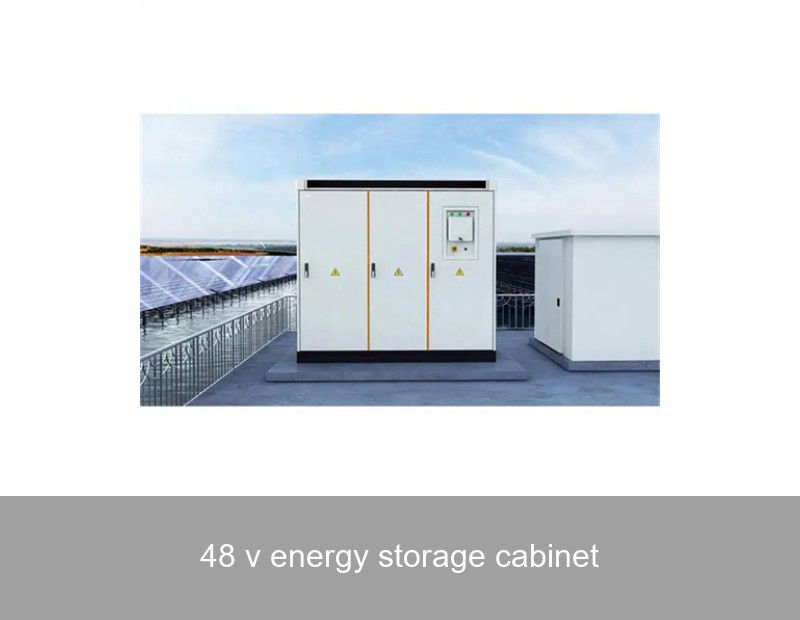
Have you ever wondered what's quietly humming in the back of a modern commercial building, a bustling factory, or even a remote microgrid, keeping the lights on and the operations smooth? Increasingly, the answer is a 48V energy storage cabinet. This isn't just another battery box; it represents a fundamental shift towards safer, more scalable, and intelligently managed power. For businesses and communities grappling with rising energy costs and grid instability, understanding this technology is the first step toward true energy independence. As a leader in advanced storage solutions, Highjoule has been at the forefront of developing robust 48V systems that are redefining reliability for commercial, industrial, and residential applications worldwide.
Table of Contents
- The Silent Revolution: From High Voltage to Accessible 48V
- Decoding the 48V Energy Storage Cabinet: Safety, Simplicity, Scalability
- The Data: How 48V Systems Outperform in Real-World Applications
- A Case Study in Resilience: A German Logistics Center's Story
- Beyond Backup: The Intelligent Brain of Modern Energy Management
- Is a 48V Energy Storage Cabinet Right for Your Energy Goals?
The Silent Revolution: From High Voltage to Accessible 48V
For years, large-scale energy storage was synonymous with high-voltage systems—complex, requiring specialized installation, and often perceived as best suited for utility-scale projects. But there was a growing need for a "Goldilocks" solution: something more powerful than a small residential unit, yet safer and more flexible than a massive high-voltage array. Enter the 48V energy storage cabinet. This voltage level is a sweet spot in electrical engineering. It's high enough to efficiently manage significant power over typical distances in a business setting, yet it remains under the 60V threshold that defines "low voltage" in many safety standards, like those from the National Fire Protection Association (NFPA). This inherent safety drastically reduces installation complexity, regulatory hurdles, and overall risk, making advanced storage accessible to a much broader market.

Image Source: Unsplash (Representative image of modular battery technology)
Decoding the 48V Energy Storage Cabinet: Safety, Simplicity, Scalability
So, what exactly is inside this cabinet? Think of it as an integrated power ecosystem. At its heart are lithium-ion battery modules—often using stable chemistry like Lithium Iron Phosphate (LFP)—arranged in a 48V configuration. But the real magic lies in the integration. A top-tier 48V energy storage cabinet from a provider like Highjoule incorporates several critical components in one unified, UL/Certified enclosure:
- Battery Management System (BMS): The guardian of the battery, constantly monitoring cell voltage, temperature, and health to ensure longevity and safety.
- Hybrid Inverter/Charger: The intelligent translator, converting DC battery power to AC for your building and managing the flow from solar panels, the grid, and the battery.
- Thermal Management: A quiet, efficient cooling system that maintains the optimal operating temperature, crucial for performance and lifespan.
- Safety Disconnects & Protection: Integrated circuit breakers and safety mechanisms for fail-safe operation.
The beauty of the modular 48V design is scalability. Need more capacity? You can often add additional cabinets in parallel, much like adding bookshelves to a library. This "plug-and-play" philosophy is central to Highjoule's product design, allowing businesses to start with what they need and expand their storage footprint as their needs grow, all without a complete system overhaul.
The Data: How 48V Systems Outperform in Real-World Applications
The theoretical advantages are compelling, but the proof is in the performance data. Let's break down the key metrics where 48V cabinets shine, particularly in the commercial & industrial (C&I) space that Highjoule specializes in:
| Performance Metric | 48V Cabinet Advantage | Impact on Business |
|---|---|---|
| Round-Trip Efficiency | Typically >94% | Maximizes the value of every kilowatt-hour of solar energy stored; reduces energy loss. |
| Response Time | Sub-100 milliseconds | Provides near-instantaneous backup during a grid outage, preventing costly process interruptions. |
| Total Cost of Ownership (TCO) | Up to 25% lower than comparable high-voltage systems* | Savings from reduced installation costs, lower insurance premiums, and simplified maintenance. |
| System Lifespan | 10-15+ years with LFP chemistry | Long-term investment protection and predictable performance. |
*Estimate based on internal Highjoule project comparisons and industry reports from sources like Wood Mackenzie.
A Case Study in Resilience: A German Logistics Center's Story
Let's move from data to a real-world scenario. Consider a major logistics and distribution center in Bavaria, Germany. Their operations are 24/7, and even a brief power interruption could freeze sorting lines, disrupt refrigeration, and delay thousands of shipments. Their goals were clear: increase on-site consumption of their existing 500 kW solar array, provide seamless backup power for critical loads, and participate in the grid's frequency regulation services for additional revenue.
Highjoule's solution was a phased deployment of three 48V energy storage cabinets, totaling 360 kWh of capacity. The 48V architecture allowed for a swift installation alongside the live operation, with no high-voltage switchgear required. The results over the first 18 months were telling:
- Self-Consumption of Solar: Increased from 35% to over 80%, drastically cutting grid energy purchases.
- Uninterrupted Operations: Successfully rode through 4 grid disturbances, with the system picking up the 150 kW critical load in under 20 milliseconds—faster than any diesel generator could ever react.
- Revenue Generation: By providing automatic frequency reserve (aFRR) to the grid, the system generated an average of €1,200 per month in ancillary service payments.
This case exemplifies how a well-engineered 48V system isn't just a cost center; it becomes a strategic, revenue-contributing asset that underpins operational resilience.
 « Pre.: Max Power On-Grid Energy Storage Cabinet: The Key to Grid Resilience and Energy Independence
Next: Finding the Right Supplier of Ziklo Solar Storage for Your Energy Independence »
« Pre.: Max Power On-Grid Energy Storage Cabinet: The Key to Grid Resilience and Energy Independence
Next: Finding the Right Supplier of Ziklo Solar Storage for Your Energy Independence »
 Inquiry
 Online Chat