


Decoding the 5kW Lithium Battery Inverter Price: Your Guide to Smart Investment
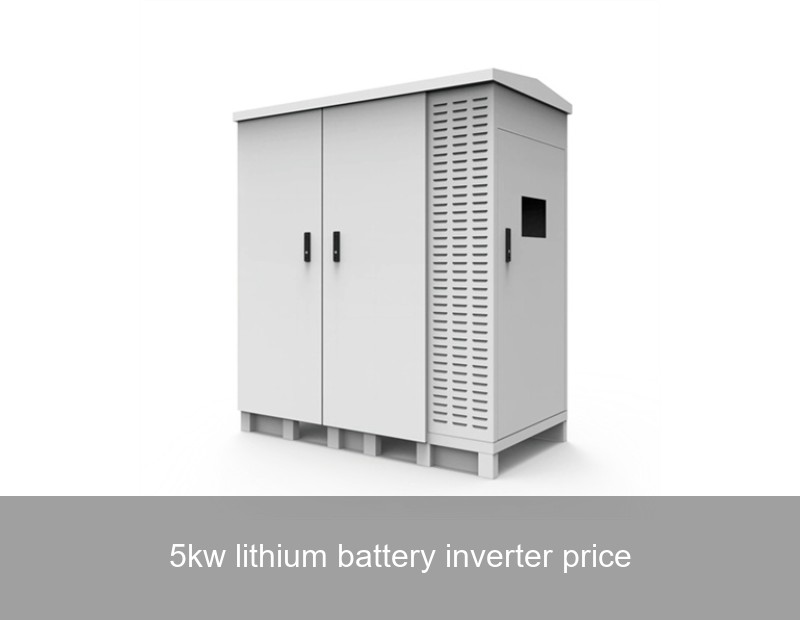
If you're researching a solar battery system for your home, you've likely typed "5kW lithium battery inverter price" into a search engine more than once. The numbers that come back can be dizzying—ranging from a few thousand to several thousand dollars or euros. It's tempting to just pick the cheapest option, but here's the reality: the inverter is the intelligent heart of your energy storage system. Its price tag isn't just for a piece of hardware; it's an investment in reliability, efficiency, and the long-term performance of your entire power setup. In this guide, we'll demystify the cost factors, explore what true value looks like, and show you how to make a choice that pays off for decades, not just upfront.
Key Factors That Shape the 5kW Lithium Battery Inverter Price
Think of the inverter as the "brain" and "translator" of your energy system. It manages the flow of electricity between your solar panels, lithium battery, and your home's appliances. The variation in price directly reflects its capabilities, durability, and intelligence. Let's break down the core components of cost.
Inverter Type and Technology: Hybrid vs. AC-Coupled
The first major decision point is the type of inverter, which fundamentally impacts the system design and cost.
- Hybrid Inverters: These are all-in-one units that combine a solar inverter and a battery inverter. They are highly efficient for new installations or major upgrades, as they directly manage DC power from both panels and batteries. They often represent a streamlined, cost-effective solution but may require a more integrated purchase.
- AC-Coupled Systems (Battery Inverter/Charger): This setup involves a separate battery inverter that works alongside your existing solar inverter. It's the ideal choice for retrofitting batteries to an older solar panel system. The price here is for the dedicated battery inverter, which must intelligently communicate with your existing setup.
The technology inside also matters. Advanced topologies like transformerless designs are lighter and more efficient but may have specific application requirements. The use of high-quality semiconductors (like silicon carbide) improves efficiency but adds to the manufacturing cost.
Battery Synergy and System Integration
A 5kW inverter doesn't operate in a vacuum. Its price is intrinsically linked to the battery it's paired with. Not all inverters communicate seamlessly with all battery brands. Some manufacturers, like Highjoule, design fully integrated systems where the inverter and battery are optimized to work together from the ground up. This deep integration ensures maximum safety, prolongs battery life, and unlocks the full potential of your system's software. While a proprietary ecosystem might have a different price point than a mix-and-match approach, it eliminates compatibility headaches and performance gaps that can cost you more in the long run.

For example, Highjoule's H-ES Series 5kW Hybrid Energy System is engineered as a unified solution. Its inverter is not just a component but the command center for Highjoule's proprietary lithium-iron-phosphate (LiFePO4) batteries, ensuring peak efficiency and granular monitoring through the Highjoule Energy OS.
Safety, Certifications, and Smart Features
This is where the "you get what you pay for" adage truly comes to life. A lower price might mean compromises in these critical areas:
- Safety Certifications: Mandatory certifications like UL 9540 (USA) or IEC 62619 (EU) are non-negotiable for insurance and fire safety. Obtaining them requires rigorous testing, which adds to the cost.
- Grid Services & Software: Can your system do more than just backup? Advanced inverters enable features like peak shaving, time-of-use optimization, and even virtual power plant (VPP) participation. This intelligence requires sophisticated software and grid-compliance capabilities, reflected in the price.
- Warranty & Support: A 10-year or longer warranty on the inverter is a sign of manufacturer confidence. It also represents a future cost the company is banking on, which is factored into the initial price. Robust local technical support is another value-added service.
According to a 2023 NREL report on solar-plus-storage costs, the "soft costs" of installation, permitting, and customer acquisition remain significant, but investing in a high-quality, well-supported inverter can drastically reduce long-term maintenance and operational costs.
A Real-World Case: The German Homeowner's Journey
Let's look at data from a real scenario. In 2023, a homeowner in Bavaria, Germany, wanted to increase self-consumption of his existing 8kW solar array and gain backup power. He received three quotes for a 5kW lithium battery inverter system with 10kWh of storage:
| Option | Inverter Type | Battery Brand | Quoted System Price (EUR, installed) | Key Differentiators |
|---|---|---|---|---|
| A | Basic Hybrid | Generic Li-ion | €8,200 | Lowest upfront cost, 5-year warranty, basic app. |
| B | Mid-Range AC-Coupled | Mid-Tier LiFePO4 | €11,500 | Good for retrofit, 10-year warranty, VPP-ready. |
| C (Highjoule Partner Install) | Highjoule H-ES 5kW Hybrid | Highjoule LiFePO4 | €12,800 | Fully integrated, 12-year warranty, advanced energy management, includes professional grid-connection support. |
The homeowner chose Option C. After one year, his self-consumption rate jumped from 35% to over 80%. More importantly, during a regional winter grid outage, his system powered essential loads for 14 hours seamlessly. The advanced software also automatically avoided peak tariffs, saving an estimated €450 annually on his electricity bill. The slightly higher initial price was offset within the first 7-8 years, and the peace of mind and extended warranty provided clear long-term value.
The Highjoule Solution: Balancing Price with Long-Term Value
At Highjoule, we approach the "5kW lithium battery inverter price" conversation from the perspective of total lifecycle value. Since 2005, we've focused on creating systems that are not just products, but resilient energy assets. Our H-ES Series 5kW Hybrid Inverter is a prime example. Priced competitively within the premium segment, it incorporates:
- Ultra-High Efficiency (98.4%): More of your solar harvest becomes usable power, directly impacting payback time.
- Built-In Grid Forming Technology: It can create a stable microgrid during outages, allowing other essential inverters (like your solar PV) to continue operating—a feature often missing in standard hybrids.
- Highjoule Energy OS Platform: This is where the intelligence lives. It provides predictive energy analytics, remote firmware updates, and seamless integration with smart home ecosystems.
For commercial or industrial settings requiring scalable power, our containerized BESS solutions leverage the same core inverter technology, scaled and reinforced for demanding applications. We provide not just hardware, but a complete service package including feasibility studies, system design informed by global best practices, and ongoing performance monitoring.

Looking Beyond the Sticker: Total Cost of Ownership
When evaluating a 5kW lithium battery inverter price, always calculate the Total Cost of Ownership (TCO):
TCO = Initial Purchase + Installation + (Efficiency Losses Cost) + (Potential Maintenance) + (Replacement Cost if Warranty is Short) - (Energy Bill Savings + Incentives + Residual Value)
A cheaper inverter with 95% efficiency versus a 98.4% efficient one loses more energy every single day for 15+ years. That lost energy has a real cost. Similarly, a system that can't adapt to new tariffs or participate in grid-balancing programs leaves money on the table. Highjoule systems are designed to minimize TCO by maximizing every watt-hour of energy, ensuring durability, and future-proofing your investment through software-upgradable features.
Your Next Step: What's Your Energy Independence Goal?
The journey to understanding the true value behind a 5kW lithium battery inverter price is about aligning technology with your personal or business energy objectives. Is it purely financial ROI, unwavering backup security, or contributing to a more resilient grid? We encourage you to look past the initial quote and ask your potential provider: How will this specific inverter and battery combination perform for *my* unique consumption pattern over the next 15 years? What is the roadmap for its software, and how will it help me adapt to the energy market of tomorrow?
We invite you to share your primary motivation for considering energy storage—is it the recent volatility in energy prices, a specific concern about grid reliability in your area, or a step towards complete energy self-sufficiency?
 Inquiry
 Online Chat