


Understanding the 72V 60Ah Lithium Battery Price: A Comprehensive Guide for Your Energy Storage Needs
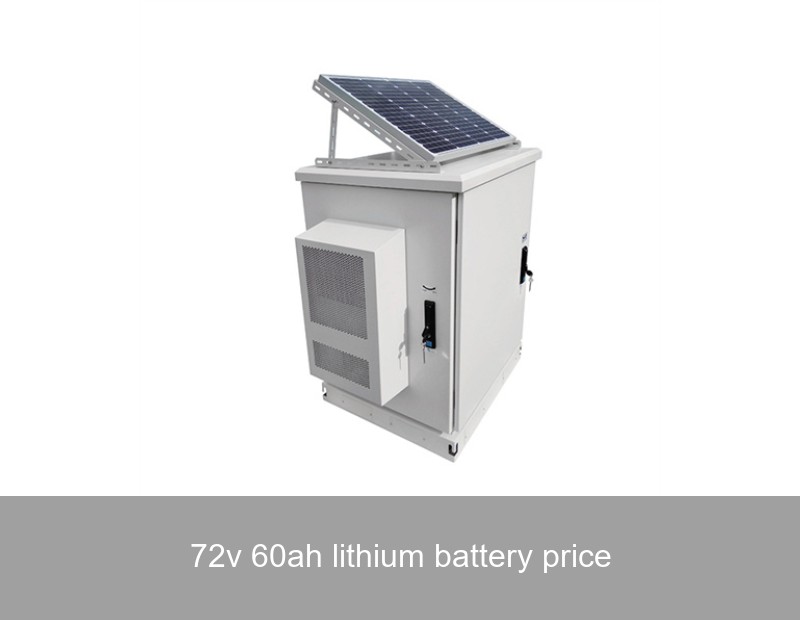
If you're researching energy storage for a large project—be it an off-grid cabin, a commercial vehicle fleet, or a backup power system—you've likely come across the specification "72V 60Ah lithium battery." And your next question is almost always: "What's the price, and what truly determines it?" The quoted price for a 72V 60Ah lithium battery isn't just a random number; it's a direct reflection of the underlying technology, safety features, and long-term value engineered into the system. In this guide, we'll demystify the cost factors, explore real-world applications, and show you how investing in a robust system from a trusted provider like Highjoule translates to superior performance and total cost of ownership.
The Real Price Breakdown: More Than Just Cells
When you see a price tag for a 72V 60Ah lithium battery, you're looking at the cost of a complete Battery Energy Storage System (BESS), not just a pack of cells. A 72V system typically comprises around 20-24 lithium cells in series. The raw cell chemistry (like Lithium Iron Phosphate or LiFePO4) is a major component, but it's only part of the story. The true cost and value are built from:
- Cell Quality & Chemistry: Premium, automotive-grade LiFePO4 cells cost more but offer 3-4x the cycle life of generic alternatives.
- Battery Management System (BMS): The brain of the operation. A high-quality BMS monitors voltage, temperature, and current, ensuring safety, balancing cells, and prolonging lifespan. This is non-negotiable for a reliable system.
- Pack Assembly & Safety: This includes robust housing, thermal management systems, safety fuses, contactors, and wiring. Proper engineering here prevents thermal runaway and physical damage.
- Certifications & Compliance: For markets in Europe and the US, certifications like UL 1973, CE, and UN38.3 are mandatory. The testing and engineering to achieve these add cost but are critical for insurance and installation approval.
- Warranty & Support: A longer, more comprehensive warranty (e.g., 10 years) reflects the manufacturer's confidence and protects your investment.
Therefore, comparing the 72V 60Ah lithium battery price based on cost alone is misleading. A cheaper unit often compromises on these critical components, leading to higher risk and cost over time.
Key Factors Influencing 72V 60Ah Lithium Battery Price & Performance
Let's delve into the specifics. Why might one 72V 60Ah (approximately 4.3 kWh) system cost 30% more than another? The table below breaks down the core variables.
| Factor | Lower-Cost Option Typical Spec | Premium Option (e.g., Highjoule) Typical Spec | Impact on Price & Long-Term Value |
|---|---|---|---|
| Cell Chemistry | Generic Li-ion (NMC/LCO) | Grade-A LiFePO4 (LFP) | LFP offers superior safety, >6000 cycles, and stable performance, justifying a higher initial cost. |
| BMS Intelligence | Basic voltage protection | Advanced, software-managed BMS with state-of-health monitoring, communication protocols (CAN, RS485), and remote diagnostics | Prevents failure, enables system integration, and maximizes lifespan. Core to smart energy management. |
| Cycle Life & Warranty | 2000 cycles, 2-3 year warranty | 6000+ cycles, 10-year performance warranty | Lower cost per cycle over the system's life. Total cost of ownership is significantly lower. |
| Peak Power Capability | 1C Rate (~60A continuous) | 3C+ Rate (180A+ continuous) | Handles high surge loads (like motor starts) effortlessly, crucial for industrial and mobility applications. |
As you can see, the price is intrinsically linked to these performance and durability specifications. For demanding applications, the premium option is the most economical choice over a decade of service.
Where is a 72V 60Ah Battery Used? Market Applications
This battery configuration isn't for your average home solar setup. Its higher voltage makes it ideal for applications requiring substantial power and efficiency. Here are the primary use cases in Europe and North America:
- Electric Utility Vehicles & Fleet: Golf carts, street cleaning vehicles, and airport ground support equipment. A 72V system provides the torque and range needed for all-day operation.
- Marine & Recreational Vehicles (RVs): Powering electric boat motors or serving as the house battery bank for large RVs, where energy density and safety are paramount.
- Off-Grid Industrial Power: Providing reliable electricity for remote telecommunication sites, construction sites, or agricultural operations.
- Microgrids & Backup Power: Acting as a stable storage node in a community or commercial microgrid, or providing seamless backup for critical loads during outages.

In each scenario, the reliability of the battery system directly impacts operational continuity and cost. A failure isn't just an inconvenience; it's lost revenue.
A Real-World Case Study: Cost Savings in Action
Let's look at a concrete example from the US market. A regional golf cart and small utility vehicle fleet operator in Arizona was facing high maintenance and replacement costs with their old lead-acid batteries. They needed a solution for 50 utility vehicles (72V systems).
The Problem: Lead-acid batteries required replacement every 18 months, struggled in the desert heat, and had long recharge times, reducing vehicle availability.
The Solution & Data: The operator switched to a custom 72V 60Ah LiFePO4 battery system from Highjoule. The key outcomes over three years were:
- Upfront Cost: Higher initial price per battery unit (approx. 2.2x the lead-acid cost).
- Operational Savings: Vehicle availability increased by 30% due to 2-hour full charges vs. 8-hour for lead-acid.
- Lifetime Cost: With a 10-year warranty and projected 6000+ cycles, the cost per cycle was calculated to be less than one-third that of lead-acid.
- Performance: Consistent power output even in high temperatures, with no performance degradation noted.
This case, documented in a DOE report on lithium-ion cost trends, highlights that the true metric is Total Cost of Ownership, not just purchase price.
The Highjoule Advantage: Intelligent Systems, Not Just Batteries
At Highjoule, we understand that you're not just buying a battery; you're investing in a power solution. Our approach to a 72V 60Ah system exemplifies this philosophy. We engineer integrated systems where every component is optimized to work together.
Our H-Series Commercial Battery Systems are built around the 72V architecture and are scalable for larger capacities. What sets them apart?
- Proprietary Adaptive BMS: Our BMS doesn't just protect; it learns from usage patterns to optimize charge cycles and proactively flag maintenance needs via our cloud platform.
- Modular & Scalable Design: Start with a 60Ah pack and seamlessly add modules as your energy needs grow, protecting your initial investment.
- Seamless Integration: Our systems come with standard communication interfaces, making them plug-and-play with most major solar inverters and energy management systems, a critical factor for European and US installers.
- Global Service & Warranty: Backed by our 10-year warranty and a network of technical partners, we ensure your system performs for its entire designed lifespan.

By choosing a Highjoule system, you are paying for peace of mind, intelligence, and a partnership focused on maximizing your energy independence. The 72V 60Ah lithium battery price becomes an investment in predictable, sustainable operations.
Making the Right Investment Decision
So, how should you proceed when evaluating options? First, shift your mindset from "What is the cheapest price?" to "What is the best value over 10 years?" Request detailed specifications, not just a quote. Ask about the BMS capabilities, cycle life at specific depth-of-discharge, and the warranty terms. Always verify certifications for your region.
Consult independent sources, like this NREL report on energy storage costs, to understand broader market trends. Then, engage with experts who can tailor a solution. For instance, would your project benefit more from a single 72V 60Ah unit, or two paralleled 36V units for redundancy? These are the conversations that define a successful project.
Your Next Step
Given the specific energy and power requirements of your project, what would be the more critical factor for you: achieving the absolute lowest upfront cost per kWh, or ensuring the highest possible system uptime and longevity over the next decade?
 Inquiry
 Online Chat