


Navigating the Future: Why Your ACES Africa Supplier is Key to Sustainable Power
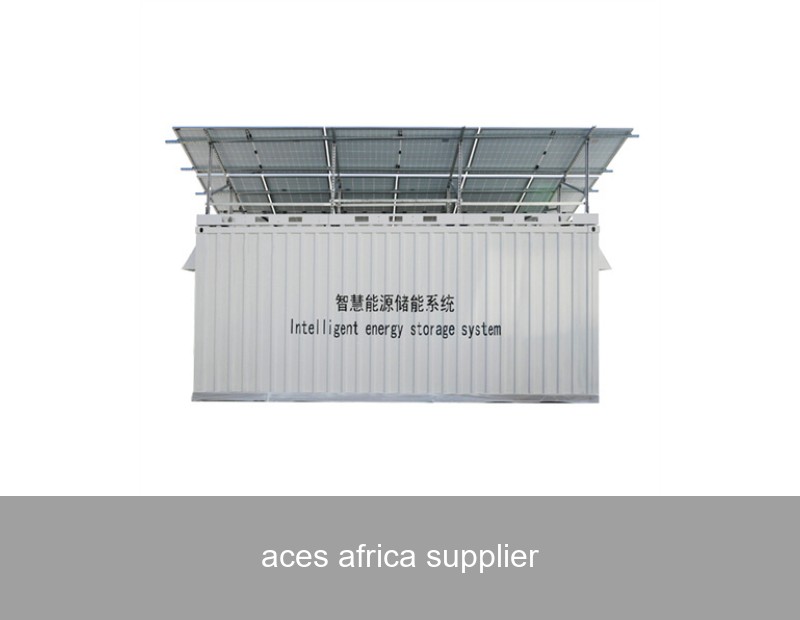
Imagine a future where a hospital in rural Kenya never fears a blackout during a critical surgery. Picture a bustling Lagos market where vendors keep their goods fresh and their businesses running smoothly, day and night. This isn't just a hopeful vision; it's a tangible reality being built today through Advanced Clean Energy Storage (ACES) systems. For project developers, utilities, and governments across the continent, choosing the right ACES Africa supplier is no longer a simple procurement decision—it's a strategic move that will define energy resilience for decades. In this deep dive, we'll explore the unique energy landscape of Africa, the pivotal role of ACES, and how the expertise behind your chosen supplier makes all the difference.
The African Energy Challenge: A Continent at a Crossroads
Africa's energy story is one of stark contrast. It's a continent blessed with abundant renewable resources—some of the world's best solar irradiance, vast wind potential, and significant geothermal reserves. Yet, it faces a profound energy access gap. According to the International Energy Agency (IEA), over 600 million people in sub-Saharan Africa still lack access to electricity. For those connected, supply is often unreliable, characterized by frequent outages and voltage instability that stifles economic growth and burdens daily life.
The traditional "grid-first" approach has run into challenges of scale, cost, and speed. This is where a paradigm shift is occurring. Instead of waiting for massive centralized grid infrastructure, many regions are leapfrogging directly to decentralized, renewable-powered microgrids and hybrid systems. These systems, however, have a critical brain and heart: the storage solution. Solar energy is only generated during the day, and wind is intermittent. Without storage, the promise of 24/7 clean power remains unfulfilled. This is the precise problem ACES is designed to solve.

Decentralized solar solutions are transforming communities, but their full potential is unlocked only with reliable storage. (Image: Unsplash)
The Data: The Compelling Case for Storage
Let's look at the numbers. A World Bank study on mini-grids highlights that integrating battery storage can increase the reliability of a renewable system from around 60% to over 95%. Furthermore, the levelized cost of electricity (LCOE) from solar PV coupled with lithium-ion batteries has plummeted by over 80% in the last decade, making it increasingly competitive with, and often cheaper than, diesel generation—the current, polluting, and expensive default for backup power across the continent.
Why Your ACES Africa Supplier Choice is Critical
Not all energy storage is created equal, and the African context demands specific qualities. An ACES system here isn't just a battery in a box; it's a ruggedized power asset designed to perform under pressure.
- Environmental Resilience: Systems must withstand extreme heat, dust, and humidity without degrading performance or safety.
- Technical Sophistication: Advanced battery management systems (BMS) are non-negotiable for safety, longevity, and maximizing cycle life.
- Grid Intelligence: The system must seamlessly integrate multiple power sources (solar, wind, grid, generator) and manage loads intelligently.
- Lifecycle Support: A supplier must offer robust warranties, remote monitoring, and local technical support to ensure the system operates optimally for its 10-15 year lifespan.
Choosing a supplier that views these as core engineering principles, rather than afterthoughts, is what separates a successful, long-term project from a costly disappointment.
Case Study: Powering Tanzanian Commerce with Highjoule ACES
Let's move from theory to practice. Consider the challenge faced by a large commercial plaza in Dar es Salaam, Tanzania. Home to over 50 retail stores, offices, and a supermarket, the plaza was plagued by daily grid outages lasting 4-6 hours. Their reliance on diesel generators was crippling: fuel costs exceeded $12,000 monthly, noise and fumes were a nuisance, and maintenance was constant.
In 2023, they partnered with Highjoule and a local integrator to deploy a tailored ACES solution. The system comprised a 500kW solar carport array coupled with a Highjoule HDC 500 containerized battery energy storage system (BESS), with a capacity of 1MWh. The intelligent controller was programmed for peak shaving, solar self-consumption maximization, and automatic backup.
| Metric | Before ACES | After Highjoule ACES Deployment |
|---|---|---|
| Grid Outage Impact | Business Disruption | Zero Downtime |
| Monthly Diesel Cost | > $12,000 | $1,200 (for critical backup only) |
| Carbon Emissions | ~48 tons/month | ~5 tons/month |
| Energy Cost (LCOE) | $0.38/kWh | $0.11/kWh |
The results were transformative. The plaza now operates primarily on solar, using the grid as a secondary source and the BESS as a buffer. The Highjoule system's robust thermal management, built for high ambient temperatures, ensured consistent performance. Remote monitoring from Highjoule's Nexus Energy Platform allows for proactive maintenance, giving the plaza owners and the local technical team peace of mind. This project is a tangible example of how the right ACES Africa supplier delivers not just products, but economic and operational resilience.
The Highjoule ACES Solution: Engineered for African Resilience
With nearly two decades of experience since 2005, Highjoule doesn't just sell storage systems; we engineer power resilience. Our approach as a trusted ACES Africa supplier is built on three pillars:
- Adaptive Product Design: Our flagship HDC Series containerized BESS is a pre-integrated, plug-and-play solution. It features industry-leading liquid cooling for unmatched thermal stability in hot climates, a multi-level safety architecture, and seamless compatibility with all major inverter brands. For smaller commercial or industrial sites, our HCS Cabinet Series offers the same core technology in a modular, scalable format.
- Intelligent Software: The Nexus Energy Platform is the brain of the operation. It goes beyond simple monitoring to provide AI-driven energy analytics, predictive maintenance alerts, and automated control strategies (like demand charge management and time-of-use optimization) that maximize your financial return on investment.
- Partnership-Driven Support: We believe in empowering local partners. Through our "Highjoule Certified Integrator" program, we provide in-depth training, design support, and access to our global technical resources. This ensures that projects are commissioned correctly and supported effectively throughout their entire lifecycle, wherever they are located.
For a mining operation in Zambia needing reliable off-grid power, a utility in Nigeria looking to stabilize a weak grid feeder, or a telecom company across East Africa securing its tower infrastructure, Highjoule provides the foundational technology and expertise to make ACES projects a lasting success.

Professional installation and ongoing technical support are vital for the long-term health of any ACES deployment. (Image: Unsplash)
The Future of African Energy is Integrated
The trajectory is clear. As noted by the International Renewable Energy Agency (IRENA), Africa is poised to be a global leader in renewable energy deployment, with storage as the essential enabler. The future grid will be a network of interconnected microgrids and virtual power plants (VPPs), where thousands of distributed ACES systems can be aggregated to provide grid services, enhance stability, and unlock new revenue streams for owners.
This future requires suppliers who think in systems, not just components. It demands a partnership with a technology provider that understands the long-term digital and physical infrastructure needs of a continent on the rise.
An Open Question for Project Developers
As you evaluate your next step toward energy independence and sustainability, ask yourself this: Is your current ACES Africa supplier a vendor selling you a commodity, or a strategic partner engineering a solution with the intelligence, durability, and support to power your success for the next 15 years? The answer will define the resilience of your project long after the headlines of the installation fade.
 Inquiry
 Online Chat