


Acumulador de Energía Solar: The Key to Unlocking True Energy Independence
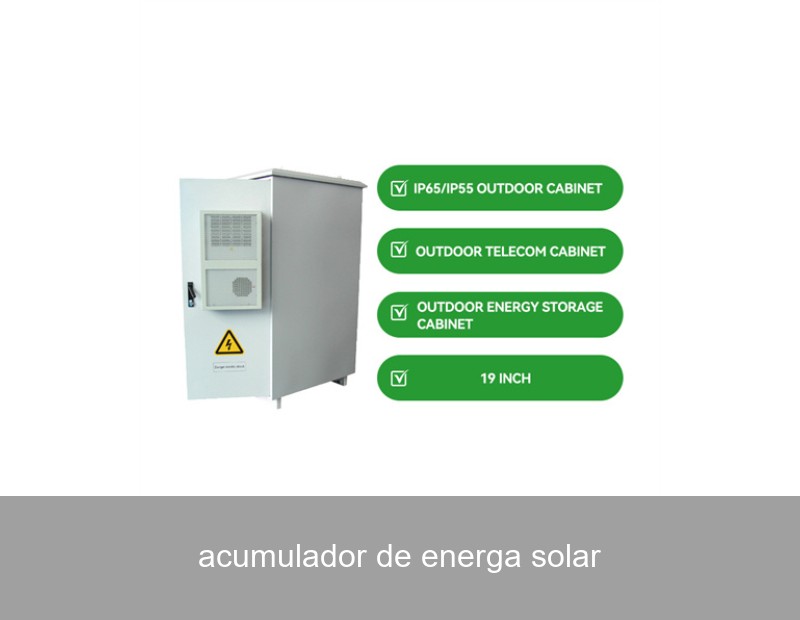
If you've invested in solar panels, you've taken a brilliant step towards cleaner energy and lower bills. But here's a question you might be grappling with: what happens when the sun goes down, or on those cloudy days? This is where the acumulador de energía solar (solar energy accumulator or battery) becomes the game-changer. It's the missing piece that transforms your solar array from a daytime contributor into a 24/7 personal power plant. Let's explore how this technology is reshaping energy consumption for homeowners and businesses across Europe and the US.
What Exactly is a Solar Energy Accumulator?
In simple terms, an acumulador de energía solar is a sophisticated battery system that stores the excess electricity your solar panels generate during the day. Instead of sending all that surplus power back to the grid (often for minimal compensation), you store it for your own use later—during the evening, at night, or during peak rate periods. Modern systems, like the Highjoule HomePower Series, are integrated units that include the battery cells, a battery management system (BMS) for safety and longevity, and an inverter that intelligently manages energy flow between your panels, battery, home, and the grid.
The Phenomenon: Why Solar Storage is No Longer Optional
For years, net metering policies made solar panels attractive by offering generous credits for excess energy. The landscape is shifting rapidly. Utilities are moving towards less favorable tariffs and reducing buy-back rates. Concurrently, electricity prices are volatile and often rising. The phenomenon? Generating your own solar power is great, but controlling it is becoming essential for economic resilience.
The Data Behind the Shift
| Factor | Impact | Storage Solution Benefit |
|---|---|---|
| Declining Net Metering Rates | In some US states, compensation dropped by 70-80% in recent years. | Store excess for self-use, avoiding low sell-back rates. |
| Rising Peak Electricity Prices | Peak rates can be 2-3x higher than off-peak in Europe. | Use stored solar power during expensive peak hours. |
| Increasing Grid Instability | More frequent extreme weather events cause power outages. | Provides backup power, ensuring essential load continuity. |
This data paints a clear picture: the true value of solar is maximized only when paired with storage. It’s the difference between being a passive participant and an active manager of your energy ecosystem.
How a Modern Solar Battery System Works: A Seamless Dance of Energy
Think of your system as a smart, automated orchestra. Here’s the typical flow:
- Step 1 (Sunshine): Solar panels generate DC electricity, which is converted to AC by an inverter for home use.
- Step 2 (Powering Your Home): This solar power is used first to run your appliances in real-time.
- Step 3 (Charging the Battery): Any excess energy, rather than flowing to the grid, charges your acumulador de energía solar.
- Step 4 (Evening & Night): As solar production falls, your system automatically draws power from the fully charged battery.
- Step 5 (Grid as Backup): Only when the battery is depleted does the system pull minimal power from the grid.
Advanced systems like Highjoule's incorporate AI-driven energy management software. This "brain" learns your consumption patterns, weather forecasts, and utility rate schedules to optimize when to charge, discharge, or even participate in grid services (where available), putting every kilowatt-hour to its most valuable use.

Image source: Unsplash (Professional photo of a home battery installation)
Key Benefits of Integrating an Acumulador
- Maximized Self-Consumption: Increase the share of your own solar power you use from ~30-50% to 70% or more, slashing grid dependence.
- Reduced Energy Bills: Avoid purchasing expensive grid power during peak evening hours by using your stored, free solar energy.
- Reliable Backup Power: Keep lights, refrigeration, and critical devices on during grid outages—a feature becoming priceless in many regions.
- Enhanced Sustainability: Truly maximize your renewable footprint by minimizing reliance on fossil-fuel-based grid power after dark.
- Future-Proofing: Prepare for electric vehicle charging and dynamic electricity pricing models.
A Real-World Case Study: A Winery in Andalusia, Spain
Let's look at a concrete example from southern Europe. A medium-sized winery in Andalusia had a 100 kWp solar installation. Despite this, their energy costs remained high because most of their energy-intensive refrigeration and bottling processes ran into the evening when solar production was zero. They were exporting vast amounts of solar energy at low feed-in tariffs only to buy it back at a premium hours later.
The Solution: They installed a Highjoule IndustrialStack system, a modular acumulador de energía solar with 200 kWh of storage capacity.
The Data-Driven Results (12 months post-installation):
- Grid Energy Consumption: Reduced by 82%.
- Self-Consumption Rate: Increased from 35% to 94%.
- Payback Period: Achieved in under 5 years due to high local electricity prices and avoided demand charges.
- CO2 Reduction: Additional 48 tonnes of CO2 saved annually by displacing grid power.
This case, typical of many commercial applications, shows that storage isn't just an add-on; it's a strategic investment that unlocks the full financial and operational potential of solar PV. For businesses, it also stabilizes operational costs and protects against energy price volatility.
Choosing the Right System for Your Home or Business
Not all accumulators are created equal. Here are key considerations:
Technology Matters
Most modern systems use Lithium Iron Phosphate (LFP) chemistry due to its superior safety, longer lifespan (typically 6,000+ cycles), and excellent thermal stability compared to older lithium-ion blends. Highjoule systems are built on LFP technology, prioritizing safety and longevity.
Capacity & Power
Capacity (kWh) is how much energy it can store. Power (kW) is how much it can deliver at once. A home running an AC unit and an EV charger needs high power. A business smoothing its daytime load needs high capacity. Scalable systems, like Highjoule's modular design, allow you to start with what you need and expand later.
Integration & Intelligence
Can the system integrate with your existing solar inverter (AC-coupled) or is it a full DC-coupled solution? A high-quality system includes sophisticated monitoring and control software, giving you insights and control via a smartphone app. Highjoule's EnergyOS platform provides this intelligent layer, making energy management effortless.

Image source: Unsplash (Residential home with solar panels)
The Future of Solar Energy Storage
The trajectory is clear. As noted by energy analysts, the future of solar is inherently linked to storage. We're moving towards decentralized, resilient energy networks where every home and business can act as a proactive node. Innovations are focusing on longer-duration storage, even more sustainable battery materials, and vehicle-to-grid (V2G) integration. The goal is a fully flexible, responsive, and citizen-driven energy system.
As a global leader founded in 2005, Highjoule is at the forefront of this transition. From our HomePower Series for residences to our robust IndustrialStack and MicroGrid Core solutions for businesses and communities, we provide the intelligent hardware and software needed to make energy independence a practical reality today.
Ready to Explore Your Potential?
The journey to true energy independence starts with a clear understanding of your own consumption patterns and solar production. What would a detailed analysis of your last 12 months of energy bills reveal about your potential savings and resilience with an acumulador de energía solar?
 Inquiry
 Online Chat