


Adaptive Relaying: The Smart Guardian for Modern Power System Protection
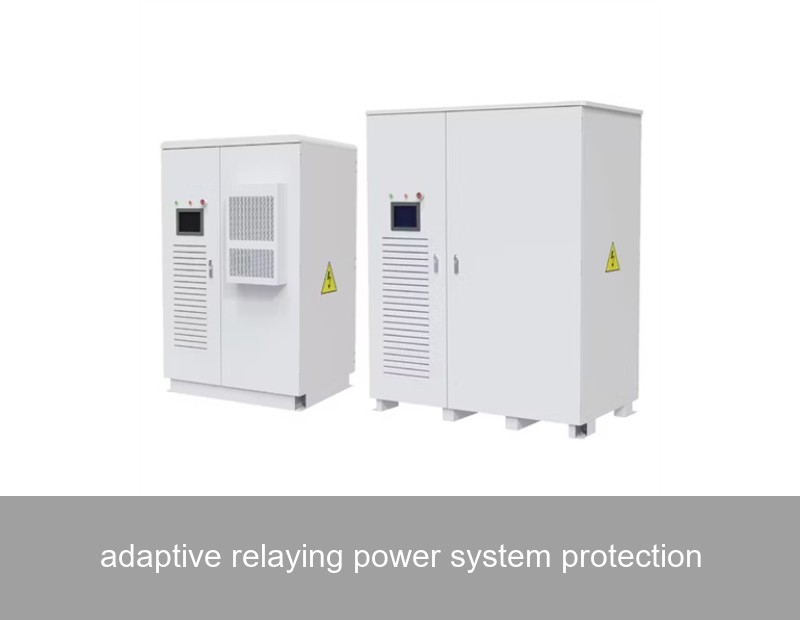
Imagine a power grid that doesn't just react to faults, but anticipates and adapts to them in real-time. As our energy landscape transforms with an influx of renewable sources like solar and wind, traditional protection systems are being pushed to their limits. This is where adaptive relaying power system protection emerges as a critical innovation. Unlike static relays with fixed settings, adaptive relays are the intelligent sentinels of the grid, dynamically adjusting their behavior based on actual system conditions. For businesses, communities, and grid operators navigating this shift, understanding this technology is key to ensuring resilience, stability, and unlocking the full potential of a clean energy future.
Table of Contents
- The Challenge: Why Static Protection Isn't Enough Anymore
- How Adaptive Relaying Works: Intelligence in Action
- Case Study: Grid Stability with High Penetration Renewables
- Highjoule's Role: Integrating Adaptive Protection with Advanced Energy Storage
- The Future Grid: A Self-Healing, Adaptive Ecosystem
The Challenge: Why Static Protection Isn't Enough Anymore
Traditional power system protection is built on a simple principle: set a relay to trip if current or voltage exceeds a predefined threshold. It's like having a guard who only knows one command—"shut the gate if you see anything unusual." This worked well for decades on predictable, one-way power flows from large central generators. However, the energy revolution has changed the game.
- Bidirectional Power Flows: Rooftop solar and behind-the-meter battery systems don't just consume power; they feed it back into the grid. This can confuse traditional protection schemes designed for single-direction current.
- Variable Generation: The output from solar farms and wind turbines fluctuates with weather. A relay set for a sunny afternoon might not operate correctly during a cloudy dusk, potentially leaving faults undetected or causing unnecessary outages.
- Microgrids & Islanding: When a microgrid (like a factory or campus with its own generation and storage) disconnects from the main grid, its electrical characteristics change instantly. Static relays cannot adapt to this new operating mode, compromising safety.
The result? A protection system that is either too sensitive (causing nuisance trips and reduced reliability) or not sensitive enough (risking equipment damage and safety hazards). According to a report by the U.S. Department of Energy, integrating high levels of inverter-based resources requires a fundamental rethinking of protection and control strategies.
How Adaptive Relaying Works: Intelligence in Action
Adaptive relaying solves these challenges by making protection schemes responsive and context-aware. Think of it as upgrading our guard with a live communications feed, real-time analytics, and the authority to change protocols on the fly.
The core process follows a continuous loop:
- Real-Time Monitoring: The relay constantly measures system parameters—current, voltage, frequency, and even power flow direction.
- Situation Assessment: Using algorithms and sometimes input from grid-wide communication systems (like IEC 61850), it identifies the current grid topology and operating state. Is the microgrid islanded? Is there a high level of solar generation right now?
- Dynamic Setting Adjustment: Based on the assessment, the relay automatically selects and applies the most appropriate protection setting group from its pre-programmed library. It essentially reconfigures itself for the task at hand.
- Precise Action: When a fault occurs, the relay acts with settings optimized for that specific moment, ensuring faster, more selective, and more reliable fault isolation.
| Feature | Traditional Relaying | Adaptive Relaying |
|---|---|---|
| Settings | Static, fixed | Dynamic, adjustable |
| Grid Awareness | Blind to topology changes | Real-time awareness of grid state |
| Response to Renewables | Can be inadequate or erroneous | Optimized for variable generation |
| Fault Response | One-size-fits-all | Context-specific and precise |
| Communication | Often standalone | Often integrated with grid comms |
Case Study: Grid Stability with High Penetration Renewables
Let's look at a real-world scenario. A regional grid in Northern Germany, with over 60% of its capacity coming from wind and solar, faced recurring protection challenges during periods of low load and high renewable output. The low short-circuit current from inverters (compared to traditional turbines) meant some faults weren't being detected quickly enough by conventional overcurrent relays.
The Adaptive Solution: Engineers implemented an adaptive protection scheme that integrated real-time data on renewable generation output. The relays were programmed with multiple setting groups. When the system entered a "high renewables, low conventional generation" state, the relays automatically switched to a more sensitive setting group and even altered their protection logic to use voltage-based elements more prominently.
The Data-Driven Result: Post-implementation analysis over one year showed a 40% reduction in undetected fault incidents during high-renewable conditions. Furthermore, the selectivity of protection improved, reducing the number of customers affected by necessary outages by an estimated 15%. This case, documented in studies by organizations like CIGRE, highlights how adaptive relaying is not just theoretical but a practical necessity for grids in transition.

Image: Modern grid infrastructure with high renewable penetration requires intelligent, adaptive protection systems. Credit: Unsplash.
Highjoule's Role: Integrating Adaptive Protection with Advanced Energy Storage
At Highjoule, we see adaptive relaying not as a standalone component, but as a vital intelligence layer within a broader, smarter energy ecosystem. Our advanced battery energy storage systems (BESS) are natural partners for this technology. Here's how we integrate these concepts:
Our HPS Series for commercial and industrial applications and the GridMax solutions for utility-scale are built with sophisticated energy management systems (EMS) that communicate seamlessly with grid control systems. This allows for a powerful synergy:
- Providing Grid-Forming Support: During a microgrid islanding event, our storage systems can rapidly form a stable voltage and frequency reference. Adaptive relays detect this new state and instantly switch to the correct protection scheme for islanded operation, ensuring continuous safety.
- Enhancing Fault Current Contribution: While inverters provide low fault current, advanced BESS can be configured to deliver controlled short-circuit current. Our systems can receive signals from adaptive protection schemes, temporarily increasing output to ensure faults are detected and cleared reliably.
- Data Exchange for Smarter Decisions: The Highjoule EMS provides real-time data on state-of-charge, power output, and system status. This rich data stream can be used by adaptive protection systems to make even more informed decisions about grid state and stability.
In essence, Highjoule's smart storage solutions provide the flexible, controllable asset that adaptive protection systems can "collaborate" with to create a more resilient and efficient grid.

Image: The heart of a modern BESS. Highjoule's solutions integrate intelligence for grid support and protection synergy. Credit: Unsplash.
The Future Grid: A Self-Healing, Adaptive Ecosystem
The evolution from static to adaptive protection is a cornerstone of the smart grid. It paves the way for fully self-healing networks that can predict, isolate, and restore power with minimal human intervention. When combined with distributed energy resources like Highjoule's storage systems, the potential grows exponentially. We are moving towards an integrated adaptive system where protection, generation, storage, and consumption all communicate and cooperate in real-time.
This is not just about preventing outages; it's about enabling a grid that can host vastly more clean energy, reduce operational costs, and provide unparalleled quality of power to end-users. The question for grid operators, project developers, and energy managers is no longer if they should consider these technologies, but how to strategically implement them.
Your Grid's Next Step
Is your organization planning a microgrid, integrating a large solar PV array, or simply concerned about maintaining power quality and reliability in the face of changing grid dynamics? How might an adaptive approach to protection unlock new value and de-risk your energy investments?
 Inquiry
 Online Chat