


The Renaissance of Renewables (And Its Hidden Challenge)
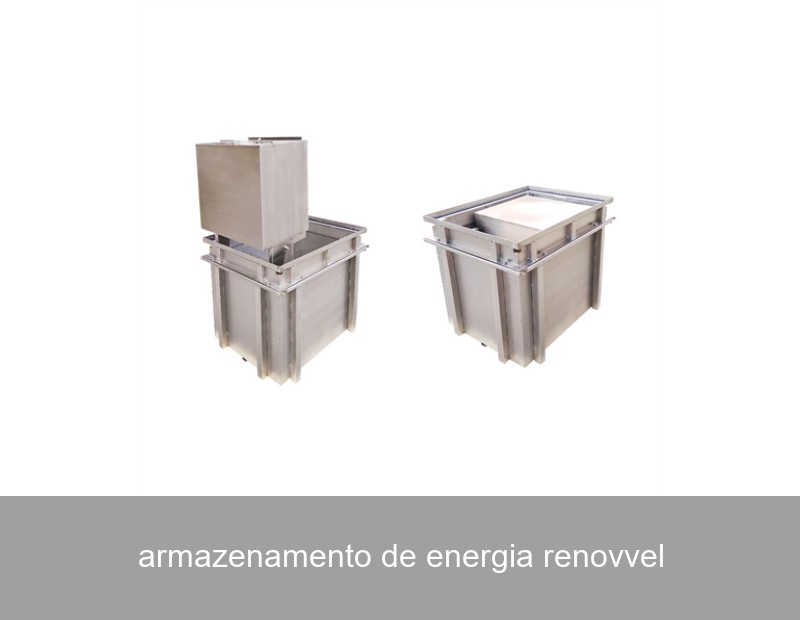
Look at the horizon—whether in sun-drenched California or wind-swept Northern Europe—and you'll see the evidence of an energy revolution. Solar panels gleam on rooftops, and wind turbines turn with serene purpose. The shift to renewable energy is no longer a niche ambition; it's a global imperative driving decarbonization and energy independence. But as any homeowner with solar panels or a grid operator managing a 40% wind-power day will tell you, there's a catch. The sun doesn't always shine, and the wind is famously fickle. This inherent intermittency is the central puzzle of our clean energy future. The solution, increasingly, isn't just about generating more green electrons—it's about capturing them for when we need them most. This is where the critical concept of armazenamento de energia renovável—renewable energy storage—comes into play, transforming solar and wind from variable resources into reliable, dispatchable power.
Beyond Generation: Why Armazenamento de Energia Renovável is the Linchpin
Think of the electrical grid as a vast, incredibly precise balancing act. For over a century, supply (power generation) was constantly adjusted to meet instantaneous demand. Fossil fuel plants provided this "dispatchable" baseload. Renewables flipped this model. Now, we have abundant power when nature provides, and potential shortfalls when it doesn't. Without a buffer, this leads to two extremes: curtailment (wasting excess renewable energy) or reliance on fossil-fuel "peaker" plants during gaps.
The data is compelling. In California, grid operators sometimes curtail over 3 GWh of solar and wind energy on a single spring day—enough to power hundreds of thousands of homes. Conversely, during the 2021 Texas winter storm, the inability to store and manage energy was starkly evident. Armazenamento de energia renovável is the technological bridge that solves this. It doesn't just store energy; it time-shifts it, enhances grid stability, and maximizes the utilization of every solar ray and gust of wind.
The Technology Landscape: From Batteries to Intelligent Systems
The term "energy storage" often conjures images of simple batteries. In reality, it's a sophisticated ecosystem of technologies, each with its role. Let's break down the key players.
Lithium-Ion: The Workhorse
Currently dominating the market, lithium-ion battery energy storage systems (BESS) are the go-to solution for rapid response and high-cycle applications. Their strengths are high energy density, fast response times (milliseconds), and modular scalability. They are ideal for:
- Frequency Regulation: Instantly injecting or absorbing power to keep grid frequency stable.
- Solar Self-Consumption: Storing daytime solar production for use at night in homes and businesses.
- Commercial & Industrial (C&I) Peak Shaving: Reducing demand charges by discharging stored energy during periods of high grid demand.
However, considerations around long-duration storage (beyond 4-6 hours), raw material sourcing, and thermal management are driving innovation beyond lithium-ion.

Credit: Photo by American Public Power Association on Unsplash. Large-scale BESS installations are key to grid stability.
Beyond Lithium-Ion
The future of armazenamento de energia renovável is diverse. Flow batteries (like vanadium redox) offer excellent longevity and are ideal for long-duration storage (8+ hours). Compressed air energy storage (CAES) and pumped hydro are large-scale, gravitational or mechanical solutions. Green hydrogen, produced via electrolysis using excess renewable energy, is emerging as a seasonal storage medium for hard-to-decarbonize sectors like heavy industry and transport.
The Brain: Energy Management Systems (EMS)
This is where hardware meets intelligence. A storage system without smart software is like a computer without an operating system. Advanced EMS uses weather forecasting, load prediction, and real-time electricity pricing data to autonomously decide when to charge, when to discharge, and at what power level. This maximizes financial return, extends battery life, and ensures the storage asset serves its primary purpose—whether it's saving money or providing backup power.
From Theory to Practice: A California Case Study in Resilience
Let's make this concrete. A major fruit processing and cold storage facility in California's Central Valley faced a triple threat: rising electricity costs, unreliable grid power that risked spoiling inventory, and corporate sustainability targets. Their 5 MW solar array produced ample daytime energy, but their critical cooling loads ran 24/7.
Their solution was an integrated armazenamento de energia renovável system. They deployed a 2.5 MW / 5 MWh lithium-ion BESS, coupled with an advanced EMS. The system was programmed to:
- Store excess solar generation each afternoon.
- Discharge during the evening "peak" period (4-9 PM), avoiding exorbitant demand charges.
- Maintain a constant "reserve" of energy to provide seamless backup power for critical cold storage during any grid outage.
The results, over the first 18 months of operation, were significant:
| Metric | Result |
|---|---|
| Annual Electricity Cost Savings | ~$280,000 |
| Demand Charge Reduction | 35% |
| Renewable Self-Consumption | Increased from 60% to over 85% |
| Backup Power Coverage | Full critical load for >4 hours |
This case, documented in part by the Southern California Edison incentive programs, exemplifies how storage moves beyond theory to deliver tangible economic and operational resilience.
The Highjoule Approach: Intelligent Storage for a Sustainable Grid
At Highjoule, with nearly two decades of experience since 2005, we've witnessed the evolution of storage from a novel idea to a grid essential. Our philosophy is that superior hardware must be married with unparalleled intelligence. Our HPS Series commercial and industrial battery storage solutions are engineered for safety, durability, and ease of integration. Built with high-cycle, automotive-grade lithium-iron-phosphate (LFP) cells, they prioritize thermal stability and long life.
But the true differentiator is the Highjoule Neuron™ EMS. This AI-driven platform doesn't just react; it predicts and optimizes. By analyzing site-specific load patterns, granular weather data, and real-time grid signals, Neuron™ autonomously manages the storage system to achieve the owner's precise goals—maximizing ROI, ensuring backup readiness, or providing grid services. For microgrid applications, our systems seamlessly island from the grid during outages, coordinating solar, storage, and generators to maintain critical operations, a solution increasingly vital for communities and industries from Portugal to Pennsylvania.

Credit: Photo by ThisisEngineering RAEng on Unsplash. Intelligent control systems are the nerve center of modern energy storage.
The Future Outlook: A Grid Powered by Predictability
The trajectory is clear. As noted by the International Energy Agency, global energy storage capacity is set to multiply exponentially this decade. This isn't just about adding more batteries; it's about building a smarter, more decentralized, and resilient energy architecture. Armazenamento de energia renovável is the enabling technology that will allow us to phase out fossil-fuel baseload, integrate ever-higher shares of wind and solar, and empower consumers to become proactive "prosumers."
The question is no longer *if* storage is needed, but *how* to implement it most effectively for your specific needs. Whether you're a factory manager looking to lock in energy costs, a municipality building a climate-resilient microgrid, or a homeowner seeking true energy independence, the strategy begins with understanding the synergy between your generation assets and the right storage solution.
What is the most critical barrier—regulatory, economic, or technological—you see to adopting large-scale renewable energy storage in your region, and what first step could change that equation?
 Inquiry
 Online Chat