


The Smart Energy Shift: Why Your Business Needs an Automated Energy Management System
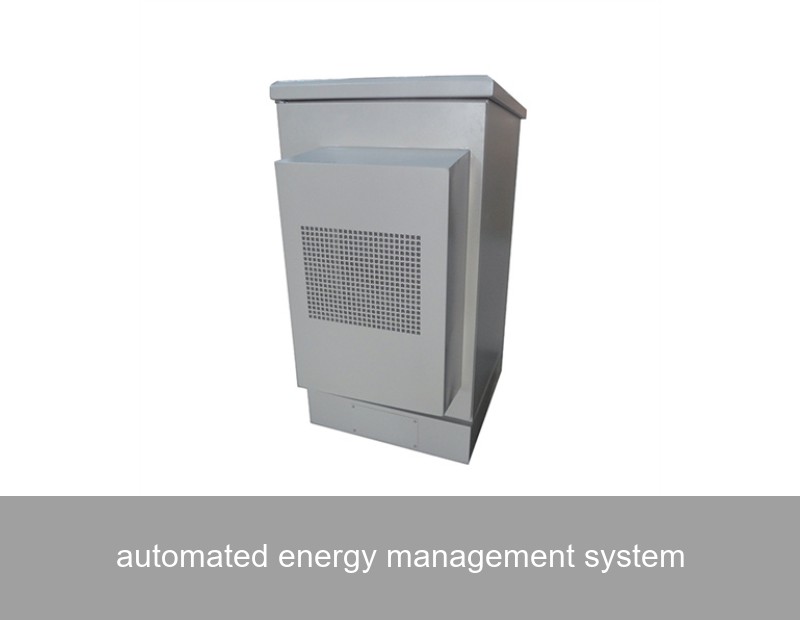
Have you looked at your commercial energy bill lately and felt a familiar pang of frustration? You're not alone. Across Europe and the US, business owners and facility managers are grappling with volatile energy prices, ambitious sustainability targets, and the complex challenge of integrating renewable sources like solar. The old way of managing power—reactively and manually—is no longer viable. The solution is a proactive, intelligent approach: the automated energy management system (AEMS). Think of it as the central nervous system for your building's energy, making real-time decisions to optimize consumption, storage, and cost, all without constant human intervention.
Table of Contents
The Problem: Energy Waste is a Silent Budget Drain
For most commercial and industrial operations, energy management is an afterthought. Lights and HVAC run on fixed schedules, oblivious to occupancy. Production machinery draws peak power from the grid even when cheaper, stored energy is available onsite. Onsite solar panels might be dumping unused energy back to the grid because there's no smart system to store it or shift loads to consume it. This operational blindness leads to three critical pains:
- Financial Loss: Paying for energy you don't need and incurring high demand charges.
- Grid Dependency: Remaining vulnerable to power outages and price spikes.
- Wasted Sustainability Potential: Failing to maximize your own renewable generation, undermining ESG goals.
This is where the paradigm shifts from passive consumption to active, automated management.
The Data: The Tangible Impact of Automation
The benefits of an AEMS aren't theoretical. Studies and real-world deployments consistently show significant returns. According to a report by the U.S. Department of Energy, systematic energy management can reduce commercial building energy use by 15-30%. Furthermore, when paired with on-site generation and storage, an AEMS can help shift over 50% of a site's load away from expensive grid peaks. The key is automation—software that continuously learns, forecasts, and executes strategies 24/7, far beyond what manual adjustments can achieve.

Image: A modern industrial site combining solar generation and battery storage, the perfect candidate for an AEMS. Source: Unsplash
How It Works: The Core Components of an AEMS
An effective Automated Energy Management System is more than just software. It's an integrated hardware and software ecosystem that performs a continuous loop of monitoring, analysis, and action.
- Sensors & Smart Meters: The eyes and ears, collecting real-time data on energy consumption from every circuit, production line, and piece of equipment.
- Energy Storage System (ESS): The heart of flexibility. A high-performance battery, like Highjoule's H-Cube Commercial ESS, stores energy from the grid or solar for use when it's most valuable.
- Control Software & AI: The brain. This platform, such as Highjoule's OptiGrid AEMS platform, analyzes data, predicts energy prices and solar production, and automatically dispatches commands.
- Actuators & Inverters: The hands. These devices execute commands, turning non-essential loads on/off or controlling the charge/discharge of the battery.
For example, our OptiGrid platform uses machine learning to understand your facility's unique patterns. It can automatically decide to charge the H-Cube battery with cheap overnight power or surplus midday solar, then discharge it to power operations during the expensive evening peak, all while ensuring operational continuity.
A Typical Day with an AEMS
| Time | Grid Price | AEMS Action | Result |
|---|---|---|---|
| 2:00 AM | Low | Charges battery from grid | Storage filled at minimum cost. |
| 10:00 AM | Medium | Powers facility from solar + battery | Minimizes grid draw during standard rates. |
| 6:00 PM | Peak (High) | Discharges battery fully, may shed non-critical loads | Avoids expensive peak demand charges. |
| Unexpected Outage | N/A | Instantly island the facility, powering critical loads from battery | Business continuity maintained. |
A Real-World Case: Manufacturing in Germany
Let's make this concrete. A mid-sized automotive parts manufacturer near Stuttgart, Germany, faced a dual challenge: rising energy costs accounting for nearly 18% of operational overhead, and corporate pressure to reduce carbon footprint. They had a 500 kW rooftop solar array, but much of its midday output was underutilized.
In 2022, they partnered with Highjoule to implement a turnkey solution: a 400 kWh H-Cube battery storage system integrated with their existing solar, all managed by our OptiGrid AEMS. The system was configured for peak shaving, self-consumption optimization, and backup power for critical assembly lines.
- 30% reduction in overall energy costs.
- Increase in solar self-consumption from 35% to over 80%.
- Payback period of under 5 years, factoring in German subsidy programs.
- Seamless ride-through during two brief grid disturbances, preventing an estimated €200,000 in production line stoppage.
This case, typical of our deployments in the DACH region and beyond, shows that an AEMS delivers both immediate financial returns and long-term strategic resilience.

Image: Centralized control and monitoring are key to automated energy management. Source: Unsplash
Beyond Savings: The Strategic Advantages
While cost reduction is the primary driver, the value of an AEMS extends much further:
Enhanced Sustainability & ESG Reporting
By maximizing green self-consumption and providing precise carbon footprint data, our systems help companies meet stringent reporting requirements and corporate sustainability goals.
Grid Services & New Revenue Streams
In some markets, aggregated AEMS-controlled batteries can participate in grid services like frequency regulation. Highjoule's platform can enable this, potentially creating a new revenue stream for your business.
Future-Proofing Your Investment
As you add more electric vehicle chargers or expand production, the AEMS seamlessly scales and optimizes these new loads. It's the foundation for a truly flexible, modern energy infrastructure.
Choosing the Right Partner for Your Energy Transition
Implementing an automated energy management system is a significant step. Success hinges on choosing a partner with deep expertise in both the hardware and the intelligence that drives it. Since 2005, Highjoule has been at the forefront of this transition. We don't just sell batteries; we provide intelligent, integrated power solutions.
Our approach is consultative. We start by analyzing your energy profile, goals, and local market regulations. We then design a system combining our robust, UL/Certified H-Cube ESS with our proprietary OptiGrid AEMS software, ensuring seamless integration with your existing infrastructure, be it solar, wind, or the grid. Our services include ongoing monitoring, support, and software updates to ensure your system delivers value for decades.
In a world of energy uncertainty, the question isn't whether you can afford to invest in smart energy management—it's whether you can afford not to. How will your business navigate the next price spike or grid event?
 Inquiry
 Online Chat