


Autosolar Energía de Colombia S.A.S. and the Power of Uninterrupted Solar Energy
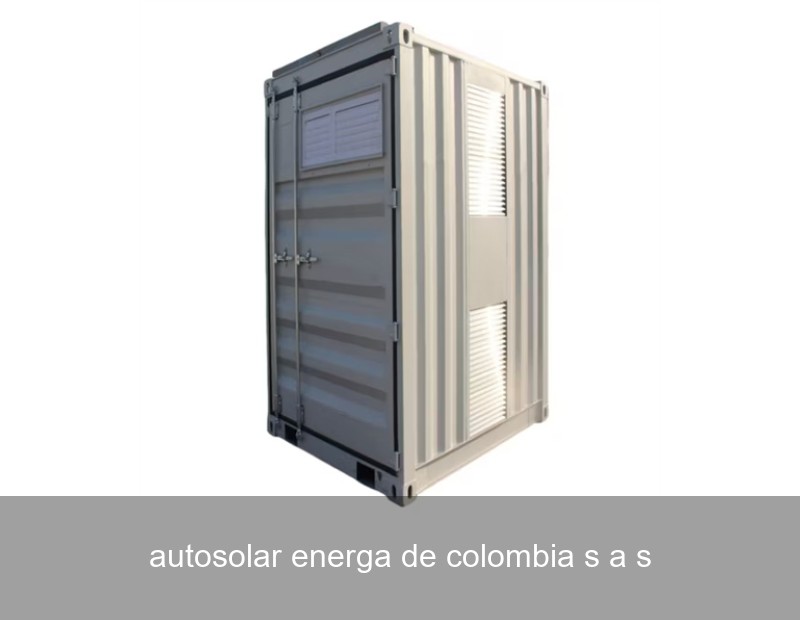
If you're involved in Colombia's booming renewable sector, you've likely heard the name Autosolar Energía de Colombia S.A.S. This dynamic company is at the forefront of a significant shift, bringing solar power to businesses, industries, and communities across the country. But here's a question we often hear from project developers and energy managers: "The sun is plentiful, but it isn't always shining. How do we deliver reliable, 24/7 clean energy?" This is precisely where the story evolves from simple solar installation to intelligent, resilient energy management. The synergy between solar pioneers like Autosolar and advanced Battery Energy Storage Systems (BESS) is unlocking a new era of energy independence and economic efficiency for Colombia.
The Challenge: Intermittency and Grid Reliability
Solar energy presents a beautiful paradox: it's abundant yet unpredictable. For a company like Autosolar Energía de Colombia S.A.S., the core mission extends beyond installing panels. It's about providing dependable power. The inherent intermittency of solar—production dropping at night, during cloudy weather, or peak grid congestion—poses a real challenge for end-users who need constant power for operations.
Let's look at the data. Colombia's national grid, while improving, can experience instability and costly demand charges during peak periods. A commercial facility powered solely by solar might see its energy costs spike when forced to draw from the grid at the most expensive times. This variability doesn't just affect the bottom line; it can impact manufacturing quality, data center uptime, and essential services. The true goal, therefore, isn't just solar generation; it's solar utilization.
The Solution: Advanced Energy Storage Systems (ESS)
This is where the magic of storage comes in. Think of a Battery Energy Storage System as a "energy bank" for your solar array. Instead of sending all excess midday solar production to the grid (often at a low feed-in tariff), you store it locally in high-capacity batteries. This stored energy becomes a strategic reserve you can deploy on command.
- Energy Time-Shifting: Use cheap, stored solar energy during expensive peak evening hours.
- Backup Power: Provide seamless power during grid outages, ensuring business continuity.
- Grid Services: For larger projects, support grid stability through frequency regulation.
- Maximized Self-Consumption: Dramatically increase the percentage of your own solar energy used on-site.
For an integrator like Autosolar, offering a combined solar-plus-storage solution transforms their value proposition from a component supplier to a comprehensive power resilience partner.
A Colombian Success Story: From Sunlight to 24/7 Power
Consider a real-world application in the Colombian agro-industrial sector. A medium-sized coffee processor partnered with a solar integrator (like Autosolar) to reduce energy costs. They installed a 500 kWp solar rooftop system. While daytime operations ran largely on solar, their evening shift for packaging and cooling relied entirely on the grid, incurring high tariffs.
The solution was integrating a 1 MWh battery storage system. Here’s the impact:
| Metric | Before Storage | After Storage |
|---|---|---|
| Grid Energy Draw During Peak Hours | ~80% of evening needs | Less than 10% |
| Overall Energy Cost Savings | ~25% (from solar alone) | ~65% (solar + storage) |
| System Self-Consumption Rate | ~60% | Over 95% |
This data illustrates the transformative leap. The storage system was programmed to charge fully from the solar surplus and discharge strategically during the 6 PM to 10 PM peak window. The result was lower costs, greater control, and a stronger competitive edge for the processor—a compelling case for any business in Colombia's regions.

Image Source: Unsplash (Representative image of commercial solar installation)
Inside the Tech: What Makes a Modern BESS Work?
You might wonder what's inside these powerful systems. A modern BESS is far more than just batteries. It's an integrated suite of intelligent components:
- Battery Cells: Typically Lithium Iron Phosphate (LFP) chemistry, chosen for safety, long life (often 6,000+ cycles), and stability.
- Battery Management System (BMS): The "brain" of the battery pack, ensuring every cell operates safely and efficiently within its optimal range.
- Power Conversion System (PCS): The critical component that converts DC battery power to AC power for your building (and vice-versa for charging).
- Energy Management System (EMS): The top-level intelligence. This software platform forecasts solar production and energy demand, then makes economic decisions on when to charge, discharge, or idle to maximize your financial returns.
This technological orchestration is key. A high-quality EMS, for instance, can analyze weather forecasts and historical usage patterns to ensure the battery is optimally prepared for a cloudy tomorrow or a week of high production.
Highjoule's Role in Empowering Solar Projects
This is where a global leader like Highjoule becomes a pivotal partner for forward-thinking integrators and developers. Since 2005, Highjoule has been designing and manufacturing advanced, containerized and modular battery storage solutions specifically engineered for commercial, industrial, and microgrid applications. For a project involving a company like Autosolar Energía de Colombia S.A.S., Highjoule provides the robust, reliable storage backbone.
Our HPS Series of containerized BESS offers a pre-integrated, plug-and-play solution. It arrives on-site with all components—battery racks, PCS, cooling, fire suppression, and our proprietary JouleMind™ EMS—fully tested and housed within a secure, weatherproof container. This drastically reduces on-site integration complexity and time for partners.

Image Source: Unsplash (Representative image of energy storage system monitoring)
For a solar integrator, this means they can focus on their core strength—the solar PV system and client relationship—while leveraging Highjoule's deep storage expertise and certified, bankable technology. Our systems are designed for the varied climates found across Colombia and are compliant with international safety standards, a critical factor for project financing and insurance. We empower our partners to deliver a complete, high-performance clean energy package with confidence.
The Future of Solar + Storage in Latin America
The trajectory is clear. As battery costs continue to decline and software intelligence grows, solar-plus-storage will move from a premium option to the standard for commercial and industrial power. Markets in Europe and the U.S. are already demonstrating this, with governments actively incentivizing storage deployments. Latin America, with its fantastic solar resources and growing focus on energy security, is poised for similar growth.
Colombia, in particular, presents a fertile ground. With supportive policies and a growing recognition of storage's value beyond backup, the opportunity for companies driving this change is immense. The question for energy-intensive businesses is no longer "Should we go solar?" but rather "How can we make our solar work smarter and harder for us every hour of the day?"
For solar integrators and project developers, the next step is clear: mastering the storage conversation. What specific energy consumption profile of your next client would benefit most from a tailored solar-and-storage audit?
 Inquiry
 Online Chat