


Beyond the Sticker Shock: Understanding the True Average Cost of Solar Panels
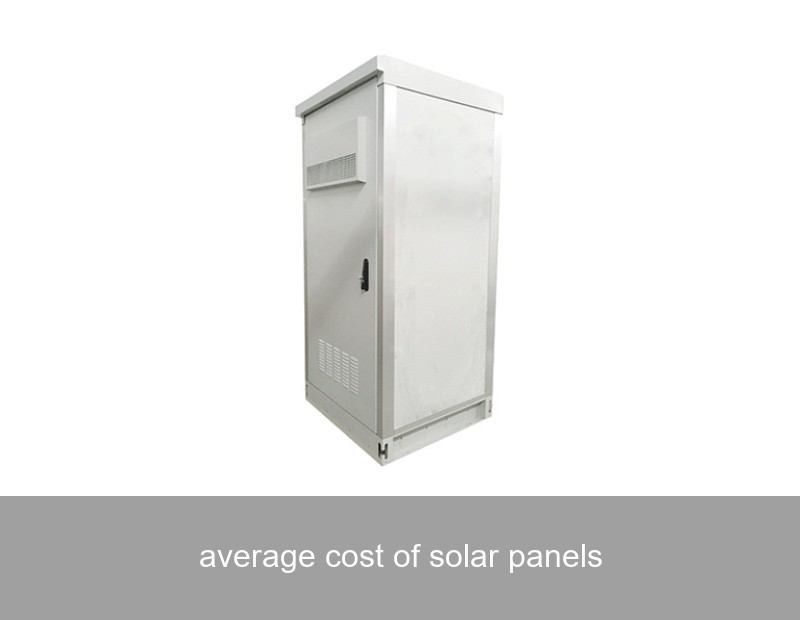
So, you're considering solar. You've heard it's good for the planet and your wallet, but the first question that pops up is almost always: "What's the average cost of solar panels?" It's a smart starting point, but here's the thing – focusing solely on that per-panel or per-watt figure is like buying a car based only on the engine price, ignoring the transmission, wheels, and, crucially, the fuel efficiency. The real story of solar affordability is a dynamic blend of declining hardware costs, location-specific incentives, and a revolutionary component that turns solar from a simple utility bill reducer into a robust energy asset: intelligent storage.
Breaking Down the Average Cost of Solar Panels: Hardware vs. "Soft Costs"
In the United States, the average gross cost for a residential solar panel system hovers around $20,000 to $30,000 before incentives, translating roughly to $2.50 to $3.50 per watt. In Europe, prices vary significantly by country but often fall within a similar range after currency and market adjustments. But what does this price tag actually include? Let's dissect it.
- Hardware (The Physical System): This includes the solar panels themselves, inverters (which convert DC solar energy to usable AC power), racking, and wiring. Good news – this segment's cost has plummeted over 80% in the last decade.
- Soft Costs (The Invisible Engine): This is where the bulk of your investment often goes. It encompasses permits, inspections, interconnection fees, installer labor, sales, and marketing. Streamlining these processes is key to making solar more accessible.
- The Game-Changer: Energy Storage: While not always included in the "average" solar quote, adding a battery storage system is becoming a standard recommendation. Why? Because it fundamentally changes your energy economics and resilience.
Image Source: Unsplash (Representative image of a residential solar installation)
Key Factors Influencing Your Final Solar Panel System Price
Your specific quote will dance around that national average based on several personal and regional factors. Understanding these puts you in the driver's seat.
| Factor | Impact on Cost | Why It Matters |
|---|---|---|
| System Size (kW) | Directly proportional | Larger systems to cover high energy use have a higher upfront cost but often a lower cost per watt and greater long-term savings. |
| Your Location | High impact | Local sunlight hours dictate system efficiency. Local labor rates, permitting hurdles, and available state/incentives drastically alter the net price. For instance, the Federal Solar Tax Credit (ITC) in the U.S. offers a 30% deduction. |
| Panel & Inverter Quality | Moderate impact | High-efficiency panels or microinverters may cost more upfront but can generate more power in limited space and offer better long-term reliability. |
| Roof Complexity | Moderate impact | Simple, strong, south-facing roofs are easiest and cheapest. Tile roofs or those with multiple angles require more labor and specialized hardware. |
From Cost to Investment: A Real-World Case Study in California
Let's move from theory to practice. Consider a typical 8 kW residential system in Sacramento, California. The gross cost might be around $24,000 ($3.00/watt). After applying the 30% federal tax credit, the net investment drops to $16,800. Given Sacramento's excellent sun exposure and high utility rates (often over $0.30/kWh), such a system can produce around 12,000 kWh annually.
The Math: 12,000 kWh * $0.30/kWh = $3,600 in annual electricity savings. This means the system pays for itself in under 5 years. Over its 25+ year lifespan, the net savings are substantial, not even accounting for rising utility costs. This case highlights that the true metric isn't just the average cost of solar panels, but the cost per kilowatt-hour generated over the system's life – which is often far below grid rates.
Maximizing Your Investment: The Critical Role of Energy Storage
Here's where the narrative evolves. Solar panels generate power only during the day, but energy demand often peaks in the early morning and evening. Without storage, excess solar energy is often sold back to the grid at a lower rate than you buy it for (through net metering policies that are changing). This is where partnering with an expert like Highjoule becomes transformative.
Highjoule doesn't just see solar panels; we see an integrated energy ecosystem. By coupling your solar array with a Highjoule IntelliBESS (Battery Energy Storage System), you capture that midday surplus and store it for use when the sun isn't shining. This dramatically increases your self-consumption rate – the portion of your solar energy you use directly – from a typical 30-50% to 70% or more.
For our California homeowner, adding a Highjoule 10 kWh battery might increase the initial system cost but delivers profound benefits:
- Energy Independence: Power through grid outages, keeping lights and refrigerators on.
- Bill Maximization: Avoid drawing expensive peak-hour grid power, effectively "time-shifting" your solar energy.
- Grid Support: Advanced systems can participate in utility demand response programs, generating revenue.

Image Source: Unsplash (Representative image of a home battery installation)
Highjoule's solutions, built on nearly two decades of innovation since 2005, are designed for this integrated future. Our H-Series commercial storage systems and HomePower residential units feature intelligent energy management software that learns your usage patterns and optimizes every kilowatt-hour, ensuring you get the maximum financial and operational return from your combined solar and storage investment. You're not just buying a battery; you're investing in an intelligent energy partner.
Is Your Property Ready for a True Energy Transformation?
The conversation about the average cost of solar panels is merely the opening chapter. The complete story is about building a resilient, cost-effective, and sustainable energy system for your home or business. It's about moving from being a passive consumer to an active energy manager.
So, the pivotal question isn't just "What do solar panels cost?" The more empowering questions are: What is the total value of energy independence for you? How much could you save by intelligently storing and managing every watt your solar panels produce? And what would it mean to have a power solution that protects your operations or family life from the increasing volatility of the grid?
The landscape of power is changing. Are you ready to build your own?
 Inquiry
 Online Chat