


Balkonsolar mit Speicher: Unlock the Full Potential of Your Balcony Power Plant
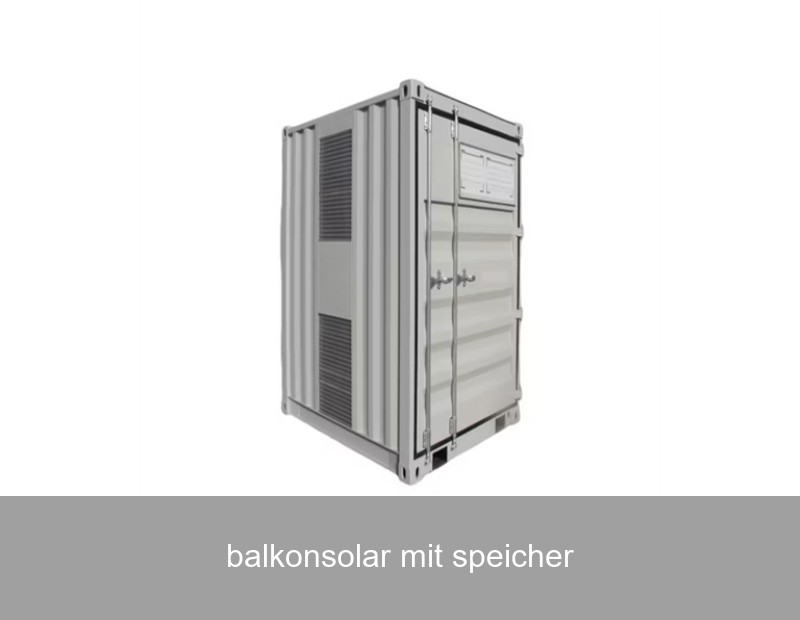
Imagine this: your balcony is not just a space for morning coffee, but a miniature power station. The sun is shining, your plug-in solar panels are humming along, generating clean electricity. But then, you head to work, and that precious energy flows into the grid because your home doesn't need it at that moment. This is the common story for many balcony solar (Balkonsolar) owners. But what if you could capture that sunshine for your evening movie night? That's where Balkonsolar mit Speicher—balcony solar with storage—transforms a great idea into a game-changing energy solution.
The Phenomenon: The Rise of Balcony Power Plants
Across Europe and the U.S., a quiet energy revolution is taking place on balconies, terraces, and small outdoor spaces. Driven by rising electricity costs, climate awareness, and supportive regulations like Germany's simplified registration for "steckerfertige Erzeugungsanlagen" (plug-ready solar devices), consumers are embracing Balkonsolar. These plug-and-play systems, typically ranging from 300 to 800 watts, democratize solar energy for renters and homeowners alike. They are a brilliant first step toward personal energy production. However, they share a fundamental characteristic with larger solar installations: peak production often misaligns with peak consumption. This mismatch leads to what experts call the "curtailment dilemma"—you generate clean power when you can't use it.

Image: A typical balcony solar setup. Source: Unsplash
The Data: Why Generation Without Storage is Incomplete
Let's look at the numbers. A standard 600-watt balcony system in southern Germany might produce around 450-550 kWh per year. Without storage, a typical household with daytime energy consumption patterns might only directly use 30-40% of that energy. The rest is fed into the grid, often for minimal financial compensation (feed-in tariffs are now a fraction of retail electricity prices).
| Scenario | Annual Solar Yield (600W System) | Estimated Direct Self-Consumption | Potential with Storage (Est.) |
|---|---|---|---|
| Balkonsolar Only | ~500 kWh | 150-200 kWh (30-40%) | -- |
| Balkonsolar mit Speicher | ~500 kWh | 350-450 kWh (70-90%) | +200-250 kWh usable energy |
This data illustrates the core value proposition of adding storage. It's not about generating more energy; it's about using more of what you already generate. By shifting your solar energy from day to night, you avoid buying expensive grid electricity during evening peaks. According to the Fraunhofer Institute for Solar Energy Systems ISE, increasing self-consumption is the most economically rational step for decentralized solar producers, especially as battery costs continue to decline.
The Case Study: Maximizing Self-Consumption in Berlin
Consider the real-world example of the Müller family in Berlin-Pankow. In 2022, they installed a 800-watt Balkonsolar system on their south-facing balcony. Enthusiastic at first, they soon grew frustrated seeing their energy app show high export rates while their electricity bill remained stubbornly high.
In early 2023, they decided to integrate a storage solution. They chose a compact, wall-mountable lithium iron phosphate (LiFePO4) battery system with a usable capacity of 1.2 kWh, paired with a hybrid inverter that manages both the panels and the battery. The results after one year were compelling:
- Solar Self-Consumption Rate: Increased from 38% to 88%.
- Grid Electricity Purchases: Reduced by an additional 22% annually, on top of the initial savings from the panels alone.
- Financial Payback: The combined system's payback period is projected to be under 7 years, significantly better than panels alone in their low-feed-in-tariff context.
- Energy Resilience: The system provides backup power for their router and essential lights during two short grid outages.
"The storage unit was the missing piece," said Mr. Müller. "Now, we truly feel in control of our energy. The power our balcony generates in the afternoon runs our lights and TV in the evening. It's a simple, satisfying closed loop."
The Solution: Intelligent Storage for Modern Balkonsolar
So, what does an effective Balkonsolar mit Speicher system look like? It's more than just connecting a battery. It requires intelligent energy management that prioritizes your home's consumption, safely stores excess energy, and delivers it precisely when needed.
This is where expertise in advanced battery systems becomes critical. At Highjoule, with nearly two decades of experience in commercial, industrial, and residential storage, we understand the precise engineering required for safe, efficient, and long-lasting energy storage. While our flagship products often power larger microgrids and businesses, the core technology principles—safety, longevity, and smart management—directly inform the solutions needed for the Balkonsolar market.
For the savvy consumer or installer looking to build a robust balcony solar-plus-storage system, here are the key components to seek:
- High-Safety Battery Chemistry: LiFePO4 (LFP) batteries are the gold standard for home storage due to their thermal stability, long cycle life (often 6000+ cycles), and absence of critical raw materials like cobalt.
- Integrated Energy Management System (EMS): A smart inverter or controller that acts as the brain, deciding when to charge the battery, power your home, or—if necessary—feed to the grid.
- Scalability: The ability to start with a modest storage capacity (e.g., 1-2 kWh) and potentially expand as needs or regulations change.
- Grid-Compliant Safety: Essential certifications (like VDE-AR-E 2510-50 in Germany or UL 9540 in the U.S.) ensure safe anti-islanding protection and grid interaction.
Highjoule's research in modular, safe battery architecture directly supports the evolution of these plug-and-play storage solutions. We believe that intelligent storage, whether for a 10 MWh industrial site or a 1 kWh balcony system, is the indispensable key to unlocking true energy independence and maximizing the return on every solar investment.

Image: A modern, wall-mounted home battery storage unit. Source: Unsplash
Navigating Regulations and Installation
A crucial question for many is: "Is adding storage to my Balkonsolar complicated?" The regulatory landscape is evolving positively. In many European countries, adding a storage unit to a registered plug-in solar system often requires only a notification to the grid operator and a certified electrician to ensure safe wiring. The U.S. market varies by state, but many jurisdictions treat battery storage as a permitted appliance, especially when paired with AC-coupled systems. Always consult a local professional, but know that the process is becoming increasingly streamlined.
The Future: Your Energy Independence, One Balcony at a Time
The journey from a simple balcony power plant to a comprehensive Balkonsolar mit Speicher system represents a maturation of personal energy strategy. It moves from participation to optimization, from contribution to resilience. As battery technology advances and energy markets continue to incentivize self-consumption, this combination will become the norm, not the exception.
We at Highjoule are passionate about this future. Our work in providing large-scale, intelligent storage solutions teaches us daily about the importance of reliability and smart energy flows—principles that are just as vital for a single household as for a factory. The transition to renewable energy is built on millions of decentralized decisions, and your balcony can be a powerful part of that story.
What will your next energy bill look like if you could use 80% of the sun's power captured on your balcony, instead of just 30%?
 Inquiry
 Online Chat