


Understanding Bateria Litio Ciclo Profundo: The Heart of Modern Energy Independence
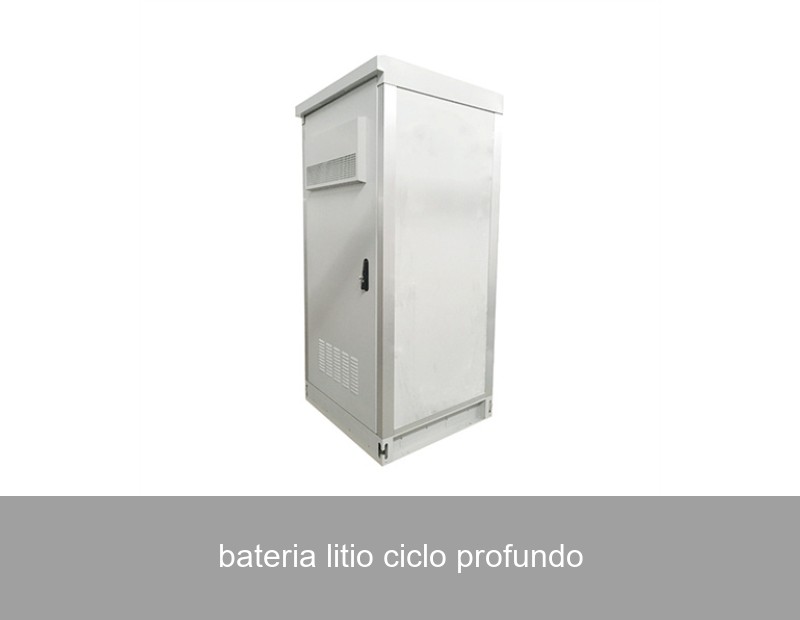
If you're exploring solar for your home, designing an off-grid cabin, or managing a business vulnerable to power fluctuations, you've likely encountered the term "bateria litio ciclo profundo" or its English counterpart, deep cycle lithium battery. But what exactly sets it apart from the battery in your car or phone? Simply put, it's the workhorse of energy storage, engineered to be regularly drained down to a significant portion of its capacity and recharged, day in and day out, for years. Unlike starter batteries that deliver a short, high burst of energy, a true deep cycle battery provides steady, reliable power over a long period—a fundamental shift that is enabling our renewable energy future.
This shift is palpable. As homeowners and businesses across Europe and the U.S. seek resilience and sustainability, the demand for robust energy storage has skyrocketed. The global market for energy storage is set to expand dramatically, with lithium-ion technology leading the charge. But not all lithium batteries are created equal for the demanding duty cycle of storing solar energy or backing up critical operations. That's where the specific engineering of a deep cycle lithium battery becomes critical.
Why Lithium? The Chemistry of Depth and Durability
Traditional deep-cycle lead-acid batteries have been around for decades. So, why the rapid transition to lithium? The advantages boil down to depth, longevity, and intelligence.
- True Depth of Discharge (DoD): A quality lead-acid battery might tolerate a 50% DoD regularly. Push it further, and its life shortens drastically. In contrast, a bateria litio ciclo profundo from advanced providers like Highjoule is designed to routinely discharge to 90% or more of its capacity. This means you can use almost all the energy you've stored without harming the battery.
- Cycle Life: The Longevity Champion: This is where the numbers speak volumes. A lead-acid battery may offer 500-1,000 deep cycles. Modern lithium iron phosphate (LiFePO4) batteries, the chemistry favored for stationary storage due to its safety and cycle life, can deliver 6,000 cycles or more while retaining 80% of original capacity. Over a 15-20 year lifespan, this translates to vastly lower cost per cycle.
- Efficiency & Space: Lithium batteries charge faster and have round-trip efficiency exceeding 95%, meaning less solar energy is wasted as heat. They also pack more energy into a smaller, lighter footprint.
At Highjoule, we've built our reputation on leveraging these advantages. Our H-Series residential and commercial battery systems utilize premium LiFePO4 cells specifically engineered for deep cycle applications. Coupled with our integrated energy management system, they don't just store energy; they optimize its use, learning your consumption patterns to maximize self-consumption of solar power and provide seamless backup during outages.

Image: A compact, modern deep-cycle lithium battery installation, similar to Highjoule's H-Series, seamlessly integrating into a home. Source: Unsplash
Beyond Theory: Real-World Performance & Data
The theoretical benefits are compelling, but real-world data confirms the revolution. According to a 2023 NREL report, the levelized cost of storage (LCOS) for lithium-ion systems has fallen by over 70% since 2015, driven largely by improved cycle life and performance. In practice, this means:
| Performance Factor | Advanced Lead-Acid | Deep Cycle LiFePO4 (e.g., Highjoule H-Series) |
|---|---|---|
| Usable Depth of Discharge | ~50% | >90% |
| Cycle Life (to 80% capacity) | 1,000 - 1,500 | 6,000+ |
| Round-Trip Efficiency | ~80% | >95% |
| 10-year Total Cost of Ownership | Higher (frequent replacement) | Significantly Lower |
Case Study: Powering a Sustainable Dairy Farm in Bavaria, Germany
Let's look at a concrete example from our European operations. A medium-sized dairy farm in Bavaria faced two challenges: volatile energy costs and a critical need for uninterrupted power for milking systems and refrigeration. Their existing lead-acid battery bank (200 kWh) was bulky, required constant maintenance, and only provided reliable backup for a few hours.
The farm partnered with Highjoule to deploy a 150 kWh Highjoule C-IQ Industrial System, a modular bateria litio ciclo profundo solution designed for demanding commercial applications. The results after 18 months:
- Energy Independence: The system, coupled with their existing solar array, now provides 92% of their daily energy needs, up from 65%.
- Reliability: During a 14-hour grid outage, the system powered all critical loads seamlessly, preventing spoilage of thousands of liters of milk.
- Financial Return: By arbitraging energy (charging from solar, discharging during peak rates) and avoiding generator fuel, the project achieved a payback period of under 5 years. The farm manager noted, "The peace of mind and the predictable energy budget are as valuable as the direct savings."

Image: Renewable energy for agriculture, a key application for deep cycle storage. Source: Unsplash
Choosing the Right Deep Cycle Battery System for Your Needs
Selecting a deep cycle lithium battery isn't just about buying cells; it's about investing in an integrated power solution. Here are key considerations:
- Chemistry: Insist on LiFePO4 for safety, longevity, and true deep cycle capability.
- Integrated Management: A superior Battery Management System (BMS) is non-negotiable. It protects the battery, balances cells, and ensures optimal performance. Highjoule's Adaptive BMS includes real-time monitoring and predictive analytics accessible via a user-friendly app.
- Scalability & Warranty: Can the system grow with your needs? Does the warranty back the promised cycle life? Highjoule systems are modular and come with a robust 10-year warranty that guarantees both capacity retention and cycle count.
- Grid Services & Software: For commercial users, advanced systems can participate in grid-balancing programs for additional revenue. Our GridSync software platform enables this functionality where available.
The Future of Deep Cycle Energy Storage
The evolution of the bateria litio ciclo profundo continues. We are researching advancements in solid-state electrolytes and cell design to push cycle life beyond 10,000 cycles. Furthermore, the integration of artificial intelligence for energy forecasting and system optimization is transforming batteries from passive storage units into active, intelligent nodes within a smarter grid. The goal is a system that not only stores energy but also autonomously manages the complete energy ecosystem of a home, business, or community microgrid.
As you contemplate energy resilience, what specific energy challenge—be it unpredictable bills, frequent outages, or a commitment to a lower carbon footprint—is driving you to consider a deep-cycle storage solution today?
 Inquiry
 Online Chat