


Batterie 15 kWh: How Much Does It Cost and What's the Real Value?
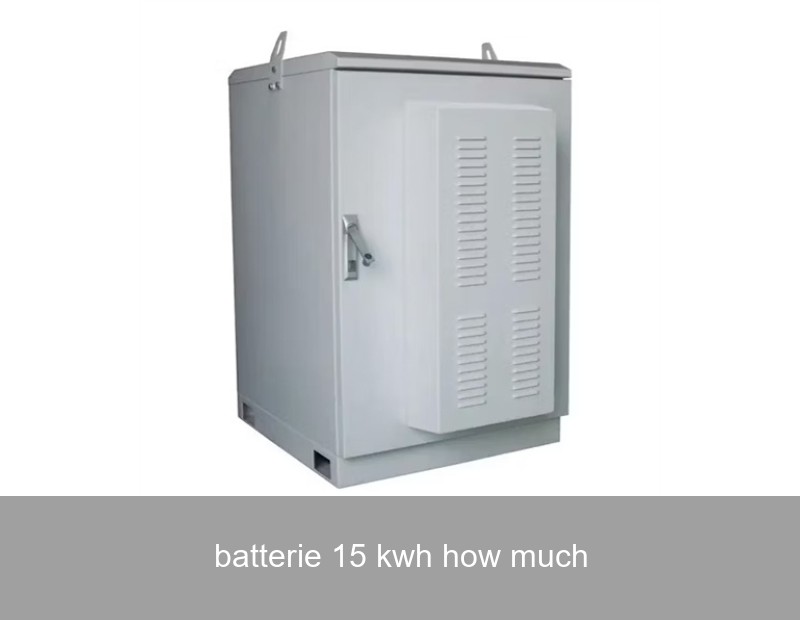
You've likely heard your neighbors talk about their solar panels, or seen the news about rising electricity prices. It's no wonder you're here, searching for "batterie 15 kWh how much?" That's a smart first question. But the true cost of a 15 kWh battery system isn't just a number on a price tag. It's an investment in energy independence, resilience, and long-term savings. Let's unpack the real value behind the price and explore how modern energy storage, like the solutions from Highjoule, is transforming how homes and businesses use power.
Table of Contents
The Price Breakdown: What Makes Up the Cost?
When you ask "batterie 15 kWh how much?", you're typically quoted for a complete energy storage system (ESS), not just the battery cells. Think of it like buying a car; you pay for the engine, safety features, interior, and brand engineering. For a 15 kWh system, the total cost generally ranges between $10,000 and $20,000 before incentives, depending heavily on your location, components, and installation complexity. Here’s what that investment covers:
| Cost Component | Description | Approx. Share of Cost |
|---|---|---|
| Battery Modules & Enclosure | The core 15 kWh lithium-ion (often LFP) battery cells, thermal management, and housing. | 40-50% |
| Hybrid Inverter or Power Conversion System (PCS) | The "brain" that converts DC from solar/battery to AC for your home and manages energy flow. | 20-30% |
| Professional Installation & Labor | Electrical work, permitting, system design, and commissioning by certified technicians. | 15-25% |
| Balance of System (BOS) | Wiring, safety disconnects, monitoring hardware, and mounting equipment. | 5-10% |
It's crucial to get detailed quotes that separate hardware from "soft costs" like labor. This transparency helps you compare offers and understand where your money is going.
Key Factors Influencing Your 15 kWh Battery Price
Why such a wide price range? Several factors come into play:
- Battery Chemistry: Lithium Iron Phosphate (LFP) is now the industry standard for residential storage due to its superior safety, longer lifespan (6,000+ cycles), and excellent thermal stability. While sometimes slightly more expensive upfront than older NMC chemistries, LFP's longevity offers better value over time.
- System Integration: Are you adding storage to existing solar (AC-coupled) or installing a completely new solar-plus-storage system (DC-coupled)? DC-coupled systems can be more efficient and sometimes more cost-effective for new installations.
- Inverter Capabilities: A capable hybrid inverter is non-negotiable. It should handle peak loads, allow for seamless backup power during outages, and be grid-responsive. This is where companies with deep expertise, like Highjoule, differentiate themselves. Our H-Stack Modular ESS features a built-in high-voltage hybrid inverter designed for scalability and intelligent energy management, ensuring you get the most from every kilowatt-hour stored.
- Installation Complexity: Electrical panel upgrades, long cable runs, or complex mounting can add to the cost.
- Local Incentives: This is a huge one. In the U.S., the federal Investment Tax Credit (ITC) now covers 30% of the cost of a qualifying battery installation, even if it's not paired with solar (source: U.S. Department of Energy). Many European countries and individual utilities also offer rebates and grants.

Image: Professional installation is key to system safety and performance. Source: Unsplash
Looking Beyond Price: Performance & Intelligence
Focusing solely on "batterie 15 kWh how much" can lead you to overlook critical performance metrics. Two batteries with the same 15 kWh capacity can deliver vastly different experiences.
- Usable Capacity: Some systems quote total capacity but have a lower "usable" amount to preserve battery health. Ensure you're comparing usable kWh.
- Power Rating (kW): How much power can the battery deliver at once? A 15 kWh battery with a 5 kW continuous power rating might struggle to start a well pump and air conditioner simultaneously. Highjoule's systems are engineered for high power output, ensuring your essential loads run smoothly during an outage.
- Round-Trip Efficiency: This percentage tells you how much energy you get back out versus what you put in. A 90%+ efficiency rating means less energy is lost as heat during charging and discharging.
- Smart Software: This is the true game-changer. An intelligent system can learn your consumption patterns, automatically switch to backup power in milliseconds, and optimize for time-of-use rates. For instance, it can store cheap solar or off-peak grid energy to power your home during expensive peak hours.
A Real-World Case: The Schmidt Family Farm, Bavaria, Germany
Let's move from theory to practice. The Schmidt family runs a mid-sized dairy farm with high and fluctuating energy demands for cooling, ventilation, and machinery. Their existing 25 kW rooftop solar system was exporting excess energy to the grid at low feed-in tariffs, while they bought power back at high rates in the evening.
Solution: In early 2023, they installed a Highjoule H-Stack 15 kWh modular battery system, integrated with their existing solar.
Data & Results (First 12 Months):
- Self-Consumption of Solar: Increased from 35% to over 80%.
- Grid Energy Purchases: Reduced by 65%, significantly shielding them from volatile energy prices.
- Backup Power: Provided seamless backup during two grid outages, protecting milk refrigeration.
- Financials: Combined with the German EEG (Renewable Energy Act) incentives for storage, their projected payback period is under 7 years. The system's 10-year warranty and 15+ year expected lifespan ensure decades of additional savings.
The Schmidts' story highlights that the value of a 15 kWh battery isn't just in cost-per-kWh; it's in creating a resilient, profitable energy asset for a specific business need.
Calculating Long-Term Value & ROI
So, how do you calculate the true return on a 15 kWh battery? You must model your specific situation:
- Electricity Rate Arbitrage: If your utility has time-of-use rates, calculate the daily savings from using stored battery power during peak periods instead of buying from the grid.
- Increased Solar Self-Consumption: Every kWh of solar you store and use yourself is worth more than the low feed-in tariff you'd get for exporting it.
- Backup Power Value: How much is it worth to you to keep lights, refrigeration, and medical equipment running during an outage? For many, this is priceless.
- Incentives: Directly subtract applicable tax credits and rebates from your net system cost.
When you run these numbers, a quality 15 kWh system often shows a compelling financial case over its lifetime, on top of the intangible benefits of energy security.

Image: Smart monitoring provides clarity on energy flows and savings. Source: Unsplash
Choosing the Right Technology Partner
Your battery is a long-term investment. The manufacturer's reputation, warranty, and software update commitment are critical. Since 2005, Highjoule has been at the forefront of advanced energy storage, serving commercial, industrial, and residential clients globally. Our H-Stack series is designed with the future in mind:
- Modular Design: Start with a 15 kWh base and easily expand capacity as your needs grow.
- Built-in Intelligence: Our Energy Management System (EMS) optimizes for savings and resilience automatically.
- Robust Warranty: We stand behind our products with industry-leading warranties that guarantee both capacity retention and performance over time.
- Global Support: Whether you're in Europe or North America, our technical support and service network ensure your system operates flawlessly for years to come.
Choosing a partner like Highjoule means investing in a system where hardware, software, and service are seamlessly integrated, maximizing the value of your 15 kWh battery from day one.
Your Energy Future Starts with a Deeper Question
The journey doesn't end with finding an answer to "batterie 15 kWh how much?" The more powerful question to ask yourself is: "What specific energy challenges do I want to solve—reducing bills, achieving energy independence, or ensuring backup power—and which system is uniquely designed to deliver that outcome for my home or business?"
What's the first energy goal you'd like your storage system to tackle?
 Inquiry
 Online Chat