


Batteries Compatible with Enphase: Your Guide to a Seamless Solar + Storage Future
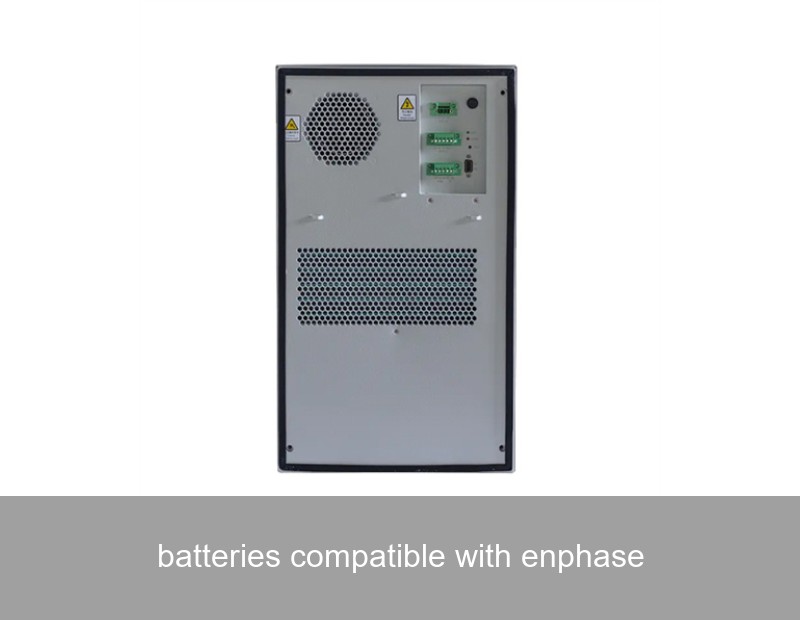
If you've invested in an Enphase microinverter-based solar system, you're already enjoying the benefits of reliable, panel-level power optimization. But as electricity prices fluctuate and grid stability becomes a growing concern, a common question arises: What are the best batteries compatible with Enphase? Adding storage is the logical next step to maximize your energy independence. However, navigating compatibility can feel like solving a complex puzzle. This guide will demystify the process, explore your options, and show you how a well-integrated system can transform your energy resilience.
Table of Contents
- What Makes Enphase Systems Unique?
- Your Path to Compatibility: AC vs. DC Coupling
- Exploring Third-Party Batteries Compatible with Enphase
- The Highjoule Solution: Seamless Integration for Advanced Energy Management
- Real-World Impact: A Case Study from Southern California
- Choosing the Right Battery for Your Enphase System
What Makes Enphase Systems Unique?
Enphase revolutionized solar with its microinverter technology. Unlike a traditional string inverter, Enphase places a small inverter on each solar panel. This means every panel operates independently, optimizing output even if others are shaded or dirty. The system communicates via the Enphase Ensemble platform, creating an intelligent energy ecosystem. When you ask about batteries compatible with Enphase, you're essentially asking: "What storage solutions can communicate seamlessly with this sophisticated ecosystem to provide backup power and energy savings?" The answer lies in the method of integration.

Image Source: Unsplash - A visual of microinverter technology central to Enphase systems.
Your Path to Compatibility: AC vs. DC Coupling
There are two primary ways to add a battery to your solar system: AC coupling and DC coupling. For existing Enphase systems, AC coupling is typically the preferred and most straightforward path.
- AC-Coupled Systems: This is where the battery has its own inverter and connects to your home's AC electrical panel, alongside your Enphase microinverters. It's like adding a smart, energy-absorbing appliance to your home's electrical system. The battery and the Enphase system "talk" through your home's wiring and often a central energy controller. This method is highly flexible and is how most third-party batteries compatible with Enphase are integrated.
- DC-Coupled Systems: Here, the battery connects on the DC side of the solar system (between the panels and the inverter). This is less common for retrofitting onto an existing Enphase setup, as Enphase microinverters output AC directly from the roof.
The key to a successful AC-coupled integration is a capable energy management system (EMS) or gateway that can coordinate the Enphase solar production, home energy consumption, battery charging/discharging, and the grid.
Exploring Third-Party Batteries Compatible with Enphase
While Enphase offers its own IQ Battery, several high-quality third-party batteries can be integrated. These systems often use a universal gateway or a dedicated EMS to create harmony. Popular options include batteries using industry-standard communication protocols. When evaluating these, consider:
| Consideration | Why It Matters for Enphase Compatibility |
|---|---|
| Communication Protocol | The battery's gateway must be able to receive data from the Enphase Envoy (the system's communication hub) to make intelligent decisions about when to store or dispatch energy. |
| Installation Expertise | Not all installers are certified or experienced in integrating disparate systems. Proper configuration is critical for safety, performance, and warranty. |
| System Scalability | Can you easily add more battery capacity later as your needs grow (e.g., adding an EV)? |
The Highjoule Solution: Seamless Integration for Advanced Energy Management
This is where Highjoule's expertise shines. As a global leader in advanced energy storage since 2005, we specialize in creating intelligent, integrated storage solutions for complex needs. For homeowners with Enphase systems, Highjoule offers a powerful alternative: our HPS Series (Home Power Stack) batteries paired with our proprietary Unity Energy Gateway.
Our Unity Gateway is the "conductor" of your energy orchestra. It is designed to seamlessly interface with Enphase microinverter systems, ingesting real-time data on solar production. Combined with our AI-driven energy management software, it doesn't just react—it predicts. It learns your consumption patterns, considers weather forecasts, and even factors in variable utility rates (common in Europe and the US) to autonomously optimize your energy flow.
- Plug-and-Play Integration: Our certified installers configure the Unity Gateway to communicate directly with your Enphase Envoy, creating a unified dashboard for monitoring and control.
- Unmatched Scalability: The modular HPS battery design allows you to start with a capacity that fits your budget and expand effortlessly in the future.
- Grid Services Ready: For markets with incentive programs, our system can be configured to participate in virtual power plants (VPPs), potentially generating revenue by supporting grid stability, as noted in studies by the National Renewable Energy Laboratory.

Image Source: Unsplash - Professional installation of a home battery storage system.
Real-World Impact: A Case Study from Southern California
Let's move from theory to practice. Consider the Johnson residence in San Diego, California—a region with high electricity rates, a mandate for solar on new homes, and increasing grid reliability concerns. The Johnsons had a 8.2 kW Enphase IQ7+ solar system installed in 2020.
The Phenomenon: Despite significant solar generation, their bills were still high in the evening (peak TOU rates) and they faced anxiety during public safety power shutoffs (PSPS).
The Data & Solution: In early 2023, they installed a Highjoule HPS-20 system (20 kWh capacity) with the Unity Gateway. The system was programmed to prioritize charging from excess solar, avoid drawing from the grid during peak hours (4-9 PM, when rates exceeded $0.65/kWh), and maintain a 40% reserve for backup.
- Bill Reduction: Their annual electricity cost dropped by 92%, moving from an average of $1,200/year to under $100/year for grid connection fees.
- Backup Events: The system provided seamless backup during three grid outages, totaling 14 hours, keeping critical loads and refrigeration running.
- Self-Consumption: They increased their solar self-consumption rate from 35% to over 80%, dramatically increasing the value of their solar investment.
The Insight: As the Johnsons' installer noted, "The right battery compatible with Enphase isn't just about chemistry; it's about intelligence. The Highjoule system's predictive algorithms turned their solar array and battery from separate components into a single, money-saving power plant."
Choosing the Right Battery for Your Enphase System
So, how do you make the best choice? Ask yourself and your installer these key questions:
- What is my primary goal? (Bill savings, backup power, environmental impact?)
- Does the proposed system include a dedicated, proven gateway for Enphase communication?
- What is the total cost of ownership, including installation, potential expansion, and the software platform's capabilities?
- Is the installer certified by both the battery manufacturer and Enphase?
Brands like Highjoule, with deep expertise in system integration, offer a compelling value proposition that goes beyond just the battery cells. We provide a holistic energy management platform that ensures your Enphase solar and storage work in perfect, intelligent harmony.
Looking Ahead: The Future of Integrated Home Energy
The conversation around batteries compatible with Enphase is evolving. The future is not just about compatibility, but about orchestration—managing solar, storage, EV charging, and smart appliances as one cohesive unit. Technologies like the DOE's SunShot Initiative continue to push for this level of interoperability. The question for you is: Is your home energy system ready to become an intelligent, adaptive asset, and what role will the intelligence behind your battery play in that transformation?
 Inquiry
 Online Chat