


Battery Plus Energy Storage Cabinet: The Intelligent Backbone of Modern Power Resilience
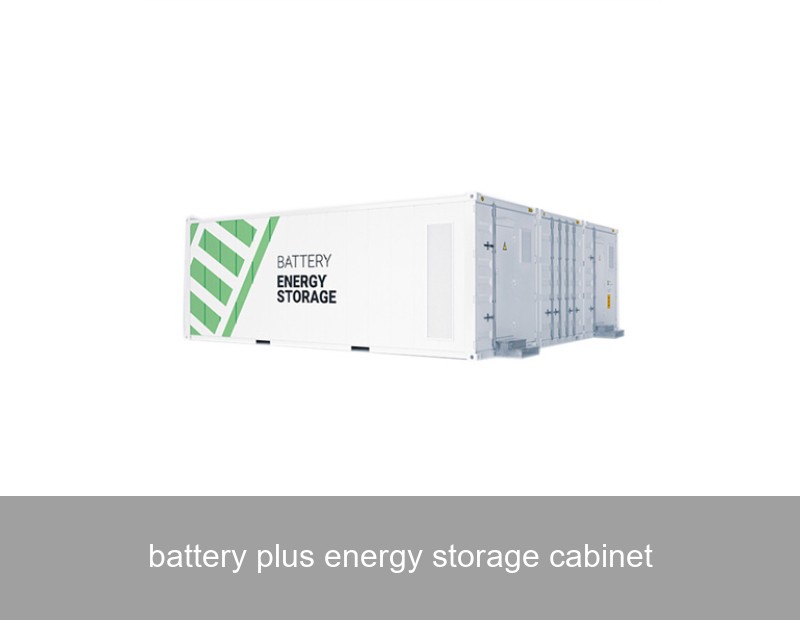
Have you ever wondered what keeps the lights on during a grid outage at a hospital, or how a factory seamlessly powers through a peak tariff period without crippling costs? The answer increasingly lies in a sophisticated, integrated solution: the battery plus energy storage cabinet. More than just a box of batteries, this system is the intelligent core of energy independence, merging advanced electrochemistry with smart software to manage, store, and dispatch electricity precisely when and where it's needed. For businesses and communities across Europe and the US facing volatile energy prices and an urgent need for grid stability, understanding this technology is the first step toward a secure, sustainable, and cost-effective energy future.
Table of Contents
- The Phenomenon: From Passive Batteries to Active Energy Hubs
- The Data: Quantifying the Need for Intelligent Storage
- The Case Study: A German Manufacturing Plant's Transformation
- The Insight: What Makes a Truly "Smart" Battery Cabinet?
- Highjoule's Integrated Solution: The PowerIQ Cabinet System
- Your Energy Future: A Question of Control
The Phenomenon: From Passive Batteries to Active Energy Hubs
Traditionally, backup power meant noisy diesel generators or simple, standalone battery units that sat idle 99% of the time, only springing to life during a blackout. Today's challenges—intermittent renewable generation, demand charges, and frequency regulation—demand a proactive approach. The modern battery plus energy storage cabinet is an all-in-one energy asset. It doesn't just wait for an emergency; it actively participates in daily energy management, storing cheap solar or off-peak grid power and releasing it during expensive peak hours or to support local grid services. This shift from passive backup to active financial and operational asset is revolutionizing how commercial and industrial entities view their energy infrastructure.

Image: A modern battery energy storage system installation in an industrial setting. Source: Unsplash (Credit: American Public Power Association)
The Data: Quantifying the Need for Intelligent Storage
Let's talk numbers. In the US, commercial demand charges—fees based on the highest 15-minute power draw in a month—can constitute up to 50% of a business's electricity bill. A study by the National Renewable Energy Laboratory (NREL) found that strategic storage could reduce these peaks, leading to significant savings. Meanwhile, in Europe, day-ahead wholesale electricity prices have experienced extreme volatility, with spikes exceeding 500 EUR/MWh in recent years. Furthermore, grid operators are increasingly paying for frequency response services to balance the grid, a market valued in the billions. A well-designed battery plus energy storage cabinet system is uniquely positioned to capitalize on all these value streams simultaneously, turning energy cost from a fixed expense into a manageable, optimizable asset.
| Market Driver | Europe | United States | How a Battery Cabinet Addresses It |
|---|---|---|---|
| Energy Price Volatility | Extreme wholesale price spikes | High time-of-use (TOU) rates | Arbitrage: Store when cheap, use/sell when expensive. |
| Grid Services Demand | Frequency Containment Reserve (FCR) markets | Frequency Regulation (Reg-up/Reg-down) markets | Millisecond response to grid signals for revenue. |
| Renewable Integration | Solar/wind curtailment during overproduction | Intermittency causing local grid instability | Stores excess renewable generation for later use, smoothing output. |
| Backup Power Needs | Increasing grid congestion and aging infrastructure | More frequent extreme weather events | Provides seamless, instantaneous backup power for critical loads. |
The Case Study: A German Manufacturing Plant's Transformation
Consider "MusterFabrik GmbH," a mid-sized automotive parts manufacturer in Bavaria. Facing steep German electricity prices and a corporate mandate to reduce carbon footprint, they installed a 500 kW / 1 MWh battery plus energy storage cabinet system alongside a new rooftop solar array in 2022. The cabinet, from a leading provider, was integrated with their energy management system (EMS). Here’s the impact after one year:
- Peak Shaving: Reduced monthly demand charges by an average of 28%.
- Solar Self-Consumption: Increased the usage of their own solar power from 35% to over 80%, drastically cutting grid imports.
- Grid Revenue: By participating in Germany's primary control reserve market, the system generated approximately €45,000 in ancillary service revenue.
- ROI Acceleration: The combined savings and revenue streams shortened the projected payback period from 7 years to under 4.5 years.
This real-world example demonstrates that the right cabinet system isn't an expense; it's a revenue-generating, cost-saving engine.
The Insight: What Makes a Truly "Smart" Battery Cabinet?
Not all cabinets are created equal. The magic isn't just in the lithium-ion cells; it's in the intelligence wrapped around them. A superior battery plus energy storage cabinet is defined by three layers:
- Hardware Excellence: This includes top-tier, UL/Certified battery cells (like LFP chemistry for safety and longevity), an integrated thermal management system (liquid cooling is becoming the industrial standard), and robust safety certifications (UL 9540, IEC 62619).
- Power Conversion & Control: The built-in bi-directional inverter (PCS) must be highly efficient (>98%) and responsive. More importantly, the cabinet's local controller is its brain, making split-second decisions on charge/discharge.
- Software & Connectivity (The True Differentiator): This is where platforms like those developed by Highjoule shine. The cabinet must connect to a cloud-based energy management platform that uses AI and forecast data (weather, energy prices, load patterns) to optimize every kilowatt-hour for maximum economic return, all while ensuring battery health and safety.
Highjoule's Integrated Solution: The PowerIQ Cabinet System
At Highjoule, with nearly two decades of experience, we've engineered our PowerIQ Battery Energy Storage Cabinet to embody this complete intelligence. Our all-in-one solution is designed for simplicity and performance in commercial and industrial settings.
- Modular & Scalable Design: Start with a single 250kWh cabinet and scale to multi-MW installations as your needs grow. This plug-and-play philosophy drastically reduces installation complexity and cost.
- Highjoule EnergyOS: The system is powered by our proprietary AI-driven software platform. EnergyOS continuously analyzes utility tariffs, on-site generation, and load forecasts to execute the most profitable strategy—be it peak shaving, arbitrage, or grid services—automatically.
- Unmatched Safety & Service: We build with Lithium Iron Phosphate (LFP) chemistry as standard, renowned for its thermal stability. Every cabinet features our state-of-the-art liquid cooling and multi-layer fault protection. Backed by a 10-year performance warranty and 24/7 global monitoring from our Network Operations Center, we ensure your energy asset delivers reliably for its entire lifespan.
For a microgrid project in California or a factory in Germany, the Highjoule PowerIQ system provides not just storage, but certainty—certainty in savings, reliability, and support.

Image: Advanced monitoring and control interface for a large-scale energy storage system. Source: Unsplash (Credit: ThisisEngineering)
Your Energy Future: A Question of Control
The transition to a resilient, low-carbon energy system is undeniable. The question for business leaders, facility managers, and community planners is no longer if storage will play a role, but how soon and with which partner. Will you continue to be at the mercy of grid outages and volatile markets, or will you take control with an intelligent battery plus energy storage cabinet that turns your site into an active participant in the new energy economy?
What would the ability to predict and lock in your energy costs for the next decade do for your operational planning and competitive edge?
 Inquiry
 Online Chat