


Unlocking Value and Sustainability: A Guide to the Battery Renewal Business
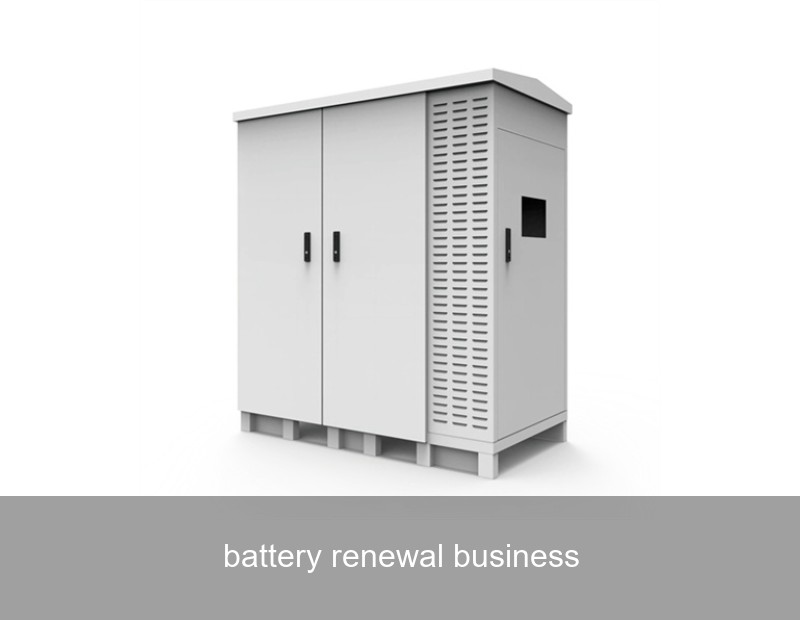
Have you ever wondered what happens to the large battery packs in electric vehicles or commercial energy storage systems when they no longer meet their original performance standards? The answer is unlocking a massive, and often overlooked, business opportunity. The battery renewal business is rapidly emerging as a critical pillar in the circular economy for energy, transforming potential waste into valuable assets. For facility managers, energy developers, and sustainability officers, understanding this space isn't just about environmental responsibility—it's a strategic move for cost reduction, revenue generation, and energy resilience.

Credit: ThisisEngineering Raeng / Unsplash
The Hidden Asset in Your Energy Strategy
Let's paint a picture. A commercial fleet operator is about to replace 50 electric vehicle batteries. A solar farm owner is planning to upgrade their 10-year-old storage system. The immediate thought might be recycling or disposal—a cost center. But here's the phenomenon: these batteries often retain 70-80% of their original capacity. They're not dead; they're just no longer optimal for their first, highly demanding life. This represents a hidden asset, a reservoir of stored energy value waiting to be tapped into a secondary market. This is the core of the battery renewal business.
What is the Battery Renewal Business?
It’s a multifaceted industry focused on extracting maximum value from lithium-ion and other advanced battery systems beyond their first use. It's not a single process but a spectrum of value-adding activities:
- Repurposing (Second Life): Taking batteries from EVs and giving them a new, less strenuous life in stationary storage for homes, businesses, or grid support.
- Remanufacturing/Refurbishing: Disassembling battery packs, testing individual modules or cells, replacing faulty ones, and reassembling them to like-new performance standards for similar applications.
- Advanced Software Recalibration: Using intelligent battery management systems (BMS) to reassess and optimize the performance of aged packs, safely extending their usable life in their original application.
- Component Harvesting: Extracting valuable materials, cells, or electronics for use in repair markets or new battery production.
This business sits strategically between direct reuse and full-scale material recycling, offering superior economic and environmental returns in many cases.
The Economic & Sustainability Imperative: The Data Speaks
The logic is compelling. From a sustainability angle, manufacturing a battery pack is energy and resource-intensive. A International Renewable Energy Agency (IRENA) report highlights that extending a battery's life through second-use applications can reduce its overall environmental footprint per year of service by a significant margin.
Economically, the numbers are staggering. A study by McKinsey & Company projected that the global market for second-life batteries could reach over 200 gigawatt-hours annually by 2030, representing a value pool of $30 billion or more. For a business, this translates to:
| Benefit | Impact |
|---|---|
| Reduced Capex for Storage | Second-life batteries can cost 30-70% less than new equivalents. |
| New Revenue Streams | Selling retired assets into the renewal chain or using renewed batteries for grid services (frequency regulation, demand charge reduction). |
| Waste Cost Avoidance | Diverting batteries from expensive, regulated disposal pathways. |
| ESG Goals Achievement | Directly contributing to circular economy and carbon reduction targets. |
Case Study: A European Industrial Park's Success
Let's move from theory to a tangible example. A large industrial park in Germany faced rising energy costs and needed to better integrate its on-site solar PV. Their goal was to add storage without the high capital outlay for a brand-new system.
Solution: They partnered with a battery renewal business specialist who sourced decommissioned EV batteries from a European automotive manufacturer. These batteries were rigorously tested, re-packaged, and integrated into a 2 MWh containerized storage system.
Data & Outcome:
- Cost Savings: The system was deployed at 40% lower cost compared to a new battery system of equivalent capacity.
- Performance: The renewed batteries provided sufficient performance for daily solar load-shifting, reducing the park's peak grid draw by over 25%.
- ROI: The project achieved payback in under 5 years through direct electricity bill savings alone, not accounting for the avoided costs of battery disposal for the automaker.
This case demonstrates the win-win-win model: the automaker responsibly offloaded an asset, the renewal business created value, and the end-user gained affordable, sustainable storage.

Credit: American Public Power Association / Unsplash
Highjoule's Role: Expertise in Second Life & Advanced Renewal
Navigating the battery renewal business requires deep technical expertise. Not all retired batteries are suitable, and safety is paramount. This is where Highjoule's experience since 2005 becomes crucial. We don't just sell new systems; we provide holistic lifecycle intelligence.
For businesses looking to source high-quality renewed storage, Highjoule offers VitaCore ESS solutions. These systems can incorporate rigorously tested second-life modules, paired with our proprietary, adaptive BMS that continuously monitors and manages cell-level health for safety and longevity. It's a performance-guaranteed approach to entering the renewed storage market.
For organizations managing retiring battery assets—like fleet operators or utility-scale storage owners—Highjoule provides Asset Transition Services. We conduct detailed health assessments, data analytics on historical performance, and determine the optimal end-of-first-life pathway: whether it's refurbishment for continued service, repurposing into a new VitaCore system, or responsible recycling. Our methodologies align with best practices outlined by leading energy agencies.
Getting Started in the Battery Renewal Business: Key Considerations
Thinking of engaging with this market? Here’s a logical step-by-step approach:
- Inventory & Assess: Catalog your battery assets (type, age, usage history). Initial testing is key to understanding residual value.
- Define Objectives: Is your primary driver cost savings, revenue, sustainability, or risk management (safe disposal)?
- Partner with Experts: The technology is complex. Work with established providers like Highjoule who have the engineering depth and safety-first culture to handle battery renewal at scale.
- Pilot a Project: Start with a smaller, controlled deployment to validate economics and performance before scaling.
- Plan for the Full Cycle: Even renewed batteries will eventually need recycling. Factor in the final recycling step and partner with firms that can manage the entire chain.
The battery renewal business is more than a niche; it's becoming a standard component of smart energy management. It answers the critical question of sustainability not with an "either-or" but with a "both-and": both economically savvy and environmentally sound. As battery volumes explode, the ability to skillfully navigate this renewal landscape will separate the leaders from the laggards.
What's the potential residual value hidden in your organization's aging battery assets, and what could a strategic partnership in the renewal business unlock for your bottom line and sustainability goals this year?
 Inquiry
 Online Chat