


Finding the Best Solar Batteries in Nigeria: A Guide to Reliable Power Independence
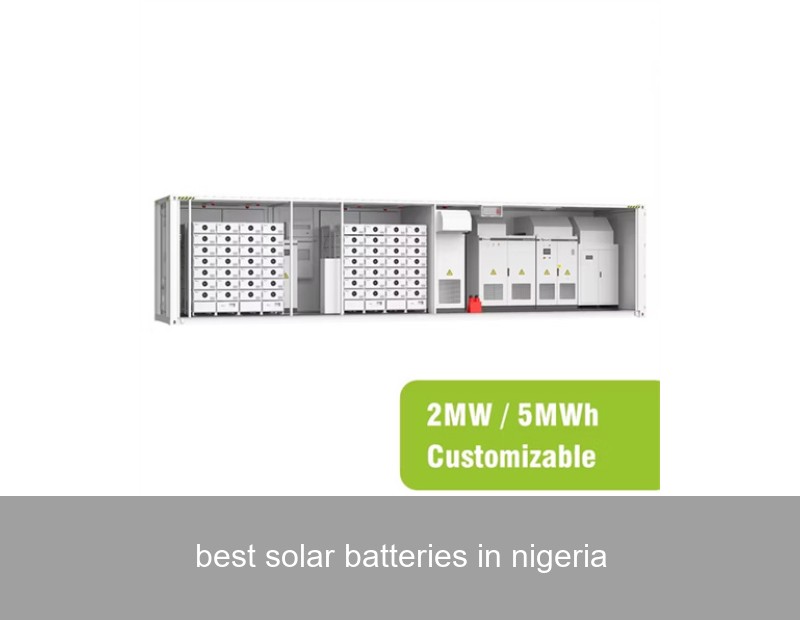
If you're searching for the best solar batteries in Nigeria, you're not just shopping for a product—you're seeking a solution to a fundamental challenge. For homes and businesses across Nigeria, from Lagos to Abuja, consistent grid power remains elusive. The real question becomes: how do you transform a solar investment from a supplementary gesture into a primary, reliable power source? The answer lies at the heart of the system: the battery. Not all batteries are created equal, especially in Nigeria's unique climate and usage conditions. This guide cuts through the noise, exploring the technical and practical essentials that define top-tier energy storage, supported by real-world data, and introduces how global expertise can be tailored for Nigerian resilience.
What Makes the Best Solar Batteries? Key Criteria for Nigerian Conditions
Let's move beyond marketing terms. In the context of Nigeria, the "best" solar batteries are defined by their ability to deliver performance, longevity, and value under specific pressures. Here are the non-negotiable factors:
- Cycle Life & Depth of Discharge (DoD): This is paramount. With frequent power outages, your battery will cycle (charge and discharge) daily. A battery rated for 6,000 cycles at 90% DoD will last years longer than one rated for 3,000 cycles at 50% DoD. Lithium Iron Phosphate (LFP) chemistry excels here, offering typically 2-3 times the cycle life of traditional lead-acid.
- Thermal Resilience: Nigeria's ambient heat is a battery's silent adversary. High temperatures accelerate chemical degradation, shortening lifespan. The best batteries have robust built-in Battery Management Systems (BMS) with thermal monitoring and cooling mechanisms to operate safely at 35°C+.
- Power Rating & Scalability: Can it start your deep freezer or industrial motor? Look at both energy capacity (kWh) and continuous power rating (kW). Modular designs that allow you to easily add more capacity later provide future-proof flexibility.
- Manufacturer Warranty & Local Support: A 10-year warranty is meaningless without accessible technical support. The best providers have established local partnerships for installation, maintenance, and claim servicing.
| Battery Type | Typical Cycle Life* | Optimal Temp. Range | Key Consideration for Nigeria |
|---|---|---|---|
| Flooded Lead-Acid | 1,200 - 1,500 | 20-25°C | Requires regular maintenance, ventilation; sensitive to heat. |
| AGM/Gel | 1,300 - 1,800 | 15-30°C | Sealed, low maintenance; but still limited cycle life and heat tolerance. |
| Lithium NMC | 3,500 - 5,000 | 15-30°C | High energy density; requires advanced BMS for thermal safety. |
| Lithium LFP | 6,000 - 8,000+ | 0-45°C | Superior cycle life, excellent thermal stability, safer chemistry. |

Image: Modern modular LFP battery systems are designed for high cycle life and thermal resilience. Credit: Unsplash.
Case Study: Powering a Lagos Manufacturing Hub
Consider "Apex Furniture Ltd." (name changed for privacy), a medium-sized factory in Ikeja, Lagos. Facing 8-10 hours of daily grid outage, they relied on diesel generators, spending over ₦4.8 million monthly on fuel. In 2022, they installed a 250kW solar PV system paired with a 500kWh lithium (LFP) battery storage system.
- Challenge: Ensure continuous 18-hour operation for power tools, CNC machines, and lighting.
- Solution: A scalable, high-cycle LFP battery bank with intelligent energy management to prioritize solar charging and dispatch.
- Result (18-month data): Diesel usage slashed by 95%. The system provided 98.5% uptime. Projected payback period: 3.2 years. The battery's state of health remains at 97% due to its high cycle life rating and effective thermal management, crucial in the factory's hot environment.
This case underscores that the best solar batteries in Nigeria are those engineered for commercial-grade duty cycles, directly replacing generator dependence.
Beyond the Battery: Why the Entire System Intelligence Matters
A champion battery in a poorly designed system is set up to fail. The inverter's compatibility, the system's energy management software, and the balance of components are critical. An advanced system should:
- Seamlessly blend power sources: solar, battery, grid, generator.
- Allow user-defined operating modes (e.g., "maximize self-consumption," "backup priority").
- Provide remote monitoring and diagnostics—a game-changer for proactive maintenance.
This is where choosing an integrated solution from a seasoned provider trumps assembling disparate components. The intelligence layer is what transforms stored electrons into reliable, smart power.
The Highjoule Solution: Engineered for Demanding Markets Like Nigeria
With nearly two decades of experience powering commercial, industrial, and microgrid projects across Europe and North America, Highjoule understands that resilience is not a luxury—it's a requirement. Our systems are engineered for markets that demand robustness, and we see the Nigerian energy landscape as a prime example of where our technology delivers exceptional value.
Our HPS Series (Highjoule PowerStack) commercial and industrial battery energy storage systems are built on Lithium Iron Phosphate (LFP) chemistry, chosen explicitly for its long cycle life and superior thermal stability. They are containerized or modular for easy scaling. More than just hardware, the Highjoule Energy Operating System (EOS) is the brain of the installation, providing intelligent control, real-time analytics, and remote management capabilities that ensure our clients maximize their energy independence and ROI.
For larger-scale applications, such as industrial parks or community microgrids, Highjoule's expertise in designing and deploying turnkey microgrid solutions is particularly relevant. We integrate solar PV, battery storage, and existing generation assets into a single, optimized system that prioritizes clean solar energy, ensures uptime, and dramatically reduces diesel consumption. Our global experience in diverse climates directly informs product design, making our storage solutions a compelling fit for businesses and communities in Nigeria seeking not just a battery, but a guarantee of performance.

Image: Utility-scale solar plus storage projects require robust, high-cycle battery systems. Credit: Unsplash.
Choosing the Right Solar Battery for Your Nigerian Home or Business
So, how do you navigate your decision? Start by asking these concrete questions:
- What is my critical load? List the appliances/machines that must stay on during an outage and calculate their total wattage and runtime needs.
- What is my daily energy consumption (kWh)? Your solar installer can help audit this. Your battery capacity should cover a meaningful portion of this.
- What is my long-term total cost of ownership? Divide the system cost by its expected lifetime kWh throughput. A cheaper battery with half the cycle life is often more expensive in the long run.
- Is the provider a long-term partner? Do they offer local training, spare parts, and technical support? Can they show you monitoring data from similar installations?
For deeper technical insights, resources like the National Renewable Energy Laboratory's (NREL) battery benchmarking reports provide invaluable, vendor-neutral data.
Your Energy Independence Blueprint
The journey to finding the best solar batteries in Nigeria is a strategic investment in stability and growth. It requires looking beyond specs on a page to proven performance in real-world, demanding conditions. The convergence of robust LFP chemistry, intelligent system design, and global expertise applied locally creates a path to true power independence.
What specific energy challenge—be it soaring diesel costs, unreliable production schedules, or the need for 24/7 power for critical facilities—is your top priority in solving with a solar and storage solution today?
 Inquiry
 Online Chat