


Finding the Best Solar Inverter in Australia: Your Guide to a Smarter, More Resilient Energy System
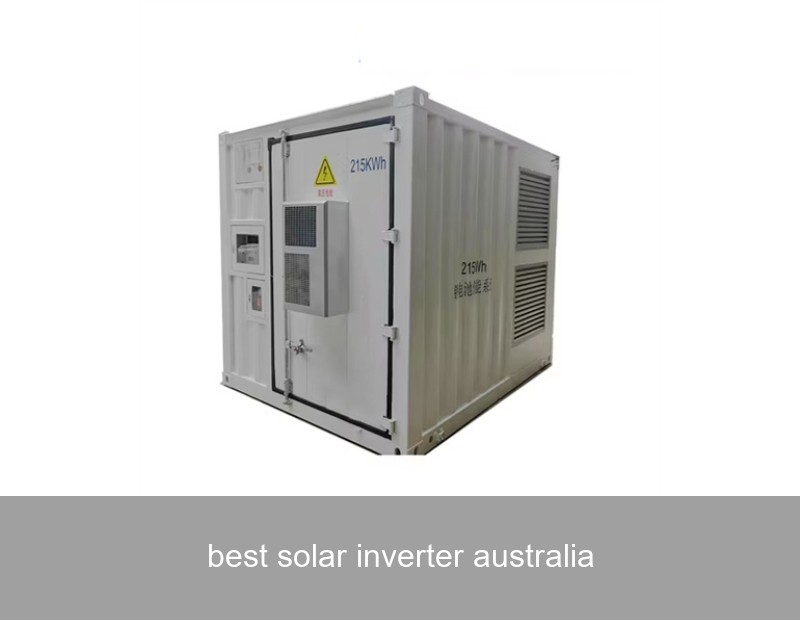
If you're an Australian homeowner or business looking to harness the sun's power, you've likely discovered that the solar panels are only part of the equation. The true brain of your solar power system is the inverter. Choosing the best solar inverter in Australia is a critical decision that determines how efficiently you generate, use, and even store your own clean energy. With unique challenges like intense heat, variable sunlight, and a growing need for grid independence, the Australian market demands inverters that are robust, intelligent, and future-proof. This article will guide you through the key considerations and showcase how pairing your panels with the right technology can transform your energy experience.
Table of Contents
- Why Your Solar Inverter Choice Matters More Than You Think
- Key Features of the Best Solar Inverters for Australian Conditions
- Beyond Conversion: The Inverter as Your Gateway to Battery Storage
- A Real-World Case: The Queensland Business Maximising Self-Consumption
- Future-Proofing Your Investment: Inverters and Energy Management
- Making the Final Choice for Your Australian Home or Business
Why Your Solar Inverter Choice Matters More Than You Think
Think of your solar panels as hardworking muscles, producing raw Direct Current (DC) power. The inverter is the brain and nervous system. Its primary job is to convert that DC power into the Alternating Current (AC) that powers your appliances and feeds into the grid. But in 2024, the best solar inverters do so much more. They are the central command unit for your entire energy ecosystem.
In Australia, where feed-in tariffs are decreasing and electricity prices remain volatile, the goal has shifted from simply exporting power to maximising self-consumption. This means using as much of your solar energy as possible onsite, and that requires an inverter with sophisticated monitoring and control capabilities. A high-quality inverter ensures you get every possible kilowatt-hour from your investment, protects your system from faults, and seamlessly integrates with battery storage—a feature becoming essential for energy resilience.
Key Features of the Best Solar Inverters for Australian Conditions
Not all inverters are built for the harsh Aussie environment. Here’s what to look for:
- Efficiency & Durability: Look for peak efficiency ratings above 98%. The inverter should have a robust design with proper temperature derating, ensuring it doesn't fail during our scorching summer heatwaves. High-quality components and strong warranties (often 10+ years) are non-negotiable.
- Advanced Monitoring & Software: A user-friendly app that provides real-time and historical data on energy production, consumption, and export is crucial. The best platforms offer insights, allowing you to pinpoint waste and optimise usage patterns.
- Grid Support Functions & Standards: Inverters must comply with Australian Standard AS/NZS 4777.2. Advanced models offer grid-support functions like voltage and frequency ride-through, which help stabilise the local network and are increasingly required by network operators.
- Hybrid & Battery-Ready Design: This is perhaps the most critical feature for future-proofing. A "hybrid" or "battery-ready" inverter has built-in circuitry and software to connect a battery storage system without the need for costly, clunky add-ons later.
Beyond Conversion: The Inverter as Your Gateway to Battery Storage
This is where the energy landscape gets exciting. A modern hybrid inverter doesn't just manage solar production; it orchestrates a tri-flow of energy between your solar panels, your home, your battery, and the grid. This intelligent orchestration is key to unlocking true energy independence.
Companies like Highjoule have pioneered this integrated approach. Instead of a simple inverter paired with a separate battery system, Highjoule provides fully integrated AC-coupled and DC-coupled energy storage solutions. Their systems are built around intelligent power conversion and sophisticated energy management software. For a new or existing solar system, this means you can add a Highjoule battery storage system that is optimised to work in concert with your generation, learning your habits to maximise self-consumption, provide backup power during outages, and even participate in virtual power plant (VPP) programs if desired.

Image Source: Unsplash (Representative image of advanced inverter technology)
A Real-World Case: The Queensland Business Maximising Self-Consumption
Let's look at the data from a real installation. A medium-sized manufacturing workshop in Brisbane had a 100kW existing solar array but was still facing high demand charges and evening energy costs. They were exporting large amounts of solar energy at low feed-in tariffs during the day and buying it back at a high rate at night.
The Solution: The business installed a Highjoule HJ-ESS Commercial 100 battery energy storage system, integrated with their existing solar inverters via Highjoule's central energy management system (EMS).
The Results (12-month period):
| Metric | Before Installation | After Installation | Change |
|---|---|---|---|
| Grid Energy Consumption | ~320,000 kWh/yr | ~175,000 kWh/yr | Reduction of 45% |
| Solar Self-Consumption Rate | 35% | 85% | Increase of 143% |
| Peak Demand Charges | Average $4,200/month | Average $2,300/month | Reduction of ~45% |
| Payback Period | N/A | Estimated 4.2 years | Strong ROI |
The system automatically charges the batteries with excess solar and discharges them during peak evening hours and periods of high machinery use, effectively "shaving" the peak demand. The EMS made all the decisions autonomously, based on real-time tariff data and consumption forecasts. This case clearly shows that the value of a solar system is dramatically amplified when paired with intelligent storage and management—capabilities initiated by the right inverter technology. You can read more about the importance of storage for grid stability from the Australian Energy Market Operator (AEMO).
Future-Proofing Your Investment: Inverters and Energy Management
The energy market is evolving rapidly. We're moving towards two-way energy flows and dynamic pricing. Your inverter should be a platform, not a one-trick pony. The best solar inverter in Australia today is one that enables you to adapt to future opportunities.
- Virtual Power Plants (VPPs): Many energy retailers now offer VPP programs, where your battery system can be called upon to support the grid during stress events, earning you financial rewards. This requires an inverter and battery system with communication capabilities and grid-responsive software.
- Electric Vehicle (EV) Charging Integration: The next wave of home energy management is integrating EV charging. Forward-thinking systems can prioritise solar or off-peak battery power to charge your car, avoiding costly grid power.
- Advanced Tariff Management: With time-of-use tariffs becoming standard, your system should be able to automatically adjust its charging and discharging strategy based on the price signals, a feature at the core of Highjoule's SmartEMS platform for commercial and residential applications.
For a deeper dive into global inverter and storage technology trends, the International Energy Agency (IEA) provides excellent resources.
Image Source: Unsplash (Representative image of a modern energy-independent home)
Making the Final Choice for Your Australian Home or Business
So, how do you cut through the noise and choose? Start by asking your installer not just about panel brands, but about the inverter's capabilities for your future. Discuss your average daily consumption, your desire for backup power, and your interest in programs like VPPs.
Look for a solution that offers a seamless, single-point-of-control experience. This is where holistic providers like Highjoule excel. As a global leader in advanced energy storage since 2005, Highjoule doesn't just supply a component; they provide a complete, intelligent power solution. Whether for a residential property seeking resilience, a commercial site aiming to cut operational costs, or a complex microgrid project, their systems are designed to be the intelligent core that maximises the return on your solar investment from day one and for the decades to follow.
Ultimately, the best inverter is the one that turns your solar array from a simple generator into an intelligent, money-saving, and resilient home energy manager. It's an investment in control and certainty in an uncertain energy market.
Given your specific energy goals and the unique climate of your location in Australia, what would be the first feature you'd prioritise in your solar inverter: maximum efficiency, seamless battery integration, or advanced smart grid capabilities?
 Inquiry
 Online Chat