


Who Are the Biggest Companies in Solar Energy and How Do They Power Our World?
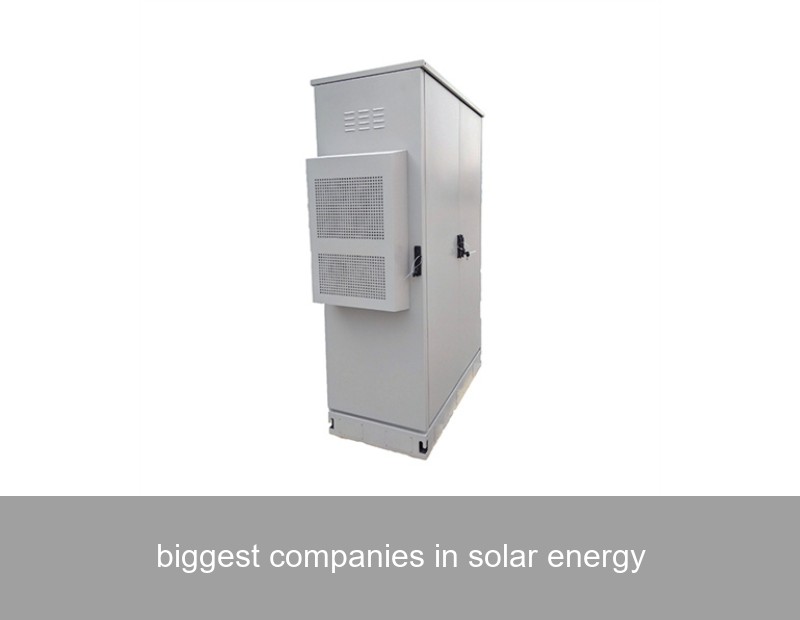
When we think about the global shift to clean energy, massive solar farms and sleek rooftop panels often come to mind. But have you ever wondered about the giants behind this transformation? The biggest companies in solar energy are not just panel manufacturers; they are integrated energy titans, innovative technology developers, and critical system enablers. Their work is fundamentally changing how we generate, store, and consume electricity. For businesses and homeowners looking to join this revolution, understanding this landscape is the first step toward a smarter, more sustainable energy future—a future where companies like Highjoule provide the essential energy storage intelligence that makes solar power reliable around the clock.
Table of Contents
- The Evolving Landscape of Solar Giants
- Beyond Panels: The Critical Role of Balance of System
- The Storage Revolution: Making Solar Power Truly 24/7
- Case Study: A European Industrial Park's Journey to Energy Independence
- Future Trends: Where Are the Biggest Companies Heading?
- Your Next Step: Integrating Solar and Storage
The Evolving Landscape of Solar Giants
The title of "biggest" can be measured in several ways: manufacturing capacity, project development scale, market capitalization, or technological influence. Traditionally, the list is dominated by Chinese manufacturing powerhouses like LONGi Green Energy Technology and JA Solar, which produce a significant portion of the world's photovoltaic (PV) modules. However, in Europe and the U.S., the "bigness" often translates to total system integration and project development.
Companies like NextEra Energy (USA) are colossal renewable energy developers, operating vast solar and wind fleets. In Europe, utilities like Iberdrola (Spain) and Enel (Italy) have pivoted aggressively into renewables, building gigawatts of solar capacity. These players don't just sell panels; they finance, build, own, and operate entire power plants, selling the electricity to grids or corporations.

Image: Utility-scale solar farms are a hallmark of the biggest energy developers. Source: Unsplash
The key takeaway? The ecosystem is layered. While module manufacturers are vital, the true value for end-users—especially commercial and industrial (C&I) entities—comes from a seamless integration of generation, storage, and smart management.
Beyond Panels: The Critical Role of Balance of System
If solar panels are the heart of a PV system, the balance of system (BoS) components are the brain and nervous system. This includes inverters (which convert DC solar power to usable AC power), mounting structures, wiring, and, most importantly, energy storage systems (ESS). The biggest companies in solar energy increasingly recognize that without advanced BoS, especially storage, solar's potential is limited.
Why? Solar generation is intermittent. The sun doesn't shine at night, and clouds can cause fluctuations. This variability challenges grid stability and limits how much solar power a facility can use directly. For a factory running 24/7 or a hospital that cannot afford a second of downtime, this is a critical problem. This is precisely where the partnership between solar giants and specialized storage experts becomes indispensable.
The Highjoule Advantage: Intelligent Storage for Maximum Solar ROI
At Highjoule, we've spent nearly two decades perfecting this piece of the puzzle. Our advanced battery energy storage systems (BESS) are designed to be the perfect partner to large-scale solar installations. We don't manufacture panels; we make the solar power you generate more valuable, reliable, and controllable.
Our IntelliBESS platform for C&I and microgrid applications does more than just store energy. It:
- Maximizes Self-Consumption: Stores excess solar energy produced at midday for use in the evening, dramatically increasing the portion of your own solar power you use.
- Provides Grid Services: Helps stabilize the local grid, offering frequency regulation and peak shaving services that can create new revenue streams.
- Ensures Resilience: Keeps critical operations running during grid outages, providing seamless backup power.
- Optimizes Intelligently: Uses AI-driven software to predict energy generation and consumption, making charging and discharging decisions that lower overall energy costs.
For the biggest solar developers, integrating a Highjoule system means they can offer clients a complete, dispatchable clean energy solution, not just a generation asset.
The Storage Revolution: Making Solar Power Truly 24/7
The data is clear: pairing storage with solar unlocks exponential value. According to the International Renewable Energy Agency (IRENA), the global capacity of battery storage is expected to multiply exponentially by 2030, with solar-plus-storage becoming the default for new commercial projects in many regions. In the U.S., the Federal Energy Regulatory Commission (FERC) Order 2222 is opening wholesale markets to distributed resources, making solar+storage projects financially even more attractive.
Think of it this way: solar panels give you a harvest of energy. A Highjoule BESS gives you a granary—a place to store that harvest, protect it, and use it exactly when you need it most, preventing waste and ensuring supply during lean times.
Case Study: A European Industrial Park's Journey to Energy Independence
Let's look at a real-world example from Southern Europe. A large industrial park in Spain, housing multiple manufacturing tenants, was facing rising grid energy costs and pressure from its corporate sustainability mandates. They partnered with a major solar developer to install a 5 MW rooftop and carport solar PV system.
The Challenge: The park's operations ran on three shifts. The solar system covered about 60% of their daytime load but almost none of their significant evening and night-time energy consumption. They were still reliant on the grid for most of their power and exporting excess solar at low feed-in tariffs.
The Solution: The developer integrated a Highjoule IntelliBESS 2.5 MWh system. Our technology was chosen for its high cycle life, safety (utilizing lithium iron phosphate chemistry), and advanced grid-interactive capabilities.
The Results (Data after 12 months):
| Metric | Before Highjoule BESS | After Highjoule BESS Integration |
|---|---|---|
| Solar Self-Consumption Rate | 35% | 85% |
| Grid Energy Cost Reduction | 25% (from solar alone) | 68% (combined solar + storage) |
| Peak Demand from Grid | 4.2 MW | 2.1 MW |
| CO2 Emissions Reduction | ~1,200 tons/year | ~2,800 tons/year |
The system automatically charges with surplus solar, discharges during high-price evening hours, and strategically shaves peak demand, saving thousands in grid capacity charges. The project's payback period was reduced by nearly 40%, making it a landmark case for the region. You can explore more on the economics of such integrations in reports from the National Renewable Energy Laboratory (NREL).
Future Trends: Where Are the Biggest Companies Heading?
The trajectory for solar leaders is towards becoming comprehensive "energy solution providers." This means:
- Vertical Integration: More companies are moving to control the entire chain, from panel production to storage and software.
- AI and Digitalization: Platforms that use artificial intelligence to optimize energy flows across millions of assets will be a key differentiator.
- Green Hydrogen: Some are exploring using solar power to produce hydrogen for long-duration storage and hard-to-electrify sectors.
- Virtual Power Plants (VPPs): Aggregating thousands of distributed solar+storage systems, like those powered by Highjoule intelligence, to act as a single, controllable power plant for the grid.

Image: Intelligent control systems are key to managing solar and storage assets. Source: Unsplash
In this future, the physical hardware is just the beginning. The real value is created by the software and intelligence that orchestrates it all—a core principle behind every Highjoule installation.
Your Next Step: Integrating Solar and Storage
The biggest companies in solar energy are building the infrastructure of tomorrow. But you don't need to be a utility giant to benefit from this synergy. Whether you're a business owner with a large rooftop, a community planning a microgrid, or an organization with ambitious sustainability goals, the combined power of solar generation and advanced storage is within reach.
The question is no longer just "How many solar panels do I need?" but rather "How can I build an intelligent, resilient, and cost-effective energy system for my specific needs?" What is the one energy challenge—be it cost volatility, reliability concerns, or carbon targets—that a tailored solar-plus-storage solution could solve for you today?
 Inquiry
 Online Chat