


Boxpower Solar Container: The Ultimate Off-Grid and Emergency Power Solution
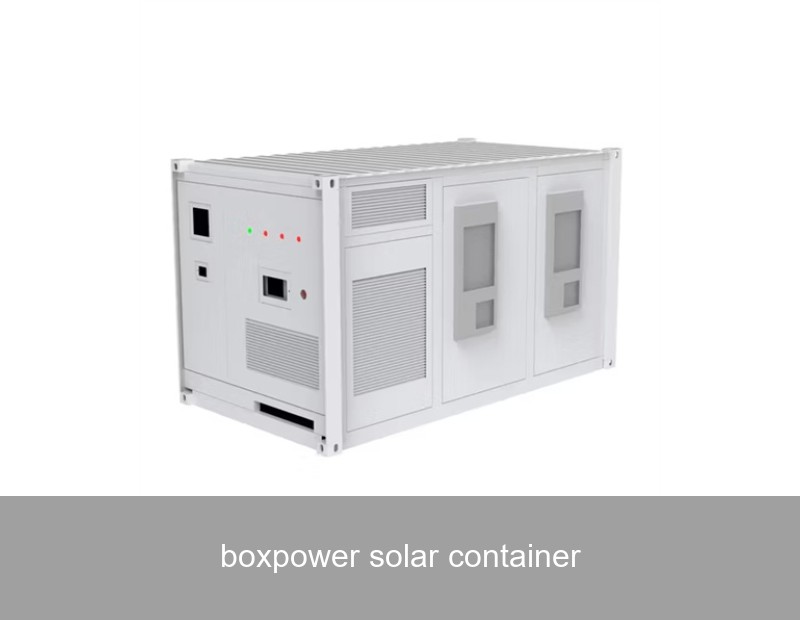
Imagine a reliable power source arriving at your remote site or disaster-stricken community, not as a complex construction project, but as a ready-to-go unit you simply place on the ground and switch on. This is the revolutionary promise of the boxpower solar container—a rapidly deployable, all-in-one energy system that is changing how we think about resilience and electrification. For businesses, communities, and utilities in Europe and the US facing grid instability, high energy costs, or the need for remote power, these containerized solutions offer a clean, silent, and independent alternative to traditional diesel generators. In this article, we'll explore how this technology works, its transformative impact, and why companies like Highjoule are at the forefront of delivering intelligent, containerized energy storage for a sustainable future.
Table of Contents
- What is a Boxpower Solar Container?
- The High Cost of Reliance: Diesel Generators in Focus
- How a Solar Container System Works: A Modular Blueprint
- Real-World Impact: A Case Study from California
- Highjoule's Advanced Approach to Containerized Energy
- Building a Resilient Future: Applications and Considerations
What is a Boxpower Solar Container?
At its core, a boxpower solar container is a pre-engineered, plug-and-play microgrid housed within a standardized shipping container. It integrates solar photovoltaic (PV) panels, a battery energy storage system (BESS), power conversion equipment, and advanced energy management software into a single, transportable unit. Think of it as a complete power plant in a box. The concept brilliantly leverages containerization—the same principle that revolutionized global logistics—to deliver energy infrastructure with unprecedented speed and flexibility. Unlike permanent installations that require extensive civil works, these systems can be delivered by truck, dropped into place, and be operational within days, if not hours. This makes them ideal for temporary construction sites, remote mining operations, agricultural facilities, disaster recovery, and supplementing weak grid infrastructure.
The High Cost of Reliance: Diesel Generators in Focus
For decades, the default answer for off-grid or backup power has been the diesel generator. The phenomenon is familiar: the grid goes down, and the loud, fuming generator roars to life. But the data reveals significant drawbacks. According to the U.S. Environmental Protection Agency, a single large diesel generator can emit hundreds of pounds of nitrogen oxides and particulate matter per day, contributing to poor air quality and health issues (source: EPA). Financially, operators are locked into volatile fuel prices. For instance, diesel prices in Europe saw fluctuations of over 40% in recent years, making operational budgets highly unpredictable. Furthermore, generators require constant fuel logistics—a major challenge in remote or inaccessible areas—and ongoing maintenance. The solar container presents a compelling alternative, turning free sunlight into stable power with minimal operational costs and zero on-site emissions.
The Economic & Environmental Equation
| Factor | Diesel Generator | Solar Container System |
|---|---|---|
| Fuel Cost | High & Volatile | Free (Solar) |
| Operating Emissions | High (CO2, NOx, PM) | Zero |
| Noise Level | High (75-110 dB) | Near Silent |
| Deployment Speed | Fast (Hours) | Fast (Days for full setup) |
| Long-Term TCO | Very High | Competitive & Falling |
How a Solar Container System Works: A Modular Blueprint
So, how does this "power in a box" actually function? Let's break it down using a logical step-by-step structure. The system is a symphony of components working in harmony:
- Energy Capture: High-efficiency solar panels, often mounted on a foldable "wing" system or ground-mounted array, convert sunlight into direct current (DC) electricity.
- Energy Storage & Conversion: The DC electricity charges a high-capacity lithium-ion battery bank housed securely inside the container. An inverter converts the stored DC power into alternating current (AC) used by most appliances and equipment.
- Intelligent Management: The brain of the operation is the energy management system (EMS). This software continuously monitors energy production, consumption, battery state, and even weather forecasts. It autonomously decides when to draw from solar, discharge the battery, or, in hybrid setups, when to start a backup generator for optimal efficiency.
- Power Delivery: The system connects to your facility's electrical panel, providing seamless power. In grid-tied applications, it can also reduce peak demand charges by discharging the battery during times of high utility rates.

This modular blueprint is where companies with deep expertise truly add value. At Highjoule, our IntelliContainerTM series builds on this foundation with industry-leading battery chemistry for longer lifespan, advanced thermal management for operation in extreme climates, and AI-driven predictive software that maximizes return on investment. Our systems are designed not just as products, but as holistic power solutions for commercial and industrial clients.
Real-World Impact: A Case Study from California
Abstract benefits are one thing, but real data tells the true story. Let's look at a concrete example from the United States. In California, wildfire prevention and public safety power shutoffs (PSPS) have made grid reliability a major concern for rural communities and critical facilities.
The Challenge: Fire Station Resilience
A fire station in a wildfire-prone region of Northern California faced a critical vulnerability: during pre-emptive grid shutoffs, they lost power, jeopardizing communications, equipment charging, and operational readiness. Relying on a diesel generator was noisy, required frequent refueling, and created emissions.
The Solution: A Deployable Solar Container Microgrid
The community deployed a containerized solar and battery storage system. The unit was positioned adjacent to the station. It featured a 40 kW solar array and a 120 kWh battery storage capacity, designed to power essential loads for over 72 hours without sun.
The Results & Data:
- 100% Uptime during subsequent PSPS events, ensuring continuous operation.
- Fuel Savings: Eliminated over 2,000 gallons of diesel consumption annually.
- Cost Reduction: Achieved a 60% reduction in annual energy costs for the station through solar self-consumption and demand charge management.
- Emission Cuts: Reduced carbon emissions by an estimated 20 metric tons per year.
This case, documented in part by the National Renewable Energy Laboratory (NREL), highlights the tangible role of containerized power in enhancing community resilience. It's a powerful model replicable for telecom towers, remote clinics, and farms.
Highjoule's Advanced Approach to Containerized Energy
As a global leader in advanced energy storage since 2005, Highjoule has evolved the boxpower solar container concept into a sophisticated, intelligent asset. Our philosophy is that a container should be more than just a shell for components; it should be a seamlessly integrated, smart grid node. For our commercial and industrial customers across Europe and North America, we provide tailored Highjoule PowerCube solutions. What sets our systems apart?
- Adaptive Design: We offer scalable configurations from 100 kWh to multi-MWh, with the flexibility to integrate solar, wind, or existing generator sets into a unified microgrid.
- Core Technology: We utilize our proprietary battery management system (BMS) and stackable lithium iron phosphate (LFP) battery modules, known for their safety, stability, and long cycle life—crucial for demanding daily use.
- Grid Services Ready: Our systems are equipped with grid-forming inverters, allowing them to not just take from the grid, but also support it by providing frequency regulation and voltage control, potentially creating new revenue streams for owners.
- Full-Service Partnership: Highjoule provides end-to-end service, from initial feasibility and design to commissioning, remote monitoring, and maintenance, ensuring optimal performance for the lifetime of the system.

Building a Resilient Future: Applications and Considerations
The applications for these versatile systems are vast and growing. In Europe, they are being used to provide temporary power for construction sites of large infrastructure projects, helping cities meet strict emissions regulations. In the US, they are deployed by utilities for substation augmentation, deferring costly grid upgrades. For agribusiness, they power irrigation and processing facilities in remote fields. The journey to adopting a solar container does involve key considerations: initial capital investment (offset by long-term savings and incentives), site suitability for solar, and clearly defining your load requirements. However, with the right partner, these hurdles are easily managed.
The transition to decentralized, renewable energy is accelerating. Containerized solutions like the boxpower solar container are proving to be a critical enabler, offering a blend of immediacy, sustainability, and intelligence. They represent a shift from reactive power solutions to proactive energy resilience.
Ready to Explore Your Power Independence?
What would reliable, clean, and cost-effective power mean for your operations? Could a resilient microgrid be the key to unlocking your project's potential or safeguarding your community's critical infrastructure? We invite you to connect with the Highjoule team to discuss your specific energy challenge and explore how a tailored containerized solution can power your future.
 Inquiry
 Online Chat