


Your Guide to the Portable Car Charger for Electric Cars: Freedom, Flexibility, and Backup Power
Imagine you're on a scenic road trip through the Spanish countryside or heading to a remote cabin in the American Rockies. Your electric vehicle (EV) is your trusted companion, but then you notice the battery level dipping lower than expected, and the next fast-charging station is miles away. This common scenario is where a simple yet powerful device becomes a game-changer: the cargador portátil para coche eléctrico, or portable charger for electric cars. More than just a cable, it's your key to energy independence, transforming any standard outlet into a potential lifeline for your EV.
Table of Contents
What Exactly is a Portable EV Charger?
Often called a portable EVSE (Electric Vehicle Supply Equipment), this device is the essential link between your electric car and a power source. Unlike bulky, permanent home wallboxes, portable chargers are compact, lightweight units that typically come with a cable and a control box. They plug into standard household outlets (like a Type F Schuko in Europe or a NEMA 5-15 in the US) and provide a safe, controlled flow of electricity to your vehicle's battery.
Think of it as the versatile "emergency kit" of EV charging. While it won't deliver the ultra-fast speeds of a DC public charger, its value lies in ubiquity and convenience. Wherever there's a compatible outlet, you have a charging solution.
The Technology in the Box
Don't let its simplicity fool you. A quality portable charger incorporates critical safety and communication features:
- Integrated Protection: Built-in systems guard against overcurrent, overheating, and ground faults.
- Pilot Signal Communication: This allows the charger to "talk" to your car, agreeing on a safe charging rate before any power flows.
- Adaptable Plugs: Many models offer interchangeable plugs for different socket types, a must-have for cross-border travel in Europe.
Why Every EV Driver Should Consider One
The primary public charging networks are expanding, but gaps remain, especially in rural Europe and parts of the US. Relying solely on them can induce "range anxiety." A portable charger directly addresses this by expanding your map of potential charging points to include:
- Relative's or friend's homes during visits.
- Rural vacation rentals, cabins, and bed & breakfasts.
- Workplaces with standard outdoor outlets.
- As a reliable backup if your primary home charger malfunctions.
It's the ultimate tool for planning flexibility and peace of mind. You're no longer tethered to the predefined charging infrastructure.
Key Features to Look For in a Portable EV Charger
Not all portable chargers are created equal. When selecting your cargador portátil, prioritize these aspects:
| Feature | Why It Matters | Typical Specs |
|---|---|---|
| Charging Power (kW) | Determines how quickly your EV battery adds range. | 2.3 kW (10A) to 7.4 kW (32A). Higher rates may require a dedicated socket. |
| Cable Length | Affects how easily you can reach the outlet from your parking spot. | 5 to 10 meters. Longer cables offer more parking flexibility. |
| Interchangeable Plugs / Connectivity | Essential for travel. Allows use with different national socket types. | Kits with Type 2, Schuko (F), UK Plug (G), NEMA 5-15, etc. |
| Build Quality & Safety Certifications | Non-negotiable for electrical safety and device longevity. | Look for CE, UL, or other regional certifications. Robust, weather-resistant casing. |
A Real-World Case: The Spanish Holiday Rescue
Let's look at concrete data. A 2023 study by the European Alternative Fuels Observatory (EAFO) noted that while major highway charging coverage is good in Western Europe, coverage in rural and tourist-intensive areas like Andalusia or the Alps can be sparse.
The Scenario: A family from Munich drives their 77 kWh battery EV to a restored farmhouse in rural Catalonia for a week-long holiday. The nearest public AC charger is 15 km away, and the property only has a standard 230V Schuko outlet in the garage.
The Solution: They use their 2.3 kW portable charger each night. Charging for 12 hours overnight adds approximately 27 kWh (12h * 2.3kW = 27.6 kWh), which translates to roughly 150 km of range—more than enough for their daily explorations. Over the week, they add over 1,000 km of range without ever visiting a public station, saving time, money, and stress.
This case highlights the portable charger's role not as a primary tool, but as a critical enabler of lifestyle and travel freedom, perfectly complementing the public network.

Image: A portable EV charger provides essential power at a remote location. Source: Unsplash
Beyond the Cable: The Highjoule Ecosystem for Energy Resilience
At Highjoule, we view the cargador portátil para coche eléctrico as one component of a smarter, more resilient energy lifestyle. True energy independence comes from integrating your transportation with your home or business energy system.
Our portable charging solutions are designed with the same intelligence and durability as our core products. But we invite you to think bigger. What if the energy you use to charge your car could come from your own roof? And what if your car's battery could support your home during a power outage?
Highjoule's Integrated Energy Systems
We specialize in creating seamless energy ecosystems:
- Highjoule Home Energy Hub: This intelligent system integrates solar panels, high-capacity battery storage (like our HJ-PowerStack), and EV charging into a single, optimized platform. It automatically prioritizes solar power for your car, reducing grid dependence and charging costs.
- Vehicle-to-Home (V2H) Readiness: Our bi-directional chargers and systems are prepared for the future, where your EV can act as a backup power source for your essential home circuits during an outage.
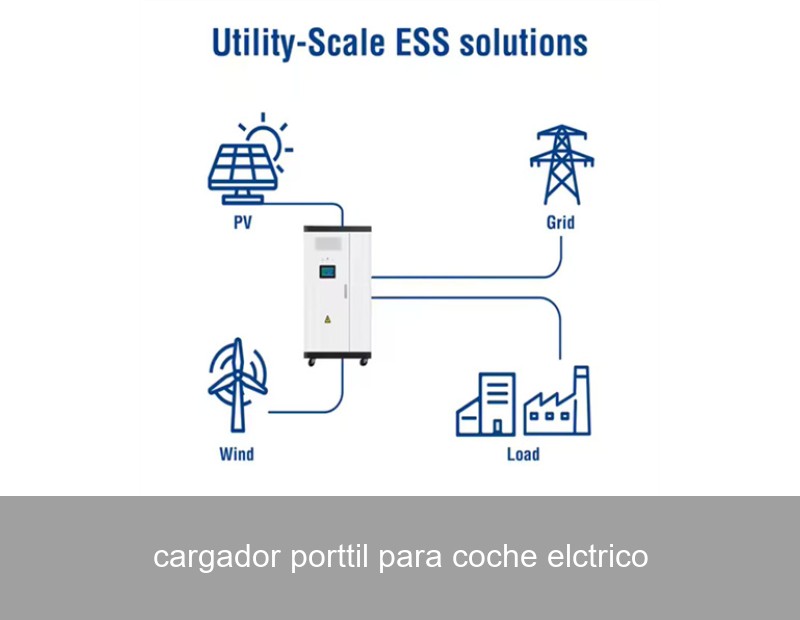
- Commercial & Microgrid Solutions: For businesses, we design large-scale battery energy storage systems (BESS) that stabilize grids, cut energy costs, and provide reliable EV charging for fleets and customers.
So, while a portable charger gets you out of a tight spot on the road, a Highjoule system ensures your entire energy footprint is efficient, sustainable, and under your control.

Image: A home integrated with solar panels and EV charging represents the future of energy. Source: Unsplash
Making the Right Choice for Your Needs
Choosing the right portable charger depends on your lifestyle. Are you a city dweller who rarely ventures far? A robust, single-plug model may suffice. Are you a frequent traveler across Europe? A kit with multiple plug adapters and higher amperage settings is a must.
Most importantly, view it as the first step towards a more comprehensive energy strategy. Pairing your portable charger with a smart home energy system from a provider like Highjoule multiplies the benefits, turning your EV from an energy consumer into a dynamic part of your personal energy network.
Ready to Explore Your Energy Independence?
Whether you're looking for the perfect portable charger for your electric car to ensure worry-free adventures, or you're curious about how to integrate solar, storage, and EV charging to achieve true energy resilience, the journey starts with a question.
What would you power first if you could design your own intelligent, sustainable energy system?
 Inquiry
 Online Chat