


What Do Solar Panels Do? Unlocking Sunlight's Full Potential
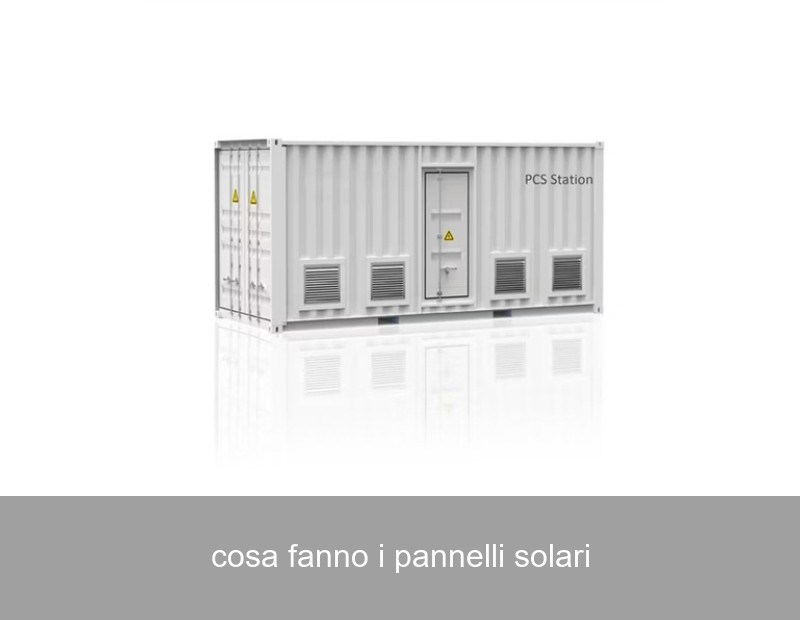
When you ask "Cosa fanno i pannelli solari?"—What do solar panels do?—the simple answer is they generate electricity. But that's just the beginning of the story. In today's energy landscape, especially across Europe and North America, solar panels are the cornerstone of a transformative system. They don't just create power; they empower energy independence, stabilize grids, and drive the transition to a sustainable future. This article delves deep into the multifaceted role of modern photovoltaic (PV) systems, exploring the science, the components, and the critical importance of pairing them with intelligent storage solutions.
Beyond Electricity: The True Power of Solar Panels
At first glance, solar panels are elegant pieces of technology that sit silently on rooftops or in fields. Their primary function is undeniably to convert sunlight into direct current (DC) electricity. However, their impact is far more profound. For homeowners, they reduce utility bills and provide a hedge against rising energy costs. For businesses, they enhance sustainability credentials and operational resilience. For communities and grids, they contribute to decarbonization and distributed energy generation, reducing strain on traditional power infrastructure. The modern solar panel is not an endpoint; it's the starting point of a smart, integrated energy ecosystem.
The Photovoltaic Effect: The Core Science Explained
So, how does this conversion happen? It all hinges on the photovoltaic (PV) effect, discovered in 1839. Solar panels are composed of many cells, typically made from silicon, a semiconductor material. Here's a simplified breakdown:
- Photon Absorption: When sunlight (composed of particles called photons) strikes the solar cell, it energizes the silicon atoms.
- Electron Excitation: This energy knocks electrons loose from their atomic bonds, creating electron-hole pairs.
- Electric Field Direction: A built-in electric field within the cell (created by doping the silicon with other elements) forces these freed electrons to move in a specific direction.
- Current Flow: This directed movement of electrons is an electric current—specifically, direct current (DC).
This DC electricity is then channeled out of the panel through wiring. A single panel might produce 300 to 400 watts under ideal conditions, so multiple panels are linked into an array to meet a home or business's energy needs.

Image Source: Unsplash - Close-up of solar panel cells.
From Panel to Plug: Key System Components
To understand what solar panels truly "do," you must see them as part of a team. A functional solar power system involves several key players:
| Component | Primary Function | Why It Matters |
|---|---|---|
| Solar Panels (Array) | Convert sunlight to DC electricity. | The primary energy harvesters; efficiency and durability are key. |
| Inverter(s) | Convert DC electricity to usable AC electricity. | Home appliances and the grid run on AC power. Modern systems use optimizers or micro-inverters for better panel-level management. |
| Mounting & Racking | Securely attach panels to roof or ground. | Ensures system longevity, optimal tilt, and orientation towards the sun. |
| Monitoring System | Tracks energy production and system health. | Provides real-time data, alerts for issues, and verifies performance and savings. |
| Battery Storage System | Stores excess solar energy for later use. | This is the game-changer. It allows use of solar power at night, during outages, and maximizes self-consumption. |
This last component—battery storage—is where the story evolves. Without storage, excess solar energy generated on a sunny afternoon is often fed back to the grid (for a credit or feed-in tariff), leaving you dependent on the grid at night. With storage, you can capture that surplus and use it on your own terms. This is precisely where Highjoule steps in. As a leader in advanced energy storage since 2005, Highjoule provides intelligent battery systems that seamlessly integrate with solar arrays. Our H-Joule Home and H-Joule Commercial series are designed to store solar energy efficiently, manage loads intelligently, and provide critical backup power, transforming a simple solar generator into a resilient, personal energy asset.
Real-World Applications and Impact: A Case Study from Germany
Let's move from theory to practice. Consider a mid-sized manufacturing facility in Bavaria, Germany. The facility operated two shifts, with high energy demand during daylight and early evening hours. They installed a 500 kW rooftop solar array.
The Phenomenon: Their solar panels produced a massive surplus at midday, but energy costs spiked during the evening shift when the sun was down.
The Data: Pre-storage, they were exporting ~40% of their solar generation to the grid at low feed-in tariffs, while purchasing expensive grid power later. Their on-site consumption of solar power was only about 60%.
The Case & Highjoule Solution: To bridge this gap, they integrated a Highjoule H-Joule Commercial 500 battery energy storage system (BESS). This system was configured to store the midday solar excess and dispatch it during the high-price evening hours.
The Insight & Result: Post-installation data showed their on-site consumption of solar power jumped to over 85%. They reduced their grid energy purchases during peak times by approximately 70%, leading to a calculated payback period of under 6 years on the storage addition, while significantly boosting their energy resilience. This case exemplifies the modern answer to "what do solar panels do?"—they work in tandem with storage to provide direct, predictable, and substantial economic value. (Data inspired by real Fraunhofer ISE study trends on commercial PV profitability with storage).
The Storage Imperative: Maximizing Solar's Potential
The German case study highlights a universal truth: the value of solar is multiplied by storage. For our European and US audiences, this is increasingly critical. Grids are becoming more dynamic, with time-of-use rates and less generous export tariffs (like the shift from Net Metering to Net Billing in some US states). A solar-plus-storage system future-proofs your investment.
Highjoule's systems are built with this intelligence at their core. Our Adaptive Energy Operating System (AEOS) doesn't just store and release energy; it learns consumption patterns, considers weather forecasts, and can be programmed to optimize for self-consumption, cost savings, or grid services participation. Whether for a residential customer looking for backup during storms in California or a microgrid project in Southern Europe ensuring community power continuity, Highjoule's technology ensures the energy your panels produce is used in the smartest way possible.

Image Source: Unsplash - Home with solar panels and battery storage unit.
The Future of Solar Technology
The journey of solar panels is one of constant innovation. We're seeing the rise of bifacial panels (capturing light from both sides), perovskite solar cells promising higher efficiencies, and building-integrated photovoltaics (BIPV) where panels become part of the building material itself. Furthermore, the integration of AI and IoT with systems like Highjoule's is creating "self-optimizing" energy homes and businesses. The fundamental answer to "cosa fanno i pannelli solari" is expanding from "they generate power" to "they are the heart of an intelligent, adaptive, and autonomous energy system."
Given the rapid evolution of both solar and storage technology, how will you ensure your energy system is not just generating power today, but intelligently managing it for the demands and opportunities of tomorrow?
 Inquiry
 Online Chat