


Understanding the True Cost of 5kW Solar Panels: A Smart Investment Guide
If you're considering solar power for your home, you've likely asked the key question: "What's the real cost of 5kW solar panels?" It's a smart starting point. A 5kW system is often considered the sweet spot for an average family home, balancing energy production with upfront investment. But the price tag you see advertised is just the beginning. The true value—and cost—is found in the system's performance over 25+ years, the quality of its components, and the intelligence of its energy management. Let's demystify the investment and explore how modern solar and storage solutions, like those from Highjoule, turn this upfront cost into long-term energy independence and savings.
Table of Contents
- Breaking Down the Cost of a 5kW Solar System
- Beyond the Panels: The Hidden Factors That Determine Value
- A Real-World Case Study: The Johnson Family Home in Arizona
- The Game Changer: How Battery Storage Redefines Solar Economics
- The Highjoule Solution: Intelligent Systems for Maximizing ROI
- Future-Proofing Your Investment
Breaking Down the Cost of a 5kW Solar System
In the U.S. and Europe, the total installed cost for a typical 5kW residential solar panel system can vary widely. As of 2024, you might see averages ranging from $11,000 to $15,000 USD (or €10,000 to €14,000) before incentives. This broad range isn't arbitrary. It's built from several core components:
- Solar Panels (Modules): These typically account for about 20-25% of the total cost. Premium, high-efficiency panels cost more but generate more power in limited space.
- Inverters: The "brain" of your system, converting DC solar power to usable AC power. Choosing between string inverters and microinverters impacts cost and performance.
- Mounting Hardware & Racking: The secure skeleton that holds your system to the roof.
- Electrical Components & Wiring: Safety switches, conduits, and cables that bring the power home.
- Professional Installation & Permits: Labor, engineering, and the paperwork to ensure a safe, code-compliant system. This is a significant and crucial part of the value.
However, this is just the hardware story. The real economic picture emerges after applying government incentives like the U.S. federal Investment Tax Credit (ITC) or similar schemes in European countries, which can reduce net cost by 30% or more.
Beyond the Panels: The Hidden Factors That Determine Value
Focusing solely on the per-watt cost of the panels is a common pitfall. Two critical, often overlooked factors drastically influence your long-term return on investment (ROI):
- System Efficiency & Degradation: A cheaper panel may degrade faster, losing 1% or more of its output per year. A premium panel with a lower degradation rate (e.g., 0.25% per year) will produce significantly more electricity over its lifetime, paying for its higher upfront cost many times over.
- Your Local Energy Landscape: The economics hinge on your local electricity rates and net metering policies. In regions with high, volatile utility rates (like parts of California or Germany), solar pays back faster. The value of each kilowatt-hour you produce is higher.
Image Source: Unsplash - A quality installation is key to long-term performance.
A Real-World Case Study: The Johnson Family Home in Arizona
Let's put numbers in context. The Johnson family in Phoenix, Arizona, installed a 5.2kW solar system in 2022. Their pre-incentive cost was $14,300. After the 30% federal tax credit, their net investment was $10,010.
| Metric | Detail |
|---|---|
| Annual Production | ~9,100 kWh |
| Local Electricity Rate | $0.145 / kWh (and rising ~4% annually) |
| First-Year Savings | ~$1,320 |
| Estimated Payback Period | ~7.5 years |
| 25-Year Estimated Savings | Over $45,000 (factoring in rate increases) |
Their system offsets nearly 95% of their annual usage. However, they faced a challenge: their utility's net metering policy changed, reducing the credit for excess power sent to the grid in the afternoon. This is a growing trend, making the next component—storage—essential for maximizing value.
The Game Changer: How Battery Storage Redefines Solar Economics
This is where the conversation about solar cost evolves. A standalone solar system is a great start, but pairing it with a battery storage system transforms its financial and practical value. Think of it this way: without a battery, you're still largely tied to the grid's schedule and prices. With a battery, you create your own personal energy reserve.
- Maximize Self-Consumption: Store your cheap, clean solar energy for use in the evening when grid rates are high.
- Backup Power: Provide essential power during grid outages, a feature whose value is immeasurable during extreme weather events.
- Grid Services: In some markets, you can even earn revenue by allowing your system to support grid stability.
Adding a battery increases the initial investment but dramatically improves energy independence and can protect against unfavorable shifts in utility policies. The key is an intelligent, integrated system.
The Highjoule Solution: Intelligent Systems for Maximizing ROI
This is precisely the challenge Highjoule was founded to solve. Since 2005, we've moved beyond just providing components to delivering integrated, intelligent energy systems. For a homeowner considering a 5kW solar system, we offer a seamless, optimized package.
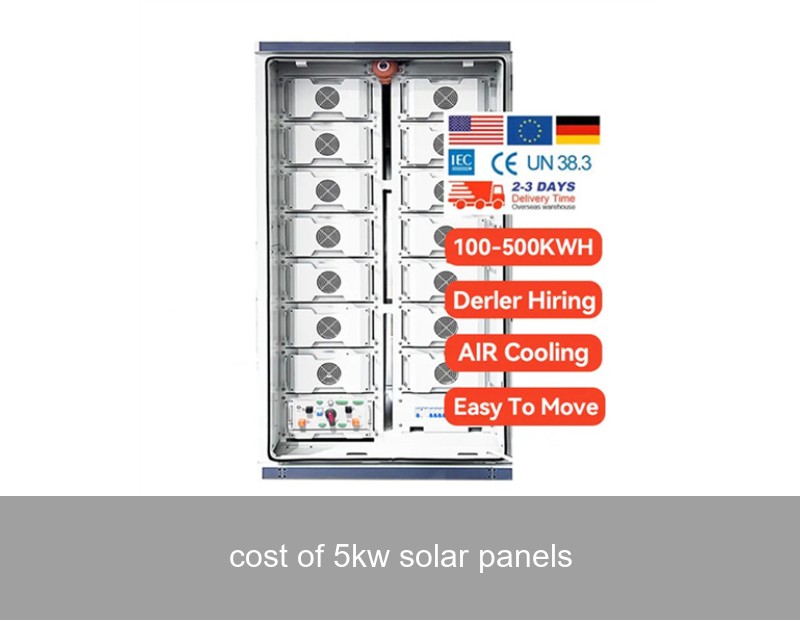
Our Residential Energy Hub combines high-efficiency solar panels with our advanced, modular battery storage and a smart hybrid inverter. The system's AI-driven energy management software is the true differentiator. It constantly learns your household's energy patterns, weather forecasts, and real-time electricity tariffs (in deregulated markets) to automatically decide when to store energy, when to use it, and when to draw from the grid—always prioritizing your savings and comfort.

Image Source: Unsplash - Modern battery storage units are compact and safe for homes.
For example, a Highjoule system might charge the batteries with excess solar, use that power during the peak evening rate period, and then take advantage of ultra-low overnight rates to top up the battery if needed before the next day—all without you lifting a finger. This level of optimization ensures that every dollar spent on your 5kW solar and storage system works harder for you, shortening the payback period and increasing lifetime value.
Future-Proofing Your Investment
The energy market is dynamic. According to the International Energy Agency (IEA), renewable capacity is set to expand rapidly, but grid integration and price volatility remain. Your home energy system should be adaptable.
When evaluating the cost of 5kW solar panels, ask your provider about system scalability and software updates. Can you easily add more battery capacity later? Will the software evolve to participate in new grid service programs? A Highjoule system is designed with this future in mind. Our modular batteries allow for capacity expansion, and our cloud-based software platform receives regular updates that can unlock new revenue streams and efficiency features over time, protecting your investment for decades.
So, the most important question isn't just "What is the cost of 5kW solar panels?" but rather, "What is the value of the energy independence and long-term security I want to achieve?" How would your daily life change if you could buffer yourself from rising energy costs and grid instability, starting today?
 Inquiry
 Online Chat