


Unlocking Solar Independence: Your Guide to the CoVAX Solar Energy Storage Cabinet
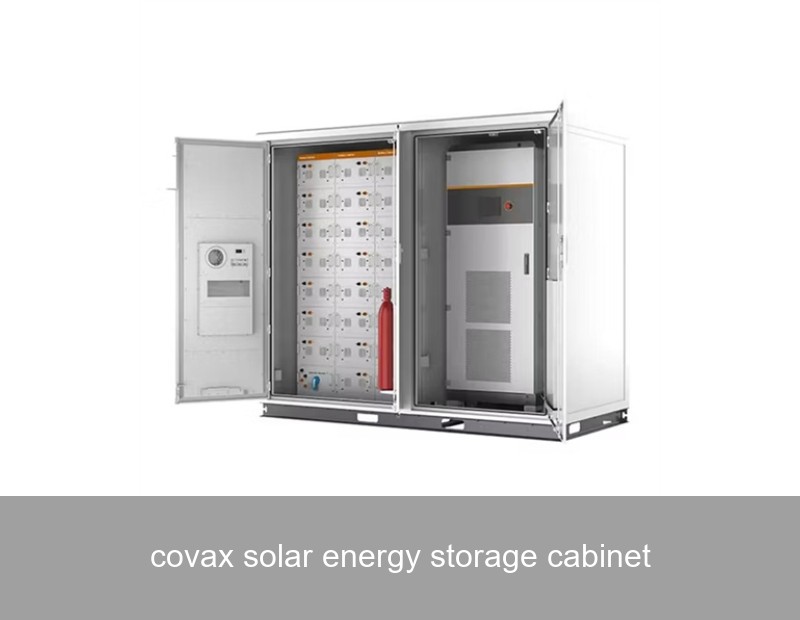
You've made the smart decision to go solar. Your panels are soaking up the sun, reducing your carbon footprint and your electricity bills. But have you ever wondered what happens when the sun is blazing, your panels are producing more power than your home or business can use, and the rest just... vanishes? Or what you'll do when the sun sets, and you're back to buying power from the grid at peak rates? This is where the concept of a CoVAX solar energy storage cabinet comes into play—a sophisticated, all-in-one system designed to capture that excess solar energy and store it for when you truly need it. Let's explore how this technology is transforming solar from a supplemental power source into a pillar of true energy independence.
The Power Grid Phenomenon: Too Much of a Good Thing?
Here’s a scenario playing out across sunny neighborhoods in California, Spain, and Germany. Midday, solar generation hits its peak. If your local grid is saturated—think of it as a highway at rush hour—this surplus solar energy can't be used effectively. In some cases, grid operators are forced to curtail, or essentially "turn off," solar feed-in to maintain stability. This isn't just a theoretical problem; it's a direct economic hit to your solar investment. Your panels are working, but you're not getting the full value. The phenomenon highlights a critical gap: generation without intelligent, on-demand storage. The solution isn't more panels; it's a smarter way to manage the energy you already produce.

Image Source: Unsplash - A modern home solar installation, the perfect candidate for adding a storage cabinet.
The Data Tells the Story: Curtailment and Cost
The numbers are compelling. In California's CAISO grid, reports have shown that solar curtailment has increased significantly year-over-year, with over 2.4 million megawatt-hours of renewable energy curtailed in a recent year—enough to power nearly 250,000 homes for a year. Meanwhile, for the end consumer, electricity prices continue to exhibit a dramatic spread between off-peak and peak hours. In parts of Europe and the US, peak rates can be double or triple the off-peak cost. This creates a powerful financial logic: store cheap, self-produced solar energy at midday, and use it during the expensive evening peak. This simple shift in consumption timing, enabled by storage, can slash your grid dependence by 70% or more.
Case Study: A Bavarian Dairy Farm's Journey to Resilience
Let's look at a concrete example. Müller Dairy, a mid-sized farm in Bavaria, Germany, installed a 120 kW solar array to power its milking parlors and cooling facilities. Despite high generation, they faced two issues: high grid fees during evening operations and vulnerability to occasional grid outages that threatened their refrigeration. In 2022, they integrated a Highjoule H-Cube 100 commercial energy storage cabinet—a system akin to an advanced CoVAX solution.
| Metric | Before Storage | After Highjoule H-Cube Installation |
|---|---|---|
| Grid Electricity Purchased (Evening Peak) | 85% of evening needs | 15% of evening needs |
| Solar Self-Consumption Rate | 35% | 92% |
| Estimated Annual Energy Cost Savings | Baseline | €18,500 |
| Backup Power During Outages | None (Diesel Generator) | Up to 8 hours for critical loads |
The result? The farm now operates its critical cooling systems primarily on its own solar energy, day and night, achieving a remarkable return on investment and gaining priceless peace of mind. This is the real-world power of a dedicated solar storage system.
The Highjoule Advantage: Intelligent Storage for a Complex Grid
At Highjoule, we understand that a storage cabinet is more than just a box of batteries. Since 2005, we've been engineering integrated systems that think. Our H-Cube series for commercial/industrial use and HomeVault series for residential applications embody the principles of a high-performance CoVAX system. What sets our solutions apart is the Adaptive Grid Intelligence (AGI) software. It doesn't just store and release energy; it learns your consumption patterns, forecasts weather, and integrates real-time grid electricity pricing (where available). It automatically optimizes energy flow to maximize your savings, protect your equipment, and even provide backup power seamlessly during an outage—all without you lifting a finger.

Image Source: Unsplash - The interior of a professional battery energy storage system, showcasing organization and safety.
Key Components of a Modern Solar Storage Cabinet
So, what's inside a system like this? Let's break it down:
- High-Density Battery Modules: Typically using lithium iron phosphate (LFP) chemistry for safety, longevity (often 10+ year warranties), and high cycle life. Highjoule uses modular designs, allowing capacity to be scaled as your needs grow.
- Bi-Directional Inverter/Charger: The brain of the power flow. It efficiently converts DC power from your panels and batteries to AC power for your building, and vice-versa for charging.
- Integrated Thermal Management: A crucial, often overlooked component. A closed-loop cooling system maintains optimal battery temperature year-round, ensuring performance and safety in both summer heat and winter cold.
- Grid-Forming Capability: Advanced systems, like those from Highjoule, can "island" from the grid and create a stable microgrid for your property during outages—a feature once reserved for industrial facilities.
- Cybersecurity & Connectivity: Secure remote monitoring and control via a user-friendly app, giving you insights and control over your energy ecosystem from anywhere.
Choosing a system isn't just about kilowatt-hours. It's about choosing a platform designed for the future. As noted by energy researchers at NREL, the integration of storage is key to building a resilient, decarbonized grid. Your decision contributes to that larger picture.
Your Solar Power, Your Future Grid
The journey from a simple solar array to a self-sustaining energy asset is enabled by the intelligent storage cabinet. It transforms your relationship with energy from passive consumption to active management. It turns solar panels into a true 24/7 power plant for your home or business. The question is no longer if you should add storage, but when and which system will best fit your goals for savings, resilience, and sustainability.
Is your current solar installation operating at its full potential, or is a significant portion of its value slipping back to the grid on your behalf? What would it mean for your business or home to have guaranteed power through the next grid interruption?
 Inquiry
 Online Chat