


Electrical Energy Production: The Modern Shift Towards Decentralized and Smart Power
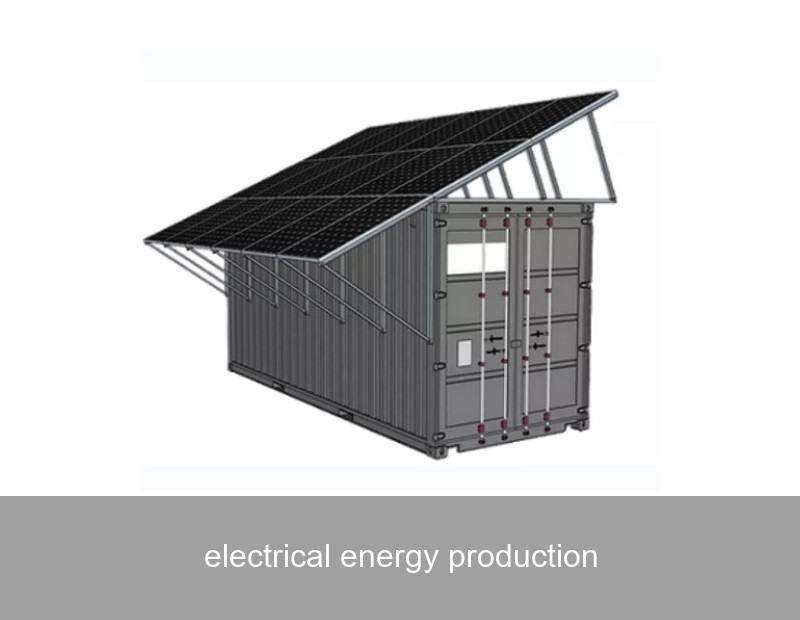
For over a century, electrical energy production followed a simple, one-way path: large centralized power plants (burning coal, gas, or harnessing nuclear or hydro power) generated electricity, sent it over vast transmission networks, and we consumed it. Today, that model is undergoing a radical transformation. Driven by climate goals, energy security concerns, and technological innovation, how we produce and manage electricity is becoming decentralized, digital, and sustainable. This isn't just about adding solar panels; it's about reimagining the entire energy ecosystem from the ground up.
Table of Contents
- The Phenomenon: From Centralized Grids to Energy Independence
- The Data: The Rising Tide of Renewables and Storage
- The Case Study: A German Industrial Park's Journey
- The Insight: Intelligence is the New Infrastructure
- Highjoule's Role in the New Energy Landscape
- What Does Your Ideal Energy Mix Look Like?
The Phenomenon: From Centralized Grids to Energy Independence
Walk through any neighborhood in California or browse new housing developments in Germany, and you'll see the phenomenon firsthand: rooftops gleaming with solar PV, and sometimes, a sleek battery unit mounted on a wall. Businesses are doing this at a much larger scale. Why? The reasons are threefold: volatility, sustainability, and economics.
First, energy prices and grid reliability are no longer a given. Extreme weather events and geopolitical tensions have exposed the vulnerability of traditional grids. Second, corporate sustainability mandates and consumer preference are pushing for cleaner electrical energy production. Third, and perhaps most compellingly, the levelized cost of energy (LCOE) from solar and wind has plummeted, making self-generation not just an ethical choice, but a financially savvy one. The goal is no longer just to consume power, but to actively produce, store, and optimize it.

Image: Modern industrial facilities are becoming active power plants, combining solar PV with on-site battery storage.
The Data: The Rising Tide of Renewables and Storage
Let's look at the numbers that underscore this shift. According to the International Energy Agency (IEA), renewables are set to contribute 80% of new power capacity globally through 2030 under current policies. In the U.S., the Energy Information Administration (EIA) projects that combined solar and battery storage capacity will jump from 11 GW in 2023 to over 30 GW by 2025. Europe is accelerating even faster, aiming for a 42.5% share of renewables in energy consumption by 2030.
But here's the critical piece of data often missed: intermittency. Solar doesn't produce at night, and wind can be calm. This is where Battery Energy Storage Systems (BESS) become the linchpin. They don't just store excess energy; they transform variable renewable generation into a firm, dispatchable resource. The global BESS market is expected to grow from about 90 GWh of annual additions in 2023 to over 400 GWh by 2030. This isn't an add-on; it's fundamental to the new architecture of electrical energy production.
| Driver | European Context | U.S. Context |
|---|---|---|
| Policy & Regulation | EU Green Deal, REPowerEU, net-zero mandates | Investment Tax Credit (ITC), Inflation Reduction Act (IRA) |
| Economic | High & volatile wholesale electricity prices | Demand charge management for commercial users |
| Technological | Advanced grid-forming inverters, AI-driven management | Scale-up of utility-scale solar+storage projects |
| Security | Reducing dependence on imported fossil fuels | Grid resilience against wildfires and extreme weather |
The Case Study: A German Industrial Park's Journey to 85% Self-Sufficiency
The theory comes alive with real-world results. Consider a mid-sized automotive supplier park in Bavaria, Germany. Facing rising grid costs and ambitious Scope 2 carbon reduction targets, the park management embarked on a modernization project in 2022.
The Challenge: High peak demand charges, unreliable grid power during peak periods, and a need to integrate existing rooftop PV more effectively.
The Solution: A integrated smart microgrid was deployed, centered on a Highjoule HiveStack Commercial BESS with 2.4 MWh capacity and advanced grid-forming capabilities. The system was coupled with an existing 1.5 MWp solar array and managed by Highjoule's Orion AI Energy Management Platform.
The Data-Driven Outcome (12-month post-installation):
- Energy Self-Sufficiency: Increased from 35% to 85% annually.
- Peak Demand Shaving: Reduced grid peak demand by 72%, slashing capacity charges.
- Cost Savings: Achieved a 40% reduction in overall electricity costs.
- Carbon Avoidance: Prevented an estimated 1,850 tonnes of CO2 emissions.
- Grid Services: The system now participates in local frequency regulation markets, creating a new revenue stream.
This case, documented in a Fraunhofer ISE study on industrial decarbonization, illustrates that modern electrical energy production is a dynamic, multi-value operation. It's not just generation; it's storage, smart dispatch, and market participation working in concert.
The Insight: Intelligence is the New Infrastructure
So, what's the key takeaway from this shift? The most valuable component in the new energy paradigm is no longer just the solar panel or the battery cell—it's the intelligence that orchestrates them. A battery without smart software is a passive vessel. Solar without intelligent forecasting and load-matching can strain the grid it's trying to support.
True modern electrical energy production requires a system that can:
- Forecast: Predict solar/wind generation and facility load using weather data and AI.
- Optimize in Real-Time: Decide every second whether to consume, store, or discharge energy based on cost, carbon intensity, and grid signals.
- Form Grids: Provide stable voltage and frequency in "island mode" during outages, a feature known as black start capability.
- Adapt: Learn from usage patterns and evolve its strategies over time.

Image: The brain of the operation: AI-driven energy management platforms turn raw data into cost and carbon savings.
Highjoule's Role in the New Energy Landscape
Since 2005, Highjoule has been at the forefront of this intelligent energy transition. We understand that our clients—whether a hospital in Texas, a factory in Poland, or a residential community in Spain—need more than just hardware. They need a comprehensive, future-proof power solution.
Our product suite is engineered for this precise purpose:
- HiveStack Commercial & Industrial BESS: Scalable, containerized or modular battery systems featuring UL 9540 certification and advanced safety protocols. Their grid-forming inverters are crucial for building resilient microgrids.
- VoltStream Residential Storage Systems: Sleek, high-cycle life lithium iron phosphate (LFP) battery systems designed for seamless integration with leading solar inverters, giving homeowners control and security.
- Orion AI Energy Management Platform: The core intelligence. This cloud-based platform uses machine learning to autonomously optimize energy flows across assets, maximizing financial return and sustainability impact. It can even aggregate distributed systems to participate in utility demand response programs.
Our services extend from initial feasibility studies and system design to commissioning, long-term performance monitoring, and maintenance. We partner with you to transform your site from a passive energy consumer into an active, intelligent hub of electrical energy production.
Beyond the Meter: The Microgrid Imperative
For campuses, industrial complexes, and remote communities, the ultimate expression of this new model is the smart microgrid. Highjoule specializes in designing and deploying these self-sufficient energy networks. By integrating local generation (solar, wind), our BESS, and the Orion AI, a microgrid can disconnect from the main grid during outages and operate independently, ensuring critical operations never stop. This is the pinnacle of resilient, sustainable electrical energy production.
What Does Your Ideal Energy Mix Look Like?
The landscape of electrical energy production has changed irrevocably. The question is no longer if you will participate in this more dynamic, decentralized system, but how and when. Every business leader, facility manager, and homeowner now has the opportunity to be a proactive energy manager.
What is the one energy challenge—be it cost volatility, sustainability targets, or reliability concerns—that keeps you up at night? How would transforming your relationship with energy impact your operations, your community, or your monthly bills? We invite you to explore these questions. The technology to answer them is here, and it's smarter than ever.
 Inquiry
 Online Chat