


Why the Electricity Exhibition Dubai is a Global Beacon for Energy Innovation
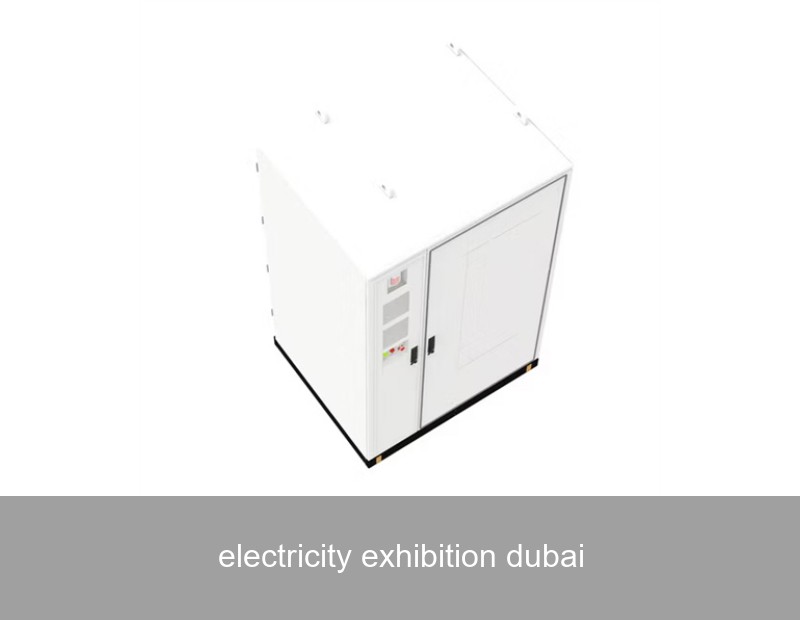
The Electricity Exhibition Dubai is more than just a regional trade show. It has rapidly evolved into the world's premier crossroads for the future of power. As global energy systems strain under the pressures of climate change, economic volatility, and rising demand, this event serves as a critical mirror, reflecting both our collective challenges and the most promising solutions. For anyone in the renewable energy and advanced energy storage sector, understanding the trends showcased here isn't just insightful—it's essential for navigating the next decade of power.
Table of Contents
- The Dubai Phenomenon: More Than Megawatts
- The Data Driving the Shift: From Intermittency to Intelligence
- A Case Study in Resilience: Al Maktoum International Airport's Solar+Storage Project
- The Intelligent Core: What Modern BESS Solutions Must Deliver
- Highjoule at the Forefront: Engineering Stability for a Volatile Grid
- Beyond the Exhibition Hall: The Future Grid is Hybrid and Intelligent
The Dubai Phenomenon: More Than Megawatts
Walk the halls of the Electricity Exhibition Dubai, and you immediately feel a unique energy. It's a fusion of ambitious national visions, like the UAE's Energy Strategy 2050, and the pragmatic needs of industries, utilities, and homeowners from Europe, Africa, Asia, and beyond. The conversation has decisively shifted. It's no longer just about generating more electricity, but about managing it intelligently, storing it efficiently, and distributing it resiliently.
This is where Battery Energy Storage Systems (BESS) have moved from the sidelines to center stage. The exhibition floor is a testament to this, showcasing everything from massive, grid-scale containerized systems to sleek, modular units designed for commercial rooftops. The central question echoing through every booth and conference session is: How do we turn variable renewable power into a firm, dispatchable, and reliable source of energy? The answer, universally, points to advanced storage.
The Data Driving the Shift: From Intermittency to Intelligence
The theoretical benefits of solar and wind are well-known. The practical hurdle is their intermittency—the sun doesn't always shine, and the wind doesn't always blow. This creates a "duck curve" phenomenon, where grid operators face a steep ramp-up in demand as solar production plummets in the evening. Without storage, this requires keeping fossil-fuel "peaker" plants on standby, undermining both economic and environmental goals.
Let's look at the numbers. According to the International Energy Agency (IEA), global grid-scale battery storage capacity needs to expand over 40-fold by 2030 to align with net-zero emissions targets. In markets like California and Germany, where renewable penetration is high, BESS is no longer a luxury; it's critical infrastructure for frequency regulation, peak shaving, and black-start capability. The discussions at the Electricity Exhibition Dubai consistently highlight that the next phase of the energy transition is digital and electrochemical, not just mechanical.

Image: Utility-scale solar and storage are becoming inseparable. Source: Unsplash
A Case Study in Resilience: Al Maktoum International Airport's Solar+Storage Project
Nothing illustrates the practical application of these trends better than a real-world project from the region. A prime example is the solar and storage initiative at Al Maktoum International Airport (DWC) in Dubai. The airport integrated a significant solar PV array with a multi-megawatt hour (MWh) battery storage system.
The objectives were clear: reduce reliance on the main grid during peak tariff periods, provide backup power for critical operations, and lower the airport's overall carbon footprint. The BESS acts as a buffer, storing excess solar energy generated during the day and discharging it during the high-demand evening hours or during any grid instability. Reports indicate the system helps the airport shave over 20% off its peak demand charges and provides crucial seconds of ride-through power during grid fluctuations, ensuring uninterrupted operations for sensitive aviation infrastructure. This is a textbook case of the commercial and operational value proposition highlighted at the Electricity Exhibition.
The Intelligent Core: What Modern BESS Solutions Must Deliver
Projects like DWC's succeed not just because they have batteries, but because they have intelligent storage systems. From the exhibition floor to global deployments, the market demands solutions that go beyond simple battery racks. A modern, high-performance BESS must integrate several key layers:
- Advanced Battery Management (BMS): Precise monitoring and control of each cell for safety, longevity, and performance.
- Sophisticated Power Conversion (PCS): High-efficiency bi-directional inverters that manage the AC/DC flow seamlessly.
- Energy Management System (EMS): The true "brain." It must analyze real-time data, weather forecasts, electricity prices, and load patterns to make autonomous, profit or savings-optimizing decisions.
- Thermal Management: An often-underestimated component. Consistent, precise cooling is vital for cycle life and safety, especially in harsh climates like the Gulf's.
This integrated intelligence is what transforms a capital expense into a strategic asset that generates ROI through multiple value streams.
Highjoule at the Forefront: Engineering Stability for a Volatile Grid
For nearly two decades, Highjoule has been engineering storage solutions that meet these exacting demands. Our presence at forums like the Electricity Exhibition Dubai is rooted in delivering not just products, but comprehensive stability. We understand that a BESS is a long-term investment, and its performance must be guaranteed across thousands of cycles in diverse environments.
Our H-Series Commercial & Industrial (C&I) storage systems are a direct answer to the needs showcased in Dubai. They feature:
- Modular, Scalable Design: Start with what you need and expand capacity as your business grows, protecting your initial investment.
- High-Density, LFP Chemistry: Utilizing Lithium Iron Phosphate batteries for superior safety, longer lifespan (typically over 6,000 cycles), and excellent thermal stability.
- AI-Powered GridSync™ EMS: Our proprietary software platform enables advanced strategies like peak shaving, time-of-use optimization, and demand response participation, automatically maximizing financial returns.
- Global Service & Monitoring: With 24/7 remote monitoring and a network of technical partners, we ensure system health and performance from installation through its entire lifecycle.
For larger, more complex needs, our Microgrid & Utility-Scale solutions provide the grid-forming and black-start capabilities that are becoming vital for national energy security and industrial campus resilience. Whether it's a manufacturing plant in Germany looking to cap its energy costs or a community microgrid in the US seeking independence, Highjoule's technology provides the intelligent buffer between renewable generation and reliable consumption.

Image: A technician performing maintenance on a modular BESS unit. Source: Unsplash
Beyond the Exhibition Hall: The Future Grid is Hybrid and Intelligent
The ultimate takeaway from the Electricity Exhibition Dubai is that the future energy system will be a hybrid, decentralized, and digitally orchestrated network. It will combine utility-scale solar parks, distributed rooftop PV, wind farms, and a diverse fleet of storage assets—all managed by intelligent software that balances the grid in real-time. The BESS is the linchpin of this new architecture.
This shift is supported by evolving policy. The U.S. Inflation Reduction Act (IRA) and various European Green Deal initiatives are creating powerful investment incentives for storage. As noted by Wood Mackenzie, policy tailwinds are accelerating deployment timelines dramatically. The projects debated and deals signed in Dubai will shape the grids of tomorrow from Nevada to Norway.
Ready to See How Intelligent Storage Can Transform Your Energy Profile?
The innovations on display at the Electricity Exhibition Dubai are not mere concepts; they are ready-to-deploy technologies solving real economic and operational problems today. Whether you're a facility manager tired of volatile energy bills, a developer building the next sustainable community, or a utility planner tasked with grid stability, the equation now includes storage.
What specific energy challenge—peak demand charges, renewable curtailment, backup power needs, or carbon reduction goals—could an intelligent, Highjoule-style storage system solve for your operation?
 Inquiry
 Online Chat