


Electricity Power Systems: The Backbone of a Sustainable Future
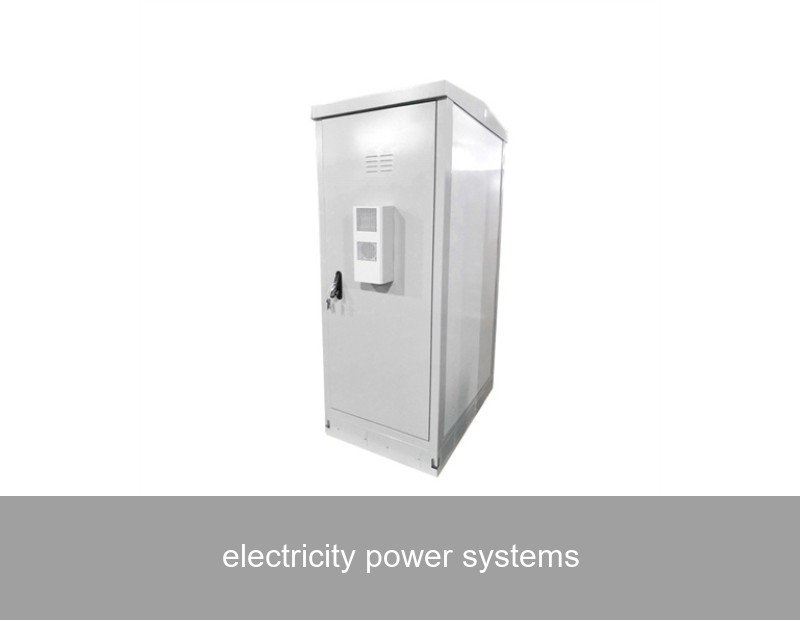
Have you ever stopped to think about the journey of the electricity that powers your home, business, or city at this very moment? Modern electricity power systems are engineering marvels, but they face unprecedented challenges. From grid instability to the integration of renewables, the very architecture of how we generate, distribute, and consume power is undergoing a radical transformation. This evolution is critical for achieving energy independence and a sustainable future, especially in markets like Europe and the United States.
Table of Contents
- The Modern Challenge: An Aging Grid Meets Renewable Energy
- The Data Reality: Why Our Grids Are Under Stress
- Case Study: California's Duck Curve in Action
- The Solution's Core: Intelligent Energy Storage
- How Highjoule is Reinventing Electricity Power Systems
- The Future Grid: Decentralized, Resilient, and Smart
The Modern Challenge: An Aging Grid Meets Renewable Energy
For decades, electricity power systems have operated on a simple, one-way principle: large, centralized power plants (like coal or nuclear) generate electricity, which is then transmitted over long distances and distributed to end-users. This model is linear and, frankly, inflexible. The surge in solar and wind energy—a fantastic development for our planet—has exposed this rigidity. These sources are intermittent; the sun doesn't always shine, and the wind doesn't always blow. This creates a fundamental mismatch between supply and demand that traditional grids were never designed to handle.
The Data Reality: Why Our Grids Are Under Stress
Let's look at the numbers. In the United States, the Department of Energy reports that 70% of the nation's transmission lines are over 25 years old. In Europe, the push for decarbonization means renewable capacity is growing rapidly, but grid infrastructure upgrades lag behind. This leads to two critical issues:
- Curtailment: Grid operators are forced to pay renewable plants to *stop* generating when supply exceeds demand or grid capacity, wasting clean energy and money.
- Reliability Risks: During extreme weather events (like heatwaves or winter storms), peak demand can overwhelm the system, leading to brownouts or blackouts.
The data paints a clear picture: without a new layer of intelligence and flexibility, our electricity power systems will struggle to deliver on the promise of a renewable future.
Case Study: California's Duck Curve in Action
Perhaps no phenomenon better illustrates this challenge than the now-famous "Duck Curve," a term coined by the California Independent System Operator (CAISO).

Image Source: California ISO (CAISO)
Here's what happened: As California installed massive amounts of midday solar power, the net demand on the grid (total demand minus solar/wind) began to plunge sharply in the afternoon, forming the "belly" of the duck. Then, as the sun sets and solar generation drops to zero, demand spikes rapidly for the evening—forming the "neck" of the duck. This creates a massive, steep ramp that traditional gas "peaker" plants must fulfill, which is inefficient, expensive, and carbon-intensive.
In 2022, CAISO reported having to curtail over 2.4 million megawatt-hours of renewable energy, primarily solar—enough to power over 270,000 homes for a year. This real-world case is a powerful lesson for electricity power systems worldwide: integrating renewables isn't just about generation; it's fundamentally about management.
The Solution's Core: Intelligent Energy Storage
So, how do we flatten the duck curve and build resilient grids? The answer lies in advanced Battery Energy Storage Systems (BESS). Think of BESS as a "shock absorber" and "time-shift" device for the grid. It doesn't just store energy; it provides critical grid services with millisecond-level precision.
| Storage Function | Impact on the Grid |
|---|---|
| Energy Time-Shifting (Arbitrage) | Stores cheap solar energy at noon and discharges it during the expensive evening peak. |
| Frequency Regulation | Instantly injects or absorbs power to keep the grid's frequency stable, a must for system health. |
| Peak Shaving / Capacity Firming | Reduces demand charges for businesses and defers costly grid infrastructure upgrades. |
| Black Start Capability | Can help restart parts of the grid after a total blackout, enhancing resilience. |
How Highjoule is Reinventing Electricity Power Systems
This is where Highjoule's nearly two decades of expertise comes into play. Since 2005, we've moved beyond simply supplying battery hardware. We design and deliver intelligent, integrated electricity power systems that solve the core challenges outlined above.
Our flagship product, the Highjoule Nexus Platform, is a prime example. It's a containerized, all-in-one BESS solution built with industry-leading lithium-iron-phosphate (LFP) battery cells for safety and longevity. But its true power is in its software: the Highjoule Apex Optimizer.
- For Commercial & Industrial (C&I) Sites: The Apex Optimizer continuously analyzes energy prices, on-site solar production, and facility load. It autonomously decides the most economical moment to charge or discharge, slashing energy bills and providing backup power during outages. It turns a business's energy assets into a revenue-generating or cost-saving portfolio.
- For Utilities and Microgrids: Our systems can be aggregated to form virtual power plants (VPPs), providing grid-scale services like frequency regulation and peak capacity. We've deployed systems that help stabilize local grids, allowing for higher penetration of wind and solar without risking reliability.

Image Source: Unsplash (Representative of modern BESS installation)
Our approach is holistic. We provide everything from initial feasibility studies and financial modeling to system design, installation, and 24/7 remote monitoring. We ensure our electricity power systems are not just products, but long-term partnerships for energy resilience.
The Future Grid: Decentralized, Resilient, and Smart
The future of electricity power systems is not a single, monolithic grid. It's a network of interconnected microgrids and distributed resources. Imagine a neighborhood where every home with solar panels also has a storage system, all coordinated to support each other and the main grid during a stress event. This decentralized model, supported by companies like Highjoule, reduces single points of failure and empowers communities.
Research from institutions like the National Renewable Energy Laboratory (NREL) consistently shows that combining solar with storage is the most effective path to high renewable penetration. The technology is ready, and the economic case grows stronger every day.
Is your business, community, or energy project ready to transition from being a passive consumer to an active manager in the new energy landscape? What step will you take today to build a more resilient and intelligent electricity power system for your needs?
 Inquiry
 Online Chat