


Understanding and Maximizing Your Solar Panel Energy Output
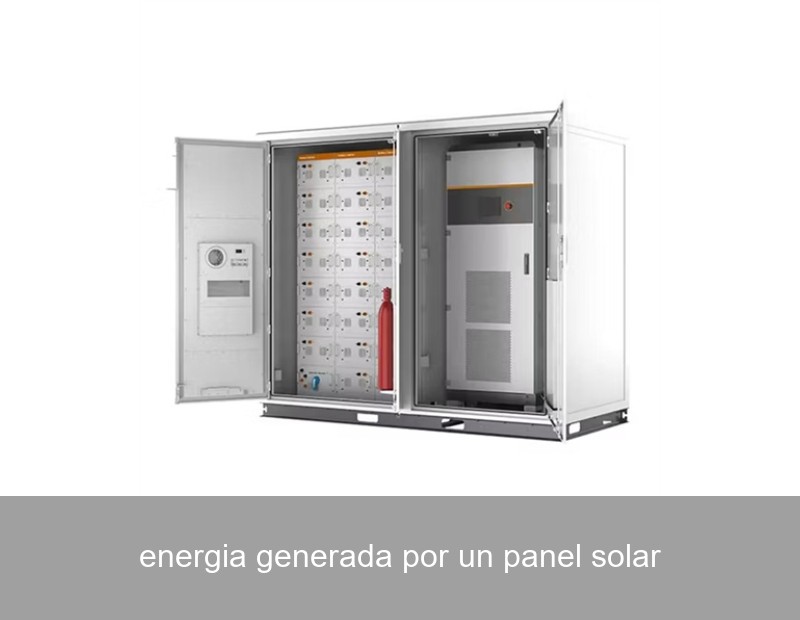
Table of Contents
So, you've got solar panels on your roof, or you're thinking about getting them. You hear terms like "kilowatt-hours" and "system efficiency," but the core question is beautifully simple: how much usable electricity—energía generada por un panel solar—can I actually get? It's not just about the panels themselves; it's about the entire ecosystem that captures, manages, and delivers that clean power to your home or business. Let's demystify the journey of a sunbeam into your socket.
What Exactly Is "Energía Generada por un Panel Solar"?
In essence, it's the total amount of electrical energy produced by your photovoltaic (PV) system over a given period, typically measured in kilowatt-hours (kWh). Think of it this way: if a 400-watt panel operates at its full capacity for one hour, it generates 400 watt-hours, or 0.4 kWh, of energy. But here's the catch—sunlight isn't constant. The actual energy generated is a product of the panel's rated capacity, the intensity of sunlight, and a myriad of environmental and technical factors.

Image Source: Unsplash - A visual representation of solar energy generation.
This raw energy is just the beginning. The true measure of a system's value is how much of that generated energy you can effectively use or store. This is where the conversation shifts from simple generation to intelligent energy management.
Key Factors Impacting Your Solar Panel's Energy Production
Your solar yield isn't left to chance. It's influenced by a clear set of variables. Understanding these is the first step toward optimization.
- Solar Irradiance & Geography: This is the foundational input. Locations in southern Spain or California naturally receive more annual sunlight than those in northern Germany or Washington state. Tools like PVGIS from the European Commission provide excellent estimates for specific locations.
- Panel Orientation & Tilt: In the Northern Hemisphere, south-facing roofs typically yield the highest annual output. The optimal tilt angle often matches your latitude.
- Temperature: Contrary to intuition, solar panels are more efficient in cooler, sunny weather. High temperatures can reduce their voltage and overall output.
- Shading & Soiling: Even partial shading from a chimney or tree can disproportionately reduce output. Regular cleaning to remove dust, pollen, or bird droppings is also crucial.
- System Components & Degradation: The quality of your panels, inverters, and wiring matters. Panels also naturally degrade, losing about 0.5%-1% of their output capacity per year.
The Invisible Culprit: Inefficient Consumption & Grid Dependency
Here's a paradox many face: high generation but still high bills. Why? Because solar production often peaks in the middle of the day when you might not be home. Without a way to capture that surplus, it's exported to the grid at a low rate. Later, in the evening when demand peaks, you buy back expensive grid power. This mismatch severely underutilizes your precious energía generada por un panel solar.
From Theory to Reality: A Real-World Case Study
Let's look at a concrete example. A medium-sized dairy farm in Bavaria, Germany, installed a 100 kW rooftop solar system in 2020. Their goal was to power their cooling facilities and reduce operational costs.
| Metric | Initial Setup (2020) | After Adding Highjoule BESS (2023) |
|---|---|---|
| Annual Solar Generation | ~95,000 kWh | ~95,000 kWh |
| On-Site Consumption (Self-Consumption Rate) | 35% (~33,250 kWh) | 85% (~80,750 kWh) |
| Grid Reliance During Peak Hours | High | Reduced by ~70% |
| Estimated Annual Energy Cost Savings | €12,000 | €28,500 |
The Game-Changer: In 2023, the farm integrated a Highjoule HI-Stack Commercial Battery Energy Storage System (BESS). This allowed them to store the midday solar surplus and dispatch it during the high-rate evening hours and for critical overnight cooling. The system's intelligent energy management software automatically optimizes for cost savings based on real-time consumption and tariff data.
As the International Renewable Energy Agency (IRENA) notes, "storage is key to ensuring the flexibility of power systems with high shares of renewables." This farm is a perfect microcosm of that principle in action.
Beyond the Panel: How to Truly Maximize Your Solar Energy Output
Maximizing your return isn't just about squeezing a few more watts from the panels; it's about holistically managing the energy lifecycle.
- Professional Design & Installation: Start with a reputable installer who models shading and uses quality components.
- Embrace Energy Storage: This is the single most effective step. A battery system like Highjoule's residential HI-Core Home or commercial HI-Stack series transforms your solar array into a personal energy reserve. You increase self-consumption, gain backup power, and achieve true energy independence.
- Smart Energy Management: Pair your storage with intelligent software. Highjoule's EnergyOS™ platform learns your habits, integrates with time-of-use tariffs, and can even prioritize charging an EV with excess solar, ensuring every kilowatt-hour is used where it delivers the most value.
- Regular Maintenance & Monitoring: Use your system's monitoring portal to track performance. A sudden drop in energía generada por un panel solar can alert you to maintenance issues.

Image Source: Unsplash - A home integrating solar generation with battery storage.
At Highjoule, we see ourselves not just as storage providers, but as energy resilience partners. Our solutions are designed to bridge the gap between solar generation and reliable, cost-effective consumption, whether for a family home in Texas or an industrial facility in Italy.
The Future of Solar Energy Utilization
The technology continues to evolve. Panel efficiencies are slowly creeping upward, and the integration of solar with other renewables into microgrids is becoming more common. According to the National Renewable Energy Laboratory (NREL), ongoing research promises continued cost reductions and performance improvements.
However, the most immediate and impactful evolution is in system intelligence. The future lies in AI-driven systems that don't just store energy, but predict generation, adapt to weather patterns, and seamlessly integrate with electric vehicles and smart home appliances, creating a fully autonomous, efficient energy ecosystem.
Your Energy, Your Control
So, the next time you look at your solar panels, think beyond the glittering blue surface. The true potential of your energía generada por un panel solar is unlocked not just by the sun, but by the technology that harnesses, stores, and intelligently manages it. Are you ready to move from simply generating solar energy to truly commanding it?
What's the biggest challenge you've faced in making the most of your solar power—is it storage, upfront costs, or simply understanding the options available to you?
 Inquiry
 Online Chat