


How an Energy Automation System is Revolutionizing Power Management in Homes and Businesses
Imagine your home or business not just consuming electricity, but actively managing it. Picture a system that seamlessly coordinates your solar panels, your battery storage, and even your appliances to maximize efficiency, slash bills, and keep the lights on during an outage. This isn't science fiction; it's the reality delivered by a modern energy automation system. For nearly two decades, Highjoule has been at the forefront of this intelligent energy revolution, providing smart, integrated solutions that turn passive power consumers into active energy hubs. Let's explore how this technology works and why it's becoming indispensable.
Table of Contents
- What is an Energy Automation System?
- The Phenomenon: From Static Grids to Dynamic Networks
- The Data: The Tangible Benefits of Automation
- The Case Study: A German Bakery's Recipe for Resilience
- The Insight: The Core Components of a Smart System
- Highjoule's Role: Your Partner in Intelligent Energy
- Looking Ahead: What's Next for Automated Energy?
What is an Energy Automation System?
At its core, an energy automation system is the "brain" of a modern energy setup. It's a sophisticated software platform, often paired with smart hardware, that autonomously monitors, controls, and optimizes the flow of energy. Think of it as the conductor of an orchestra, where the instruments are your solar PV array, battery storage system, grid connection, and major electrical loads. The system makes real-time decisions based on factors like electricity prices, weather forecasts, your consumption patterns, and grid stability, ensuring every kilowatt-hour is used in the most economical and efficient way possible.

Image: A modern energy management dashboard, central to any energy automation system. Source: Unsplash
The Phenomenon: From Static Grids to Dynamic Networks
For over a century, our relationship with electricity was simple: we flipped a switch, and power flowed from a distant power plant through a one-way grid. Today, that model is breaking down. The explosive growth of intermittent renewables like solar and wind, coupled with increasing grid instability and volatile energy prices, has created a complex new landscape. Consumers are now also "prosumers"—both producing and consuming energy. Managing this two-way flow manually is impossible. This is the phenomenon creating an urgent need for automated intelligence at the edge of the grid.
The Data: The Tangible Benefits of Automation
The value proposition of an energy automation system isn't theoretical; it's quantifiable. Let's look at the key performance indicators:
| Benefit | Typical Impact | How Automation Achieves It |
|---|---|---|
| Energy Cost Reduction | 25% - 40% | Shifts consumption to low-cost periods, maximizes self-consumption of solar, avoids peak tariffs. |
| Solar Self-Consumption Increase | Up to 90%+ | Directs surplus solar energy to batteries or smart appliances (like EV chargers) instead of exporting. |
| Backup Power Readiness | Seamless transition during outages | Islands the property from the grid and optimally manages battery reserves for critical loads. |
| Grid Services & Revenue | Potential new income stream | Allows aggregated systems to participate in grid stability programs (e.g., frequency regulation). |
According to a report by the National Renewable Energy Lab (NREL), advanced energy management systems are critical to achieving high levels of renewable energy penetration while maintaining grid reliability.
The Case Study: A German Bakery's Recipe for Resilience
Let's make this concrete with a real-world example. A family-owned bakery in Bavaria, Germany, faced a classic business dilemma: high energy costs from energy-intensive ovens and refrigeration, and vulnerability to even short power outages that would spoil inventory and halt production.
Their solution was a comprehensive energy automation system built around Highjoule's technology stack:
- Hardware: A 100 kW rooftop solar PV system paired with a 120 kWh Highjoule CubeStack commercial battery storage unit.
- Brain: Highjoule's Energy Synapse automation platform.
The system was programmed with the bakery's operational schedule. The Energy Synapse platform now:
- Pre-chills the cold rooms overnight using cheap grid power.
- Uses solar energy to power daytime operations and recharge the battery.
- During the afternoon peak grid price period, it powers the ovens strictly from the battery, avoiding expensive grid draws.
- Maintains a "resilience reserve" in the battery at all times, ready to power critical loads for over 8 hours during a blackout.
- Total energy costs reduced by 68%.
- Solar self-consumption rate of 94%.
- Complete avoidance of production downtime during three minor grid disturbances.
- Projected payback period of under 5 years, factoring in German energy price trends.
This case exemplifies how automation moves beyond simple storage to active, profit- and resilience-focused energy management.
The Insight: The Core Components of a Smart System
From cases like the bakery, we see that a true energy automation system isn't a single device. It's an integrated ecosystem. Here are its essential parts:
- Intelligent Gateway/Controller: The physical hub that connects and communicates with all devices.
- Advanced Software Platform: The AI-driven logic that makes forecasting and optimization decisions, accessible via cloud or local dashboard.
- Smart Meter & Sensors: Provide real-time data on grid import/export, generation, and consumption.
- Controllable Assets: The "muscle" of the system: battery storage, solar inverters, smart circuit breakers, EV chargers, and HVAC systems.
Without a platform that can unify these components, you just have a collection of parts, not a synchronized system. This integration is where Highjoule's expertise truly shines.
Highjoule's Role: Your Partner in Intelligent Energy
Since 2005, Highjoule has evolved from a battery technology pioneer to a provider of complete, intelligent energy solutions. We understand that an energy automation system must be robust, scalable, and, above all, user-friendly.
Our offering is built on two pillars:
- High-Performance Hardware: Our CubeStack battery energy storage systems (BESS) for commercial/industrial use and HomePower series for residences are designed from the ground up for integration. They feature high cycle life, scalable capacity, and built-in communication protocols ready for automation.
- The Energy Synapse Platform: This is our crown jewel. It's a modular software platform that can be configured for a simple home setup or a complex industrial microgrid. It offers features like:
- AI-based energy forecasting.
- Customizable optimization modes (e.g., cost-saving, self-sufficiency, carbon reduction).
- Remote monitoring and management via a sleek web and mobile app.
- Open API for integration with third-party devices and building management systems.
For a business in California navigating complex time-of-use rates or a community in Sweden aiming for energy independence, Highjoule provides the tailored intelligence to make it happen. As the International Energy Agency (IEA) notes, digitalization and storage are the twin pillars of a secure, clean energy transition—and our solutions sit squarely at that intersection.

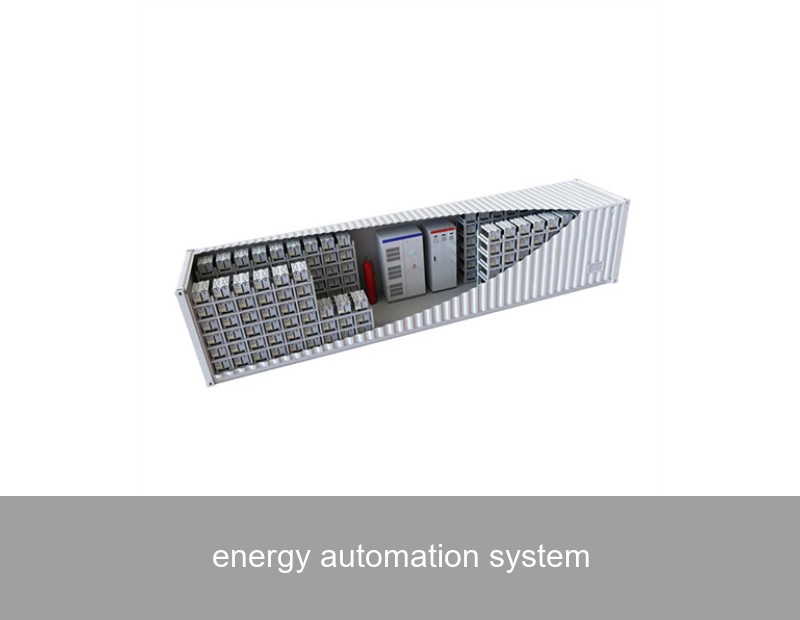
Image: A modern industrial battery storage system, a key component in automated energy management. Source: Unsplash
Looking Ahead: What's Next for Automated Energy?
The future of the energy automation system lies in even greater connectivity and market participation. We're moving towards Virtual Power Plants (VPPs), where thousands of distributed systems like the ones Highjoule installs are aggregated to act as a single, flexible power plant for the grid. This not only provides revenue for system owners but also becomes a critical tool for grid operators integrating vast amounts of renewable energy.
The question is no longer if you need to manage your energy smarter, but how and with whom. As energy markets become more dynamic and climate pressures grow, passive consumption is a growing liability.
So, we leave you with this: What is the single biggest energy challenge—be it cost, reliability, or sustainability—that keeps you or your business up at night, and how might an intelligent system be designed to solve it?
 Inquiry
 Online Chat