


Energy Density of Lithium-Ion Battery: The Silent Engine Powering Our Clean Energy Future
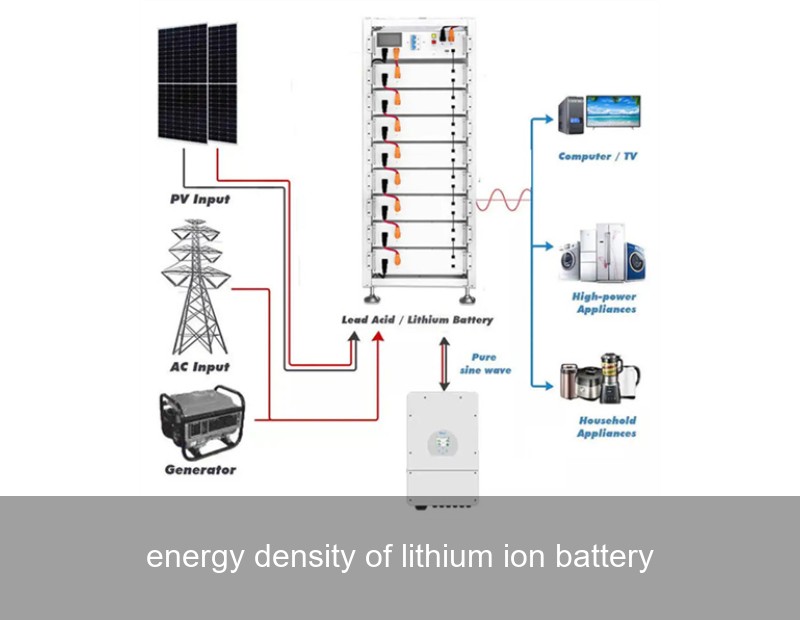
Imagine you're planning a long road trip in an electric vehicle. Your two biggest concerns are likely "how far can I go?" and "how long will it take to recharge?". Now, picture a hospital wanting to back up its critical life-saving equipment with a battery system that must be compact yet powerful enough to last through an outage. At the heart of both scenarios lies a single, critical metric: the energy density of lithium-ion battery technology. It's the unsung hero, the key parameter that determines how much energy can be stored in a given space or weight. For homeowners, businesses, and entire grids transitioning to renewables, understanding this concept isn't just technical jargon—it's essential for making informed decisions about storage solutions that are efficient, cost-effective, and truly fit for purpose.
What is Energy Density & Why It's the Battery's MVP
Think of energy density as the "fuel efficiency" of a battery. In simple terms, it measures how much electrical energy a battery can hold relative to its size (volume) or weight (mass). We typically talk about it in two ways:
- Gravimetric Energy Density (Wh/kg): Watt-hours per kilogram. This is the "weight" metric. A higher value means more energy stored per pound, which is absolutely critical for electric vehicles and portable electronics where every ounce matters.
- Volumetric Energy Density (Wh/L): Watt-hours per liter. This is the "space" metric. A higher value means more energy packed into a given volume, which is often the primary constraint for stationary storage in homes, commercial buildings, or data centers where floor space is at a premium.
Why is this the Most Valuable Player? Because it directly dictates the practicality and scope of energy storage. Higher energy density means you can get more storage capacity out of a smaller, lighter system. This translates to lower installation costs (less material, less space), greater design flexibility, and a reduced physical footprint. For industries like ours at Highjoule, where we design commercial and industrial (C&I) battery energy storage systems (BESS), mastering energy density allows us to create solutions like our H-Cube 500 series that deliver megawatt-scale power in a containerized, modular footprint, maximizing the use of valuable real estate.
Measuring the Power: Wh/kg and Wh/L Explained
Let's put some numbers on the table. The evolution of the energy density of lithium-ion battery chemistry has been a story of steady progress.
| Battery Chemistry | Typical Gravimetric Energy Density (Wh/kg) | Typical Volumetric Energy Density (Wh/L) | Common Applications |
|---|---|---|---|
| Lead-Acid | 30-50 | 60-110 | Automotive starters, basic backup |
| Nickel-Metal Hydride (NiMH) | 60-120 | 140-300 | Early hybrid vehicles, consumer electronics |
| Lithium Iron Phosphate (LFP) | 140-160 | 300-350 | Stationary storage, buses, high-safety apps |
| Nickel Manganese Cobalt (NMC) | 150-220 | 350-450 | Electric vehicles, high-performance storage |
| Next-Gen (Solid-State, Silicon-Anode) | 300-500+ (Projected) | 500-1000+ (Projected) | Future EVs & aviation, ultra-compact storage |
As you can see, lithium-ion chemistries, particularly NMC, offer a significant leap. This is why they have become the dominant force in both mobility and advanced stationary storage. But remember, these are cell-level numbers. A real-world battery energy storage system (BESS) includes battery management systems (BMS), thermal management, safety enclosures, and power conversion systems. This "system-level" energy density is what truly matters to an end-user, and it's where expert engineering, like that in Highjoule's H-Powerwall for residential and H-Stack for C&I applications, optimizes the overall package to deliver the maximum usable energy in the most efficient form factor.
Inside the Cell: Key Factors Influencing Lithium-Ion Energy Density
The quest for higher energy density of lithium-ion battery is a complex dance of chemistry and physics. It's not just about one "magic" ingredient. Here are the primary levers scientists and engineers pull:
- Cathode Chemistry: The cathode (positive electrode) is a major player. NMC (Nickel, Manganese, Cobalt) blends offer high energy density, with increasing nickel content pushing it higher. LFP (Lithium Iron Phosphate), while slightly lower in density, excels in safety, longevity, and cost.
- Anode Material: The anode (negative electrode) is traditionally graphite. The frontier here is silicon, which can store nearly 10 times more lithium ions! However, silicon expands during charging, posing durability challenges. Innovations in silicon-dominant or silicon-blended anodes are key to the next leap.
- Cell Voltage: A higher cell voltage means more energy for the same amount of current (Energy = Voltage x Capacity). Developing stable electrolytes and cathode materials that can operate at higher voltages is a direct path to higher density.
- Cell Design & Packaging: How you pack the active materials matters. "Cell-to-pack" (CTP) designs, which eliminate intermediate modules, reduce inactive weight and volume, boosting the system-level energy density significantly. This is a core design philosophy in Highjoule's modular systems, where we optimize every cubic inch for performance and safety.

Image Source: U.S. Department of Energy (public domain) - A look inside a lithium-ion cell.
Beyond the Spec Sheet: Real-World Impact on Your Energy System
So, what does a 20% increase in energy density of lithium-ion battery actually mean for a business owner or a solar farm developer? Let's move from theory to a tangible case study.
Case Study: Maximizing Solar Self-Consumption for a German Manufacturing SME
A mid-sized automotive parts manufacturer in Bavaria, Germany, installed a 500 kWp rooftop solar array. Their goal: maximize self-consumption of solar power to reduce grid dependence and volatile energy costs. Their challenge: limited space adjacent to their main switchgear for a battery system.
- Phenomenon: High solar yield during midday, but production didn't match evening energy demand peaks.
- Data & Constraint: They needed at least 800 kWh of storage. The available indoor space could only accommodate a system footprint of 12 square meters.
- Solution: A Highjoule H-Stack 800 system utilizing high-energy density NMC cells. The system's compact, cabinet-based design achieved a system-level volumetric energy density that allowed the full 800 kWh capacity to fit within the 12 sqm area. A lower-density system would have required a costly and complex external enclosure or a reduction in capacity.
- Result: The system increased their solar self-consumption rate from 35% to over 80%, slashing peak grid demand charges. The high energy density directly translated to a feasible, space-efficient solution that met their financial and physical constraints. (Fraunhofer ISE studies provide context on storage economics in Germany).
The Highjoule Approach: Engineering Systems Around Energy Density
At Highjoule, we don't just select cells with high energy density; we engineer entire systems to preserve and leverage it. Our philosophy is that a battery is more than its cells—it's an integrated ecosystem. For our microgrid and utility-scale solutions, this means:
- Intelligent Thermal Management: A compact, high-density pack generates heat. Our advanced liquid cooling systems maintain optimal cell temperature uniformly, preventing hotspots that degrade cells and ensuring the promised energy and longevity are delivered consistently, day after day.
- Advanced Battery Management (BMS): Our proprietary BMS doesn't just monitor voltage; it precisely balances the state-of-charge of thousands of cells, ensuring the entire pack operates at its peak potential, maximizing usable energy extraction from the dense pack.
- Safety by Design: Higher energy density means more energy in a smaller space. We counter this with multi-layered safety protocols—from cell-level fuses and fire-retardant materials to system-level isolation and AI-driven anomaly detection—making safety the non-negotiable foundation of our high-density designs.
This holistic engineering is what allows us to offer performance warranties that our customers can bank on, knowing that the theoretical energy density of lithium-ion battery cells is translated into reliable, real-world storage capacity.

Image Source: Unsplash (Representative image of a modern BESS installation)
The Future Horizon: What's Next for Energy Density?
The journey doesn't stop here. Research is blazing forward on multiple fronts to push the boundaries of the energy density of lithium-ion battery even further. Solid-state batteries, which replace the flammable liquid electrolyte with a solid, promise not only dramatic safety improvements but also the potential for using lithium-metal anodes, potentially doubling energy density. Silicon-anode commercialization is accelerating, with companies finding innovative ways to manage expansion. (Nature Energy often publishes cutting-edge reviews on these topics).
For us at Highjoule, staying at the forefront means actively evaluating these technologies not just for their lab-scale metrics, but for their manufacturability, safety, and total cost of ownership. Our product roadmap is designed to integrate next-generation cells seamlessly into our proven system architecture, ensuring our customers always have access to the most efficient, reliable, and sustainable storage solutions available.
The Trade-Off Conversation: Density vs. Lifespan vs. Cost
It's crucial to remember that energy density isn't the only goal. It exists in a delicate balance with cycle life, power density (how fast energy can be delivered), safety, and cost. An LFP battery, for instance, offers exceptional cycle life and superior safety, making it an ideal choice for daily-cycled residential or C&I storage, even with a slightly lower energy density. The "best" battery is always the one perfectly matched to the application's specific needs—a principle central to our consultation process at Highjoule.
Given that the landscape of battery technology and energy markets is constantly shifting, what specific challenge related to space, weight, or runtime is your business or community currently facing that a breakthrough in energy storage could solve?
 Inquiry
 Online Chat