


Energy Efficient Office Equipment: The Unseen Powerhouse of Modern Business Sustainability
Let's talk about your office. The quiet hum of computers, the soft glow of monitors, the coffee machine gurgling in the break room. It feels... efficient. But what if I told you this very ecosystem of productivity is likely one of your largest, and most hidden, energy drains? The quest for an energy efficient office often starts with the big-ticket items: HVAC, lighting. Yet, the true frontier lies in the devices we use every day. Energy efficient office equipment isn't just about buying an "Energy Star" label; it's about creating an intelligent, responsive, and ultimately self-sustaining power environment. This is where the synergy between smart devices and smarter energy storage unlocks not just savings, but resilience and a genuine competitive edge.
Table of Contents
- The Silent Energy Crisis in Your Office
- Beyond the Label: What Makes Equipment Truly Energy Efficient?
- The Missing Link: How Battery Storage Supercharges Your Efficiency
- Case Study: An Amsterdam Tech Firm's 360-Degree Solution
- Building Your Intelligent Office Energy System
- The Future-Proof Office: A Question of Resilience
The Silent Energy Crisis in Your Office
Consider this: the U.S. Department of Energy estimates that commercial office buildings spend nearly 20-30% of their total electricity bill solely on plug loads—that's everything you plug into an outlet. A significant portion of this is from office equipment running at full tilt, or worse, sitting idle in a high-power "sleep" mode. We're talking about servers, desktop workstations, monitors, printers, and even phone chargers. This isn't just a cost issue; it's a carbon footprint issue. As electricity prices become more volatile and corporate sustainability goals (like the EU's Green Deal) become stricter, this silent drain transforms into a loud business risk.
Beyond the Label: What Makes Equipment Truly Energy Efficient?
So, you upgrade to the latest efficient laptops and monitors. That's a fantastic first step. But true efficiency is a system-wide characteristic, not just a product feature. Let's break it down:
- Hardware-Level Efficiency: This is the baseline. Look for ENERGY STAR and EPEAT certifications. Modern devices with advanced power supplies, LED backlighting, and efficient processors can use 40-65% less energy than models from just five years ago.
- Software & Behavioral Intelligence: Efficiency is wasted if a device is on when no one is using it. Automated power management settings are crucial. Think of network-controlled sleep schedules for all PCs and monitors after hours.
- The Power Source Itself: This is the critical, often overlooked, layer. Your super-efficient equipment is still drawing power from the grid, which may be carbon-intensive and pricey during peak hours. The real question becomes: How and when is that efficient equipment being powered?

Image Source: Unsplash. A modern office's efficiency depends on both the devices and the power that fuels them.
The Missing Link: How Battery Storage Supercharges Your Efficiency
This is where the conversation evolves. Pairing energy efficient office equipment with a smart battery storage system is like giving your office an energy brain and a powerhouse. Here’s the logic:
- Your efficient equipment reduces the total energy demand.
- A smart battery system, like those from Highjoule, optimizes when that reduced demand is met. It charges during off-peak hours or from your solar panels, and discharges during expensive peak periods.
- The result: You power your efficient office with cheaper, cleaner energy, maximizing your financial and environmental ROI on the equipment upgrades.
At Highjoule, with nearly two decades of experience, we've seen this synergy firsthand. Our H-Series commercial battery storage systems are designed to integrate seamlessly with building management systems. They don't just store energy; they provide intelligent energy management, allowing facility managers to set schedules that ensure critical office equipment is powered from the battery during specific times, shielding the business from demand charges and grid instability.
Case Study: An Amsterdam Tech Firm's 360-Degree Solution
Let's look at a real example. A mid-sized software development firm in Amsterdam made a corporate pledge to reduce its operational carbon footprint by 50% within five years. They started with the obvious: upgrading all lighting to LED and installing high-efficiency HVAC. Yet, their progress plateaued.
Their audit revealed IT infrastructure and employee workstations were the next major hurdle. They implemented a three-phase plan:
| Phase | Action | Result |
|---|---|---|
| 1. Equipment Upgrade | Replaced 120 desktop towers with energy-efficient laptops and ultra-low-power monitors. Implemented strict power management policies. | Reduced plug load by an estimated 28%. |
| 2. On-Site Generation | Installed a 50kW rooftop solar array. | Generated clean energy, but overproduction at midday was being exported at low rates. |
| 3. Intelligent Storage | Installed a Highjoule H-200 battery storage system with integrated energy management software. | The system stored excess solar energy and discharged it during the late afternoon peak (when developers' machines were still busy compiling code). This cut peak grid draw by over 70%. |
The combined solution led to a total energy cost reduction of 41% annually, and accelerated their carbon goal timeline by two years. The Highjoule system's monitoring dashboard gave them unparalleled visibility into their office equipment's power patterns, allowing for further refinements. You can read more about the broader impact of such integrations in studies by the International Renewable Energy Agency (IRENA).
Building Your Intelligent Office Energy System
Ready to build your own efficient ecosystem? It's a strategic journey:
- Conduct an Energy Audit: Identify your biggest plug load culprits. Use smart plugs or submetering to get data.
- Phase in Efficient Equipment: Create a refresh cycle prioritizing the most used devices. Don't forget peripherals like printers and kitchen appliances.
- Consider On-Site Solar: If your building allows, generate your own clean power. The U.S. Department of Energy's Solar Office provides excellent resources for businesses.
- Integrate Intelligent Storage: This is the keystone. A solution like Highjoule's H-Series or our modular CubeStack for commercial applications can be sized to your specific needs. Our systems come with Highjoule EnergyOS, a platform that automates decision-making based on time-of-use rates, solar production, and equipment schedules.

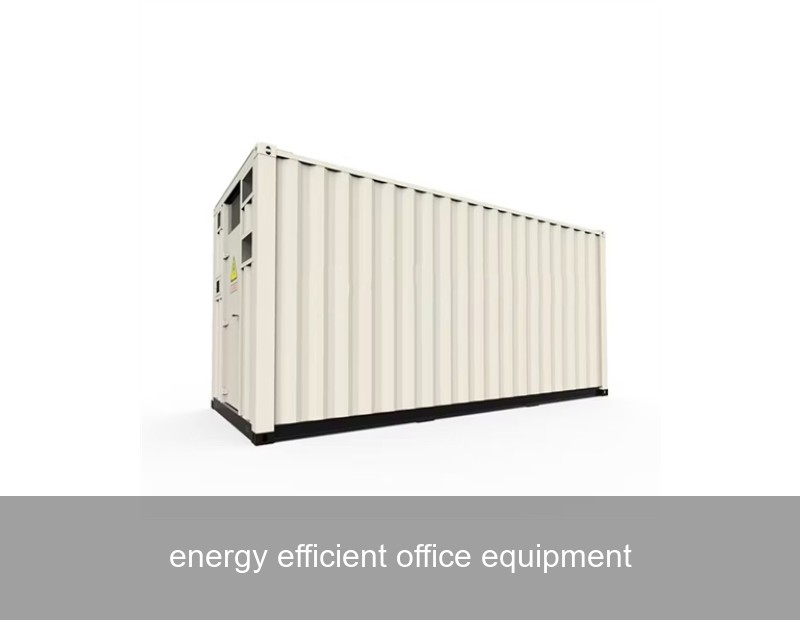
Image Source: Unsplash. A commercial battery storage system, similar to Highjoule's H-Series, forms the core of an intelligent office energy strategy.
The Future-Proof Office: A Question of Resilience
We've discussed cost and carbon. But there's a third 'C': Continuity. What happens to all that energy efficient office equipment during a grid outage? A laptop battery might last a few hours, but what about your core network, security systems, and critical research servers? A smart battery storage system provides a seamless backup. When the grid fails, the Highjoule system can island critical circuits, keeping your efficient office operational. This transforms your sustainability investment into a business resilience asset.
So, the question we leave you with is this: As you upgrade your office equipment for efficiency, are you merely reducing your energy bill, or are you building an intelligent, resilient, and truly sustainable energy ecosystem for your business? What would the ability to power your critical operations on your own terms—cheaper, cleaner, and independently—mean for your bottom line and your corporate mission?
 Inquiry
 Online Chat