


Energy Storage Cabinets: The Smart Heart of Your Solar Energy System
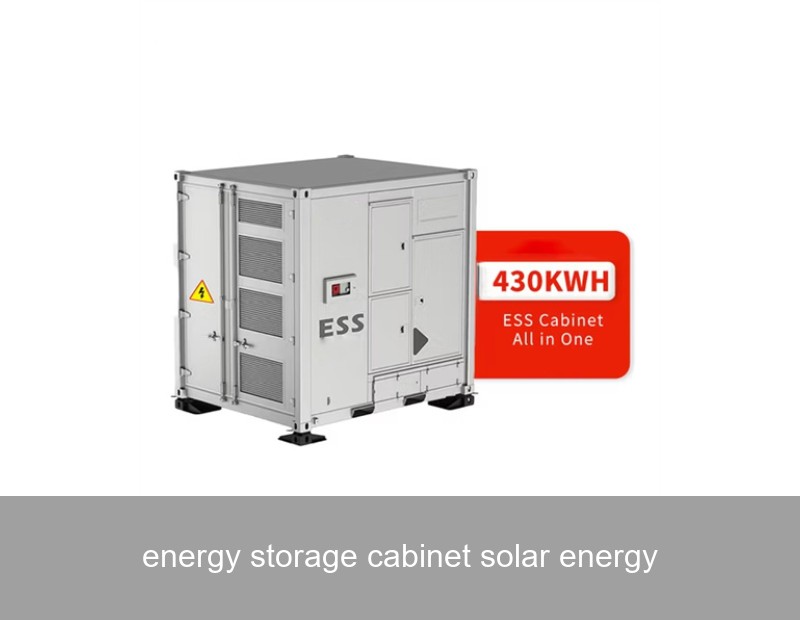
Have you ever watched your solar panels working hard on a sunny afternoon and wondered, "Where does all this extra power go?" For years, the answer for many homeowners and businesses was simply back to the grid, often for minimal credit. But what if you could capture that sunshine in a box and use it on your own terms? This is where the modern energy storage cabinet comes in, transforming how we harness and utilize solar energy. It's no longer just a battery; it's an intelligent energy management hub, a critical component for energy independence and a resilient, sustainable future. Companies like Highjoule, a global leader in advanced energy storage since 2005, are at the forefront of designing these sophisticated systems that make solar power work harder for homes, businesses, and communities.
Table of Contents
The Phenomenon: Solar Energy's Intermittency Challenge
Solar power is a brilliant, clean energy source. But let's be honest—its schedule is a bit unpredictable. The sun sets every evening, clouds can roll in unexpectedly, and winter days are shorter. This creates a fundamental mismatch: we often generate the most solar energy when demand is low (midday) and need power the most when generation is zero (evening peak). Without a way to bridge this gap, the full potential of a solar installation remains untapped. This intermittency isn't just a household concern; it's a growing challenge for entire grids as renewable penetration increases.

Credit: Photo by Andreas Gücklhorn on Unsplash. The sunset symbolizes the daily gap in solar generation.
The Data: Why Storage is the Missing Link
The numbers make a compelling case for pairing storage with solar. According to the U.S. Department of Energy, adding storage can increase the value of solar by managing when and how that energy is delivered. Consider this: a typical residential solar system might send 50-70% of its generation back to the grid if not used instantly. With an energy storage cabinet, self-consumption of solar power can jump to 70% or higher, dramatically reducing reliance on purchased electricity.
For commercial entities, the financial driver is often "demand charges"—fees based on the highest 15-minute power draw in a month. A single peak can result in staggering bills. Strategic discharge from a storage system during these short periods can flatten the demand curve, leading to savings that often pay for the storage system itself. The global market reflects this logic; BloombergNEF reports that the energy storage market is set to multiply exponentially this decade, driven largely by solar pairing.
The Solution: Anatomy of a Modern Energy Storage Cabinet
So, what exactly is inside this crucial box? A modern energy storage cabinet for solar energy is a far cry from a simple bank of batteries. It's an integrated system designed for safety, intelligence, and longevity.
- The Battery Cells: Typically lithium-ion (like LiFePO4 for superior safety and cycle life), these are the core energy reservoirs.
- The Battery Management System (BMS): The "brain" that monitors cell voltage, temperature, and health, ensuring safe operation and preventing damage.
- The Power Conversion System (PCS): This bi-directional inverter converts DC power from the batteries to AC for your home or business, and vice-versa for charging.
- Thermal Management: A critical cooling/heating system to keep batteries at their optimal temperature range, extending lifespan.
- Energy Management Software: The intelligence that decides when to charge (from solar or the grid) and when to discharge, based on weather forecasts, utility rates, and consumption patterns.
All these components are housed in a robust, often modular, cabinet designed for easy installation—whether wall-mounted in a garage or as a freestanding unit outdoors.
Key Considerations When Choosing a System
| Feature | Why It Matters | Question to Ask Your Provider |
|---|---|---|
| Usable Capacity | Determines how much energy you can actually use (after accounting for depth of discharge and system buffers). | What is the real, warrantied usable kWh of the system? |
| Round-Trip Efficiency | The percentage of energy put in that you can get out (e.g., 95% means you lose only 5%). | What is the system's AC round-trip efficiency under real operating conditions? |
| Scalability | Can you easily add more cabinets later if your energy needs grow? | Is the system modular? How complex/costly is it to expand capacity? |
| Grid Services Readiness | Future-proofs your investment for potential grid-support programs. | Does the system have advanced grid-forming capabilities and communication protocols? |
A Real-World Case Study: Peak Shaving in California
Let's look at a concrete example from our work at Highjoule. A medium-sized winery in Napa Valley, California, faced a dual challenge: high electricity costs for refrigeration and irrigation, and an unreliable grid prone to public safety power shutoffs (PSPS) during fire season. They had a sizable rooftop solar array but were still subject to high demand charges and operational vulnerability.
The Solution: Highjoule engineers designed and installed a 250 kWh containerized energy storage cabinet system, integrated with their existing solar. The system was programmed with two primary objectives: 1) Peak Shaving: Automatically discharge during the winery's short periods of highest energy use (e.g., during peak cooling loads), and 2) Backup Power: Provide critical loads with seamless power during grid outages.
The Results (12-month period):
- Demand Charge Reduction: Cut peak demand by 40%, resulting in annual savings of over $18,000 on that portion of the utility bill.
- Increased Solar Self-Consumption: Raised on-site usage of solar generation from ~35% to 85%.
- Reliability: Provided backup through three grid outages, preventing spoilage of valuable inventory.
- ROI: The system achieved a projected payback period of under 7 years, not including state incentive bonuses.
This case exemplifies how a tailored storage solution moves beyond theory to deliver tangible financial and operational resilience. You can read more about the importance of storage for grid stability from the National Renewable Energy Laboratory (NREL).

Credit: Photo by American Public Power Association on Unsplash. A modern, professional energy storage installation.
Highjoule's Intelligent Storage Solutions
At Highjoule, we've spent nearly two decades refining the technology inside the cabinet. Our product philosophy centers on intelligence, safety, and scalability. For residential applications, our H-Joule HomeHub series is a sleek, wall-mounted unit featuring our proprietary Adaptive Learning software. It doesn't just store energy; it learns your family's patterns, integrates weather forecasts, and optimizes for time-of-use rates to maximize your savings automatically.
For commercial and industrial (C&I) clients, like the winery, our H-Joule PowerRack cabinets offer modular, high-power solutions. These systems are built with industry-leading LiFePO4 chemistry and feature advanced grid-forming inverters. This means they can not only backup critical operations but also potentially "island" sections of a facility or even support the local microgrid during broader disturbances. Our cloud-based monitoring platform, Highjoule Insight, gives facility managers real-time visibility and control over their energy assets from anywhere in the world.
The core of our service is understanding that no two energy profiles are the same. We work with partners and clients across Europe and North America to conduct detailed energy audits, model financial outcomes, and design a storage solution that fits precise operational and financial goals.
The Future: Beyond Backup Power
The evolution of the energy storage cabinet is moving towards becoming an active grid citizen. Imagine a future where thousands of these distributed systems, aggregated together, form a "virtual power plant" (VPP). They could provide critical grid services—like frequency regulation or capacity during heat waves—directly to utilities, creating a new revenue stream for system owners. This turns a cost-saving asset into a potential income-generating one. The technology for this exists today in advanced systems, and regulatory frameworks are rapidly catching up, particularly in forward-thinking markets in the US and Europe.
So, as you consider harnessing the sun with solar panels, the critical next question isn't just about generation, but about control. How will you take command of your energy to build resilience, maximize savings, and contribute to a more stable grid? The answer lies in the intelligent heart of the system: the energy storage cabinet.
What specific energy challenge—be it unpredictable bills, grid reliability concerns, or a desire for true energy independence—is motivating you to explore the power of solar and storage today?
 Inquiry
 Online Chat