


How Much Does an EStore Battery Cost? A Complete 2024 Breakdown
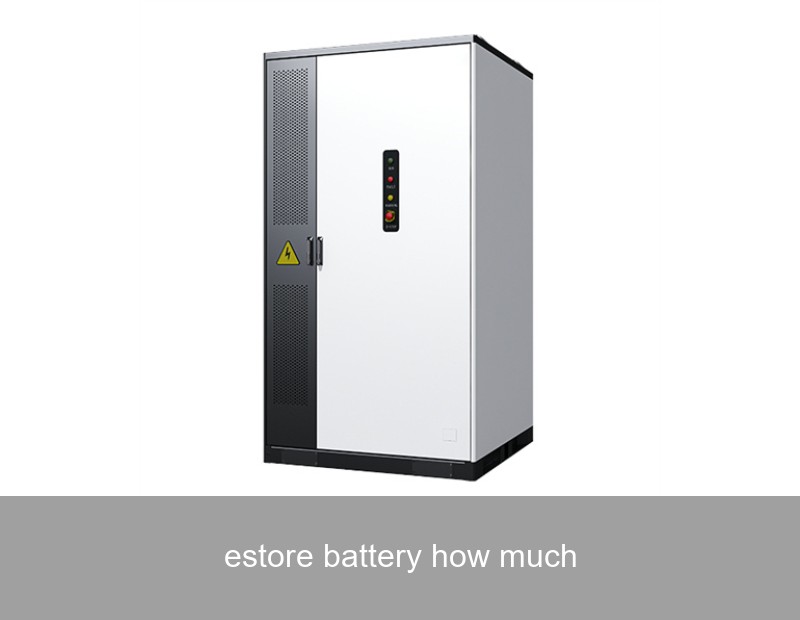
If you're researching energy storage, the question "How much does an estore battery cost?" is likely top of mind. It's a smart question, but the answer isn't a single number. The cost of a battery energy storage system (BESS) is influenced by a complex interplay of capacity, technology, application, and the intelligence of the system itself. As grid instability rises and renewable adoption accelerates, understanding this investment is crucial for homeowners and businesses alike. This guide will demystify the pricing, explore the value beyond the price tag, and show you how to evaluate what an estore battery system is truly worth for your energy independence.
Table of Contents
The Price Puzzle: More Than Just a Sticker Price
Let's address the elephant in the room first. When you search online, you might see figures ranging from $5,000 to over $50,000. That vast range isn't just marketing—it reflects fundamentally different solutions. A small residential unit for backup power is a different beast from a commercial system designed for peak shaving and demand charge management. The core components—battery cells, the battery management system (BMS), power conversion system (PCS or inverter), and thermal management—all contribute to the cost. However, the real cost driver is the system's capability and longevity. A cheaper system might save upfront capital expenditure (CapEx) but lead to higher operational costs (OpEx) due to shorter lifespan or lower efficiency.

Image: Modern modular battery storage installation. Source: Unsplash
Key Factors That Determine Your EStore Battery Cost
To understand your specific quote, you need to break down the variables. Think of it like buying a car; the model, engine size, and features all change the price.
1. Capacity and Power (kWh & kW)
This is the most straightforward factor. Capacity (kWh) is how much energy the battery can store—like the size of your fuel tank. Power (kW) is how much energy it can deliver at once—like the engine's horsepower. A system that needs to run an entire factory during a peak period requires high power and high capacity, directly increasing cost.
2. Battery Chemistry
Not all batteries are created equal. Lithium Iron Phosphate (LFP) is now the dominant chemistry for stationary storage due to its safety, long cycle life (often 6,000+ cycles), and stability. While sometimes slightly more expensive upfront than older NMC chemistries, LFP's longevity often makes it more cost-effective over its lifetime. This is the chemistry of choice for Highjoule's Horizon Series for commercial and industrial use, ensuring decades of reliable service.
3. System Integration and Intelligence
This is where leading providers separate themselves. A "dumb" battery is just a container. An intelligent estore system, like those from Highjoule, includes advanced software for energy management (EMS). This software can automatically optimize charging from solar or the grid, dispatch power during expensive peak rates, and provide grid services. This intelligence adds to the initial cost but generates significant ongoing revenue or savings.
4. Installation and Balance of System (BoS)
Don't forget the "soft costs": permitting, electrical work, installation labor, and ongoing maintenance. For commercial projects, site preparation and grid interconnection fees can be substantial. Highjoule's global project management team specializes in streamlining this process, particularly in Europe and North America, to control these variable costs.
| System Type | Typical Capacity Range | Estimated Installed Cost Range (USD)* | Primary Use Cases |
|---|---|---|---|
| Residential | 5 - 20 kWh | $7,000 - $25,000 | Solar self-consumption, backup power, load shifting |
| Commercial & Industrial (C&I) | 50 kWh - 2 MWh | $250,000 - $2M+ | Peak shaving, demand charge reduction, backup, renewables integration |
| Utility-Scale / Microgrid | 2 MWh+ | Project-specific (millions) | Grid stability, renewable firming, community resilience |
*Costs are highly variable based on location, configuration, and market conditions. Data synthesized from industry reports including IRENA and Highjoule project data.
Looking Beyond $/kWh: The Highjoule Value Proposition
At Highjoule, we believe the conversation must shift from "cost" to "value." Since 2005, we've engineered systems that deliver a lower total cost of ownership (TCO). How? Our integrated approach combines superior hardware with our proprietary JouleMind AI platform. This isn't just a monitoring tool; it's a predictive energy optimizer that learns your consumption patterns and market prices (in deregulated markets) to make decisions that save you money every single day.
For instance, our Horizon C&I Series isn't just a battery bank. It's a turnkey solution that includes:
- LFP Battery Modules: With a design life exceeding 15 years.
- Hybrid Inverter Systems: Seamlessly integrating solar, wind, grid, and generator power.
- JouleMind AI Software: The brain that maximizes financial return through automated energy arbitrage and demand management.
- Global Monitoring & Support: 24/7 oversight from our network operations centers in the EU and US.
This holistic solution means your initial investment works harder and longer, paying for itself through avoided demand charges, optimized energy purchases, and enhanced resilience.
A Real-World Case Study: Cost vs. ROI in Action
Let's move from theory to practice. In 2023, Highjoule deployed a 500 kWh / 750 kW Horizon system for a mid-sized manufacturing plant in Bavaria, Germany. The facility faced two problems: high electricity costs with volatile time-of-use rates and strict grid connection limits that hampered expansion.
The Challenge: Reduce energy costs and defer a costly grid upgrade.
The Highjoule Solution: A fully integrated system with solar PV coupling and JouleMind AI control.
The Financial Outcome (First 12 Months):
- Capital Investment: €320,000 (fully installed).
- Annual Savings/Revenue: €68,000 (from peak shaving, solar self-consumption optimization, and participation in grid-balancing programs).
- Simple Payback Period: Approximately 4.7 years.
- Additional Value: The system provided 8 hours of backup for critical processes and eliminated the need for a €150,000 grid infrastructure upgrade, effectively saving an additional upfront capital outlay.
This case illustrates that the question "how much does an estore battery cost?" is best answered by "what is the net cost after savings and avoided costs?" For this manufacturer, the net project cost over 15 years will be negative, generating substantial positive cash flow.

Image: C&I facility with solar, a prime candidate for storage. Source: Unsplash
Making Your Decision: The Right Questions to Ask
So, how do you navigate this landscape? Start by shifting your internal dialogue. Instead of just asking for a price, frame the discussion around your goals and constraints.
Questions to Ask Yourself:
- What is my primary objective? (Bill savings, backup power, sustainability, revenue generation?)
- What is my current energy consumption profile? (Get your utility bills—they tell a story.)
- Do I have on-site generation (solar/wind)?
- What is the value of uninterrupted power to my home or business?
Questions to Ask a Potential Provider like Highjoule:
- Can you provide a detailed TCO analysis, not just an equipment quote?
- What is the expected cycle life and degradation profile of your battery cells?
- How does your energy management software create value? Can I see examples of its logic and reporting?
- What is included in your service and warranty package? Do you offer performance guarantees?
We invite you to engage with us not as a vendor, but as an energy partner. The journey to understanding the true cost and value of an estore battery begins with a detailed analysis of your unique situation. What would a 25% reduction in your monthly energy demand charge do for your business's bottom line this year?
 Inquiry
 Online Chat