


Expandable Solar Panel System: Your Guide to Future-Proof Clean Energy
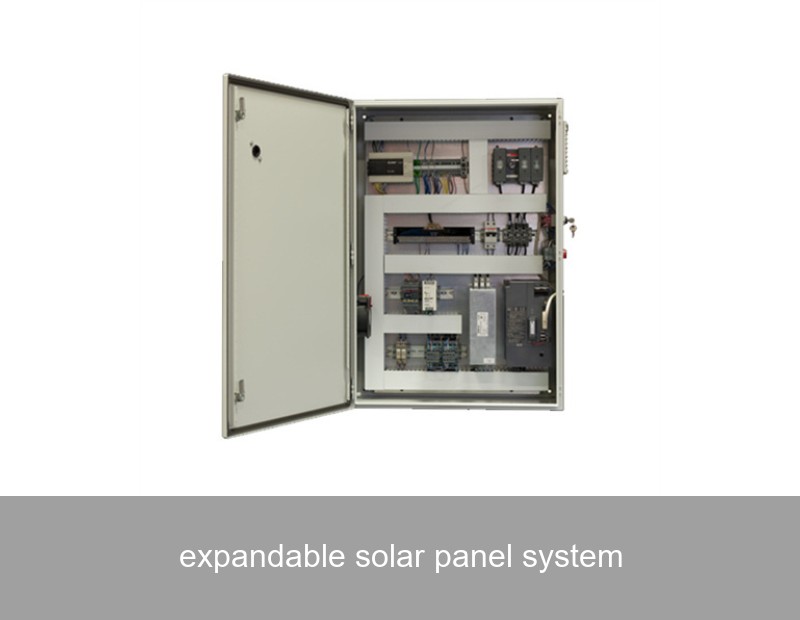
Imagine installing a solar power system, only to find a few years later that it can't keep up. Maybe you've bought an electric vehicle, added a home extension, or simply want to increase your energy independence. This is a common frustration for many homeowners and businesses who feel locked into a static system. The solution? An expandable solar panel system. Unlike traditional fixed-capacity setups, an expandable system is designed with growth in mind from the very beginning. It allows you to start with a configuration that fits your current budget and energy needs, with the clear roadmap to seamlessly add more panels, storage, or smart controls later. For families in Europe and the US looking to adapt to an electrifying future, this modular approach isn't just convenient—it's a strategic investment.
Why Modularity is the Future of Solar Power
The energy needs of a typical household are not static. According to the International Energy Agency (IEA), global electricity demand from households is expected to grow significantly, driven by electrification of heating and transport. A standard, non-expandable solar installation might cover 80% of your needs today, but what about tomorrow?
Consider these common life changes that impact your power consumption:
- Electric Vehicle Adoption: Charging an EV at home can increase a household's electricity consumption by 40% or more.
- Home Additions & Renovations: Adding a living space, a pool, or even energy-intensive smart home devices adds to the load.
- Changing Energy Goals: A desire to move from partial to full energy self-sufficiency, or to participate in grid-balancing programs.
A modular, expandable solar panel system addresses this dynamic reality. It transforms your solar array from a fixed appliance into a living ecosystem that evolves with you, protecting your initial investment and avoiding the costly, disruptive process of a complete system overhaul down the line.
Image Source: Unsplash. Planning for future expansion is a key first step in a modern solar installation.
Key Components of a Truly Scalable Solar System
Not all systems labeled "expandable" are created equal. True scalability requires careful planning and the right technology stack from the outset. Here are the critical components that enable safe and efficient expansion:
1. The Inverter: The Brain of Your Operation
This is the most crucial element. For expansion, you need an inverter that can handle increased DC input from additional panels. Options include:
- Multi-String Inverters with Parallel Capability: Allow you to connect multiple "strings" of panels and add another inverter later.
- Microinverters or DC Optimizers: These are module-level power electronics (MLPE). Adding panels simply means adding more microinverters, making them inherently scalable without complex central inverter upgrades.
2. Battery Storage: The Beating Heart of Independence
An expandable solar panel system is incomplete without considering storage. Your ability to use more of your own solar power hinges on scalable battery capacity.
| Storage Type | Scalability Approach | Key Consideration |
|---|---|---|
| AC-Coupled Battery | Easily added to existing solar systems; multiple units can often be stacked. | Ensuring your main electrical panel can handle the additional AC coupling. |
| DC-Coupled Battery | Often designed as modular units within a dedicated energy storage system. | Requires compatible hybrid inverters and proper system design from the start. |
3. Rooftop & Mounting Infrastructure
Physically, your roof must have the space and structural integrity for more panels. A forward-thinking installer will design the initial mounting system and layout with clear zones for future additions, avoiding costly re-racking work.
A Real-World Case Study: Scaling a Family Home in Bavaria
Let's look at the Müller family in southern Germany. In 2020, they installed a 6 kWp solar system with a small 5 kWh battery, aiming to cover about 60% of their electricity. Their system was designed with Highjoule's HES-Series Hybrid Energy System, known for its modular architecture.
The Trigger for Expansion: In 2023, they purchased two electric vehicles and installed a heat pump. Their electricity demand nearly doubled.
- Phase 1 (2020): 6 kWp solar, 5 kWh HES battery, one Hybrid inverter.
- Phase 2 (2023): Added 4 kWp of new panels on a pre-planned section of their roof. They then integrated an additional 10 kWh battery module into their existing HES rack. The system's inverter was already sized to accept the extra DC input, and the battery communication bus seamlessly recognized the new storage module.
- Self-Consumption Rate: Increased from 65% to 92% post-expansion.
- Grid Dependency: Reduced from 40% to less than 10% for annual consumption.
- Cost: The modular expansion was 30% less expensive than installing a separate, new system would have been, as they reused the core monitoring and grid-connection infrastructure.

Image Source: Unsplash. Modular battery units like Highjoule's HES-Series allow for clean, stackable capacity expansion.
Engineered for Growth: Highjoule's Smart, Expandable Energy Solutions
At Highjoule, we've been designing for the future since 2005. We understand that energy needs evolve, which is why scalability is not an afterthought but a core design principle across our product lines. Our solutions for residential and commercial clients in Europe and North America are built to adapt.
For homeowners, the Highjoule HES-Series (Home Energy System) is the cornerstone of a flexible energy setup. Its hybrid inverter is pre-configured for additional PV strings, and its lithium-iron-phosphate (LiFePO4) battery cabinets are physically and digitally stackable. You can start with a single 5-kWh module and grow to 30 kWh or more, all managed by a single, intuitive energy management system (EMS) that learns and optimizes your usage patterns.
For larger commercial and microgrid applications, our CBS (Containerized Battery Storage) platforms take modularity to an industrial scale. These pre-assembled, containerized solutions allow businesses and communities to scale their storage capacity in megawatt-hour (MWh) increments, providing a critical buffer for renewable integration and grid stability. Paired with our AI-driven GridSynch Platform, these systems don't just store energy—they intelligently dispatch it when and where it's most valuable, whether for self-consumption, peak shaving, or providing grid services.
Making the Right Choice for Your Expandable System
So, how do you ensure your journey into solar is truly future-proof? Ask your installer or provider these essential questions:
- Can the inverter handle more DC input power than is initially installed?
- Is the battery storage system physically and electrically modular? What is the maximum capacity the system can reach?
- Does the energy management software support the seamless integration of new hardware?
- Will the initial roof mounting layout and wiring conduits accommodate additional panels without major structural work?
Choosing an expandable solar panel system is a declaration of energy independence and adaptability. It acknowledges that your life and the energy landscape will change. By partnering with a technology provider like Highjoule, who embeds scalability into the DNA of its products, you're not just buying hardware—you're investing in a flexible energy partner for the next two decades.
What will be the trigger for your first system expansion—an electric vehicle, a new family member, or simply the ambition to take full control of your energy destiny?
 Inquiry
 Online Chat