


Understanding the Full Backup Energy Storage Cabinet: Your Ultimate Power Resilience Solution
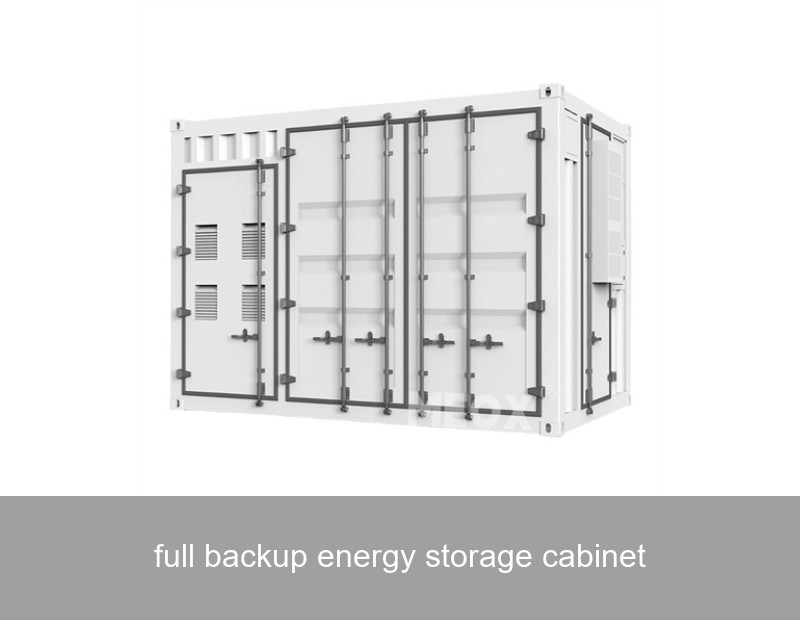
Imagine a severe storm knocks out the grid in your neighborhood. While others are left in the dark, your home or business continues to operate seamlessly, lights on, critical systems humming. This isn't just luck; it's the result of a deliberate investment in resilience, often centered around a full backup energy storage cabinet. For facility managers, homeowners, and energy professionals across Europe and the US, these systems have evolved from a niche luxury to a critical component of modern energy management. They are the silent guardians that ensure continuity, optimize energy costs, and support the integration of renewable sources. In this article, we'll demystify what a full backup energy storage cabinet truly is, explore its vital components, and reveal how it's becoming the backbone of a reliable and sustainable energy strategy.
Table of Contents
- What is a Full Backup Energy Storage Cabinet?
- Key Components and How They Work
- The Growing Market Need: Data and Drivers
- A Real-World Case Study: Resilience in Action
- Choosing the Right System: Beyond Basic Backup
- The Highjoule Approach: Intelligent Energy Security
- Future Trends and Your Next Steps

Credit: Unsplash - Photon. A modern energy storage installation showcasing a clean, integrated cabinet design.
What is a Full Backup Energy Storage Cabinet?
Let's break down the term. A full backup energy storage cabinet is a fully integrated, containerized system designed to provide complete, whole-site or whole-home backup power. Unlike a simple portable power bank or a single-battery unit for a few circuits, this cabinet houses all necessary components in one robust, safe, and often weather-resistant enclosure. Think of it as a miniature, self-contained power plant sitting on your property. Its primary job is to store electrical energy—typically from the grid during off-peak hours or from on-site solar panels—and deliver it reliably when the main grid fails or when it's economically advantageous to use stored power.
Key Components and How They Work
To understand its value, you need to know what's inside. A high-quality cabinet is more than just batteries; it's a symphony of integrated technology.
- Battery Modules: The heart of the system. Modern cabinets use Lithium Iron Phosphate (LiFePO4) batteries for their safety, long lifespan (often 6,000+ cycles), and stability. The capacity, measured in kilowatt-hours (kWh), determines how long you can power your loads.
- Battery Management System (BMS): The brain. This sophisticated electronics suite monitors every cell for voltage, temperature, and state of charge, ensuring safety, longevity, and optimal performance.
- Hybrid Inverter/Charger: The muscle and translator. This device manages bidirectional energy flow. It converts AC power from the grid or generator to DC to charge the batteries, and converts DC from the batteries back to clean AC power to run your appliances. A true hybrid inverter can also seamlessly manage input from solar PV arrays.
- Thermal Management System: The climate control. Batteries perform best within a specific temperature range. An integrated cooling and heating system (often liquid or forced air) maintains this ideal environment.
- Safety Enclosure & Switchgear: The armor and nervous system. The cabinet itself provides physical protection, fire resistance, and IP-rated ingress protection. Integrated switchgear, breakers, and contactors allow for safe connection and disconnection from the grid and critical loads.
These components work in unison, automated by intelligent software, to provide what we at Highjoule call "Set-and-Forget" resilience.
The Growing Market Need: Data and Drivers
The demand for these systems isn't emerging in a vacuum. It's a direct response to several powerful, converging trends. First, grid instability is increasing. In the US, the average duration of a power outage increased from 3.5 hours in 2013 to over 7 hours in 2020, with major events like wildfires and winter storms causing multi-day blackouts (U.S. Energy Information Administration). In Europe, the energy crisis and aging infrastructure have heightened concerns about reliability.
Second, the economics have flipped. The levelized cost of electricity from solar-plus-storage is now competitive with, and often lower than, retail grid electricity in many regions. Third, there's a strong sustainability imperative. Businesses and homeowners want to maximize their use of renewable energy, which is intermittent by nature. A storage cabinet allows you to capture excess solar energy produced at noon and use it at night, dramatically increasing self-consumption.

Credit: Unsplash - Andreas Gücklhorn. Rooftop solar paired with a ground-mounted storage cabinet for a complete home energy solution.
A Real-World Case Study: Resilience in Action
Let's look at a concrete example from the commercial sector. A mid-sized dairy processing plant in Bavaria, Germany, faced a critical challenge. A power outage of even 15 minutes would spoil an entire batch of product, leading to tens of thousands of euros in losses and operational downtime. Their process cooling and automated packaging lines required unwavering power.
The Solution: The plant installed a full backup energy storage cabinet system, integrated with their existing rooftop solar PV array. The cabinet, with a capacity of 120 kWh and a continuous power output of 50 kW, was configured to back up their entire critical production line.
The Results:
| Metric | Before Installation | After Installation |
|---|---|---|
| Outage Vulnerability | High; any outage caused spoilage | Zero; seamless transition during 3 grid faults in the first year |
| Solar Self-Consumption | ~35% (excess fed to grid at low rates) | ~85% (excess stored for later use) |
| Energy Cost Savings | Baseline | ~22% reduction through peak shaving & arbitrage |
| ROI Period | N/A | Estimated 4.5 years |
This case highlights the multi-faceted value proposition: it's not just backup; it's also significant cost savings and sustainability gains.
Choosing the Right System: Beyond Basic Backup
So, how do you select a system that's right for your needs? The most common mistake is undersizing. Ask these critical questions:
- What are your critical loads? List every appliance and circuit you must keep running. Calculate their total wattage and estimated runtime needed.
- What is your energy generation source? Is it purely grid-charged, or do you have/want solar PV integration? This dictates the need for a hybrid inverter.
- What are your local grid dynamics? Do you have time-of-use rates? Are there grid service incentives (like demand response) you can participate in? A smart system can capitalize on these.
- What are the space and environmental constraints? Cabinets can be installed indoors or outdoors, but specifications for temperature range and clearances must be met.
The Highjoule Approach: Intelligent Energy Security
At Highjoule, with nearly two decades of experience, we view the full backup energy storage cabinet as the physical core of a smarter energy ecosystem. Our H-Series Commercial Cabinet and Residential PowerVault solutions are built with the insights gained from thousands of global deployments.
Our cabinets feature our proprietary Adaptive BMS 3.0, which not only protects the battery but also learns your load patterns to optimize cycle life. Integrated with our EnergyOS software platform, the system becomes an active asset. For instance, it can automatically perform "peak shaving"—using stored energy during periods of high grid demand when electricity rates are highest, slashing your demand charges (a major portion of commercial bills).
For microgrid and industrial applications, our cabinets are designed for easy scalability. You can start with a single 100 kWh unit and stack additional cabinets in parallel as your needs grow, all managed by a single, unified control system. This modularity, combined with UL and IEC certified safety standards, provides a future-proof path to energy independence.
Future Trends and Your Next Steps
The technology continues to advance. We're seeing trends like DC-coupled architectures for higher solar-storage efficiency, the integration of second-life EV batteries for cost-effective solutions, and the development of virtual power plant (VPP) software that aggregates thousands of distributed cabinets to support the main grid (National Renewable Energy Laboratory).
The journey towards true energy resilience and autonomy begins with a clear assessment. It's no longer just about "having a backup." It's about strategically managing your energy for economic, operational, and environmental benefit. The modern full backup energy storage cabinet is the key enabling technology.

Credit: Unsplash - ThisisEngineering. Centralized monitoring and control of multiple energy storage systems.
What specific energy challenge—be it unreliable grid power, skyrocketing demand charges, or an underutilized solar array—is costing you the most today, and how might a truly intelligent storage solution transform that pain point into a strategic advantage?
 Inquiry
 Online Chat