


Why a German Solar Inverter is a Smart Choice for Your Swedish Solar Project
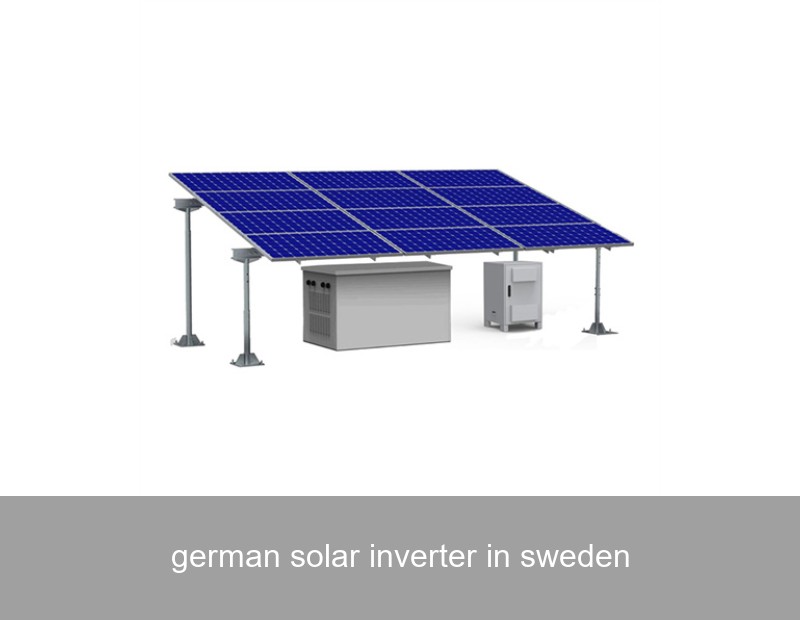
If you're exploring solar energy in Sweden, you've likely encountered a key piece of equipment: the solar inverter. And among the top recommendations, you'll often find German solar inverters highlighted. But is a piece of technology engineered in Central Europe truly the best fit for the unique Nordic climate? The answer, backed by performance data and real-world installations, is a resounding yes. This article dives into the compelling reasons why pairing Swedish sunlight with German engineering creates a powerhouse combination for reliability, efficiency, and long-term return on investment.
Why a German Solar Inverter in Sweden?
At first glance, it might seem counterintuitive. Sweden's solar profile is distinct—characterized by long summer days with ample sunlight and short, dark winters, a far cry from the more consistent solar radiation of southern Germany. However, this is precisely where the renowned precision and adaptability of German engineering shine. A German solar inverter in Sweden isn't just about converting DC to AC power; it's about intelligent energy management, extreme durability, and maximizing every precious kilowatt-hour of Nordic sun. For homeowners and businesses across Sweden, from Stockholm to Kiruna, this choice translates to a system that works harder and smarter throughout the entire year.
The Nordic Challenge: More Than Just Low Sun
The Swedish energy landscape presents specific phenomena that not all inverters are built to handle optimally.
- The Midnight Sun & Polar Night: Inverters must handle extremely long, continuous operation periods in summer and manage very low or zero input for extended times in winter without degrading.
- Temperature Extremes: Swedish winters can plunge to -30°C or lower, while summer panels can heat up significantly. Electronic components must withstand this thermal cycling without failure.
- Grid Stability & Regulations: The Swedish grid is stable, but local regulations require precise grid management features (like voltage and frequency ride-through) that premium inverters excel at.
- Snow & Ice: Partial shading from snow cover and rapid, snow-melt-induced power surges demand sophisticated maximum power point tracking (MPPT) algorithms.
According to data from the Swedish Energy Agency, the installed PV capacity has grown exponentially, surpassing 3 GW in recent years. This boom increases the need for reliable, grid-supportive technology that can integrate seamlessly.
The Data Behind the Demand
| Challenge | Inverter Requirement | Typical German Inverter Spec |
|---|---|---|
| Low-Temperature Operation | Cold-Start Capability | Operational from -25°C to +60°C |
| Partial Shading (Snow) | Advanced Multi-MPPT | 2+ Independent MPP Trackers |
| Grid Support | VDE-AR-N 4105 Compliance | Full Certification for EU Grids |
The German Engineering Edge for Swedish Conditions
German manufacturers have built their reputation on a foundation of rigorous testing, high-quality components, and software sophistication. Here’s how this translates to benefits in Sweden:
- Proven Durability: Components are selected and tested for a wide operational temperature range, ensuring they start up reliably on a cold, sunny February morning.
- Efficiency is King: German inverters often lead in peak and weighted efficiency ratings (like European efficiency). This means less energy is lost as heat, and more of Sweden's summer sun is converted into usable electricity for your home or to sell back to the grid.
- Smart Grid Integration: They come with future-proof features like dynamic grid support, which is becoming increasingly important as Sweden's energy mix evolves.
- Comprehensive Monitoring: User-friendly platforms allow you to track your system's performance in real-time, crucial for understanding your energy production patterns across seasons.

Image Source: Unsplash (Representative image of a modern inverter in a cold setting)
Case Study: A Swedish Dairy Farm's Success Story
Let's look at a concrete example from the Swedish countryside. A medium-sized dairy farm in Västergötland was facing high and unpredictable energy costs for milking, cooling, and ventilation. Their goal was to achieve greater energy independence and reduce operational expenses.
The Solution: A 120 kWp ground-mounted solar array was installed. At the heart of the system were two Highjoule H-Energy Titan 50kW three-phase inverters. These inverters were chosen specifically for their robust design, high European efficiency (98.5%), and dual independent MPPTs to handle potential shading from nearby trees and building structures.
The Results (Data after 12 months):
- Annual Production: 108,000 kWh, covering approximately 65% of the farm's total electricity consumption.
- Winter Performance: The inverters demonstrated reliable cold-weather operation, producing power even on clear days with ambient temperatures of -18°C.
- System Availability: 99.8% uptime, with zero faults related to the inverter hardware.
- Financial Impact: The farm reduced its grid electricity purchases by over 40%, leading to a calculated payback period of under 7 years.
This case illustrates that the right inverter technology is critical for commercial success. Highjoule's expertise in pairing high-performance components with system-level intelligence ensured this farm's investment was sound and productive.
Beyond the Inverter: The System is Key
An inverter doesn't work in isolation. Its true potential is unlocked when integrated into a well-designed complete energy storage system (ESS). This is where Highjoule's holistic approach sets us apart. While a top-tier German inverter maximizes solar harvest, pairing it with a Highjoule battery system allows you to store the abundant summer energy for use during dark winter evenings or power outages.
Our Highjoule HomePower ESS, for instance, can seamlessly integrate with leading German inverter brands. The system's AI-driven energy management software decides the optimal time to store solar energy, use it directly, or draw from the grid based on weather forecasts, consumption patterns, and electricity tariffs. For Swedish families, this means true energy resilience and maximized self-consumption, pushing independence beyond what solar panels alone can achieve.
For larger commercial and industrial applications, our Highjoule GridMax solutions provide scalable, containerized battery storage that can work alongside solar inverters to provide peak shaving, backup power, and grid services. This integrated approach is the future of Sweden's decentralized energy network.

Image Source: Unsplash (Representative image of a Swedish-style home with solar installation)
Highjoule's Role as Your System Partner
Since 2005, Highjoule has been at the forefront of advanced energy storage. We don't just supply components; we provide intelligent, integrated power solutions. Our team understands the nuanced requirements of the Swedish market. We can help you select not only the optimal inverter but also design the complete system—including batteries, management software, and grid interfaces—to ensure your investment delivers performance, reliability, and value for decades.
Making the Right Choice for Your Swedish Property
Choosing a solar inverter is a long-term decision. While initial cost is a factor, the total cost of ownership—encompassing efficiency, reliability, and compatibility with future storage—is paramount. A German solar inverter offers a benchmark in these areas, making it a consistently wise choice for Swedish conditions.
We recommend you look for:
- Explicit cold-temperature operational ratings.
- High European or CEC efficiency ratings.
- Proven reliability data and warranty terms.
- Open compatibility with leading battery storage systems, like those from Highjoule.
Consulting with a certified installer who has experience with both the Swedish climate and premium inverter brands is crucial. Ask them for case studies and performance data from local installations.
The synergy between Swedish ambition for renewable energy and German technological precision is powerful. By choosing a system built on this foundation, you're investing in a reliable, high-yielding asset for your property. What specific energy challenge—be it winter energy security, reducing summer grid exports, or achieving full energy autonomy—is most important for you to solve with your solar investment?
 Inquiry
 Online Chat