


Beyond the Grid: How GreenPower Energy Limited and Advanced Storage Are Redefining Power
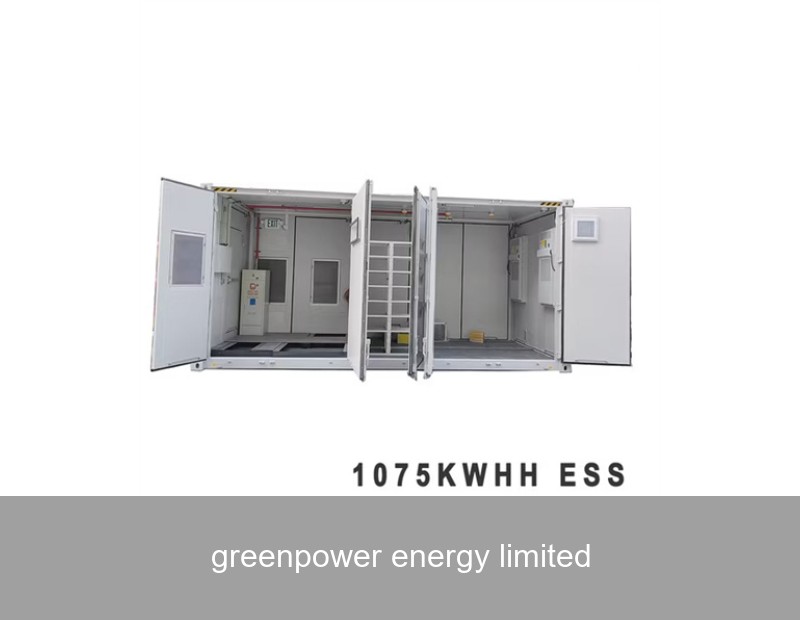
Table of Contents
Have you ever looked at a solar panel-covered roof or a sweeping wind farm and wondered, "What happens when the sun sets or the wind stops?" This is the central question of our renewable energy age. Companies like GreenPower Energy Limited are at the forefront of developing these vital renewable generation assets. But the true revolution, the key to unlocking a 24/7 clean energy future, lies not just in generation, but in what happens next: intelligent storage and management.
The Energy Crossroads: A Global Phenomenon
Across Europe and the United States, businesses and communities are at an energy crossroads. The drive for sustainability is clear, fueled by climate goals and, frankly, the economic volatility of traditional fossil fuels. Solar and wind, championed by developers like GreenPower Energy Limited, offer a clear path forward. Yet, this path has a well-documented challenge: intermittency. Renewable sources are not always dispatchable; they don't necessarily produce power when demand is at its peak.
This creates a complex puzzle for grid operators and energy consumers alike. How do we balance a grid that increasingly relies on variable sources? The answer isn't to generate less green power, but to manage it smarter. This is where the narrative shifts from generation alone to a holistic generation-storage-integration model.
The Data Dilemma: Intermittency's Real Cost
Let's talk numbers. According to the International Renewable Energy Agency (IRENA), renewable capacity is soaring, but grid flexibility must quadruple by 2050 to integrate these volumes effectively. In practical terms, a commercial facility with a large solar array might produce a massive surplus at noon, only to import expensive grid power in the evening. This "peak shaving" opportunity is lost without storage.
The financial and operational impacts are real:
- Demand Charges: For commercial and industrial users, a significant portion of the electricity bill is based on the highest 15-30 minutes of power draw in a month. A sudden cloud cover over solar panels can cause a spike, leading to punishing charges.
- Grid Strain: Excess midday solar can cause local voltage issues, forcing grids to curtail (waste) perfectly good renewable energy—a phenomenon known as "congestion."
- Missed Sustainability Targets: Without capturing excess generation, a company's actual consumption of grid power (which may still be fossil-fuel based) remains higher than it could be.

Image Source: Unsplash - Illustrating the intermittency challenge for solar assets.
Case Study: A Bavarian Brewery's Journey with GreenPower Energy Limited
Let's make this concrete. Consider a mid-sized brewery in Bavaria, Germany. Committed to sustainability and cost control, they partnered with GreenPower Energy Limited to install a 500 kW rooftop solar PV system. The results were impressive: annual generation of approximately 550,000 kWh, covering about 40% of their daytime energy needs.
However, their energy manager noticed a persistent problem. Their production peaks (for refrigeration and packaging) extended into the late afternoon and evening, when solar output was fading. They were still reliant on the grid during these expensive peak periods, and their self-consumption rate of solar power plateaued at 35%. The brewery needed to better align its consumption with its generation.
Their solution was to integrate a Highjoule HI-Cube 500 battery energy storage system (BESS). This 500 kWh / 250 kW system was seamlessly paired with their existing GreenPower Energy Limited solar array. The BESS is charged by the midday solar surplus and then dispatches power during the evening production peak. The outcome?
| Metric | Before BESS | After BESS Integration |
|---|---|---|
| Solar Self-Consumption | ~35% | ~85% |
| Peak Grid Demand Reduction | 0% | 70% |
| Annual Grid Energy Cost Savings | Baseline | €28,000+ |
| Backup Power for Critical Loads | None | Up to 4 hours |
This case shows that the value of a solar investment is dramatically multiplied when coupled with intelligent storage. The GreenPower Energy Limited installation provided the clean kilowatt-hours; the Highjoule BESS provided the control, predictability, and resilience to maximize their value.
The Storage Imperative: More Than Just a Battery
It's crucial to understand that a modern BESS is far more than a container of batteries. It is an integrated energy asset comprising:
- Battery Cells (The Engine): Typically lithium-ion phosphate (LFP) for safety and long cycle life.
- Power Conversion System (PCS - The Translator): Converts DC battery power to AC grid power and vice versa.
- Energy Management System (EMS - The Brain): This is where the magic happens. A smart EMS uses algorithms and sometimes AI to decide when to charge, when to discharge, and for what purpose (peak shaving, backup, grid services).
Choosing a system with a sophisticated, proven EMS is what separates a simple battery from a true grid asset. This intelligence ensures the system pays for itself by optimizing for the most valuable grid signals and tariff structures, which vary widely from Germany to California.
The Highjoule Solution: Intelligent Energy Management
At Highjoule, founded in 2005, we've built our expertise on this very principle. We don't just supply hardware; we provide adaptive power solutions. For a developer like GreenPower Energy Limited, our systems offer a compelling value-add for their clients, turning a solar project into a comprehensive, resilient energy solution.
Our HI-Series commercial and industrial storage systems, like the one deployed in Bavaria, feature our proprietary Adaptive EMS. This system can be configured for multiple, stacked value streams:
- Maximize Self-Consumption: Automatically store excess solar for later use.
- Demand Charge Management: Actively monitor power draw and discharge the battery to "clip" peak demand, delivering immediate ROI.
- Microgrid & Backup Power: Providing uninterrupted power during outages for critical operations.
- Grid Services (Future-Proofing): In some markets, systems can participate in frequency regulation or virtual power plants, creating new revenue.

Image Source: Unsplash - Representative of a modern commercial BESS installation.
For residential and smaller commercial applications, our EcoHome product line integrates seamlessly with leading solar inverters, offering homeowners the same peace of mind and energy independence. We see ourselves as the perfect technological partner to generation pioneers, completing the clean energy cycle.
The Future of Energy is Adaptive
The partnership model is clear. Entities like GreenPower Energy Limited are essential in deploying the clean energy generators of tomorrow. The next layer of innovation—and the key to true energy independence and grid stability—is adaptive storage. As noted by the U.S. Department of Energy's Solar Energy Technologies Office, the synergy between solar and storage is critical for decarbonizing the electricity sector.
The question is no longer if to add storage, but how and when. The technology is proven, the economics are compelling, and the need for grid resilience is only growing.
Is your organization, or a project you're involved with, ready to explore how intelligent storage can unlock the full potential of your renewable energy investments? What would a 70% reduction in your peak demand charges do for your operational budget this year?
 Inquiry
 Online Chat