


How Leading Grid Infrastructure Companies Are Building the Resilient Power Networks of Tomorrow
If you've ever experienced a blackout, watched the news during an extreme weather event, or simply received a surprisingly high electricity bill, you've felt the direct impact of our aging grid infrastructure. For decades, the electrical grid was a one-way street: power flowed from large, centralized plants to homes and businesses. Today, that model is under unprecedented strain. The surge in renewable energy, the electrification of transportation and heating, and the increasing frequency of climate-related disruptions are challenging grid infrastructure companies to rethink their very foundation. The solution lies not just in building more power lines, but in creating intelligent, flexible, and decentralized networks. This is where advanced energy storage systems become the critical linchpin, enabling a transition from a fragile grid to a resilient grid.
Table of Contents
- The Strain on the Modern Grid: More Than Just Wires
- The Data Behind the Grid Modernization Imperative
- Case Study: A European Grid Operator's Success Story
- The Solution: Intelligent Storage as Grid Infrastructure
- How Highjoule Partners with Grid Infrastructure Companies
- The Future Horizon: From Passive to Active Grid Management
The Strain on the Modern Grid: More Than Just Wires
Think of the traditional grid like a water supply system with fixed pipes and constant pressure. Now, imagine everyone decides to water their garden, fill their pools, and take showers at the exact same time. The pressure drops, and some areas get nothing. This is analogous to today's "peak demand" on the grid, often on hot summer afternoons. Now, add to that the variable nature of new water sources (like solar and wind, which depend on the weather) and the need for ultra-pure water for new industries (like data centers and EV charging). The challenge for grid infrastructure companies is monumental. They must manage this complexity while maintaining 99.9% reliability that modern life and economy depend on. The old tools—building "peaker" plants that run only a few hours a year or overbuilding transmission lines—are becoming economically and environmentally unsustainable.
The Data Behind the Grid Modernization Imperative
The numbers paint a clear picture of the transformation underway. According to the International Energy Agency (IEA), achieving global climate and clean energy goals will require adding or refurbishing over 80 million kilometers of power lines by 2040—the equivalent of the entire existing global grid. Furthermore, the U.S. Department of Energy notes that power outages cost the American economy an estimated $150 billion annually. In Europe, the push for decarbonization means grid operators must integrate a projected 70% share of renewables in the power mix by 2030. This level of variable generation is impossible to manage without massive investments in flexibility and storage.
Key Pressure Points on Today's Grid:
- Intermittent Renewables: Solar and wind generation doesn't always match demand patterns.
- Electrification: EVs and heat pumps are creating new, massive loads.
- Aging Assets: Much of the core infrastructure is decades old and nearing end-of-life.
- Climate Resilience: Grids are more vulnerable to wildfires, storms, and floods.
Case Study: A European Grid Operator's Success Story
Let's look at a real-world example. A major transmission system operator (TSO) in Central Europe faced a critical challenge in a region with high photovoltaic (PV) penetration. On sunny weekends, local solar production would frequently exceed local consumption and even the capacity of the distribution lines to export power back to the main grid. This caused voltage violations and forced the TSO to curtail (waste) clean solar energy to protect grid stability—a lose-lose situation for the utility and prosumers.
The Solution & Implementation: The TSO partnered with a technology provider to deploy a distributed network of grid-scale battery energy storage systems (BESS) at strategic substations. These 10-20 MW/20-40 MWh systems were not placed at generation sites, but directly within the grid infrastructure.
| Metric | Outcome |
|---|---|
| Renewable Curtailment Reduced | By over 92% in the first year of operation |
| Voltage Regulation | Maintained within ±0.5% of nominal, eliminating violations |
| Grid Upgrade Deferral | Estimated 5-7 year delay in a €15M line reinforcement project |
| Ancillary Services | Systems provided frequency regulation, generating new revenue streams |

Image Source: Unsplash (Representative image of a grid control center)
The Solution: Intelligent Storage as Grid Infrastructure
So, what makes modern battery storage the ideal tool for grid modernization? It's the combination of speed, intelligence, and versatility. Unlike traditional infrastructure, a BESS can switch from charging to discharging in milliseconds. It can be deployed in months, not years. And most importantly, a single system can perform multiple "grid services" simultaneously through advanced software.
Core Functions of Grid-Side Storage:
- Peak Shaving: Discharging during high-demand periods to avoid activating expensive, polluting peaker plants. Frequency Regulation: Using its rapid response to keep the grid's frequency stable, a mandatory service for TSOs.
- Renewable Integration: Soaking up excess solar/wind generation and releasing it when the sun sets or the wind dies.
- Deferred Investment: Acting as a "virtual transmission" asset to relieve congestion, postponing costly upgrades.
- Black Start Capability: Helping to restart the grid after a complete blackout, a crucial resilience feature.
How Highjoule Partners with Grid Infrastructure Companies
At Highjoule, with nearly two decades of experience since 2005, we understand that grid operators need more than just hardware. They need a reliable, intelligent, and bankable partner. Our approach is to work alongside grid infrastructure companies as a solutions architect, providing end-to-end systems that are engineered for durability, safety, and maximum financial return.
Our flagship product for utility-scale applications, the H-Joule GridMax BESS, is specifically designed for the harsh demands of grid service. It features industry-leading cycle life, liquid cooling for consistent performance, and our proprietary GridSynergy AI Platform. This software is the brain of the operation, enabling what we call "value stacking." It allows a single GridMax installation to dynamically optimize its operation between multiple revenue streams—say, frequency regulation in the morning, solar smoothing in the afternoon, and peak shaving in the evening—based on real-time grid signals and market prices.

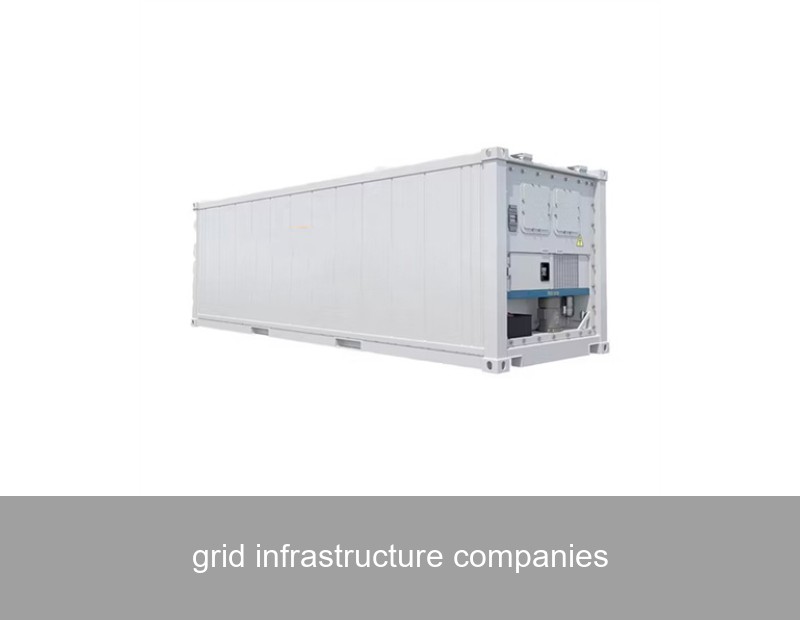
Image Source: Unsplash (Representative image of grid-scale BESS containers)
For distribution-level challenges and microgrid applications, our H-Joule Community+ systems offer modular, scalable solutions that can be deployed at factories, commercial campuses, or even neighborhoods. These systems not only provide local resilience but can be aggregated to form a "virtual power plant" (VPP), providing a flexible resource that the wider grid operator can call upon when needed. This turns distributed energy resources from a grid management challenge into a grid-strengthening asset.
The Future Horizon: From Passive to Active Grid Management
The grid of the future will be a digital and decentralized ecosystem. Grid infrastructure companies will evolve from managers of one-way power flows to orchestrators of a multidirectional energy network. In this network, millions of assets—from utility-scale storage and wind farms to rooftop solar, EV fleets, and smart home batteries—will need to communicate and respond in harmony.
This transition requires a new layer of digital intelligence and trust in technology partners. The focus shifts from sheer capacity to orchestrated flexibility. The question is no longer "How much power can we deliver?" but "How intelligently can we balance the system?"
As you look at your own grid modernization roadmap, what is the single biggest constraint you face—regulatory frameworks, capital planning for aging assets, or the technical complexity of integrating diverse distributed resources? How might a strategic partnership focused on intelligent storage change that equation?
 Inquiry
 Online Chat