


Is Grid Power from Solar Threatening Your Renewable Energy Project?
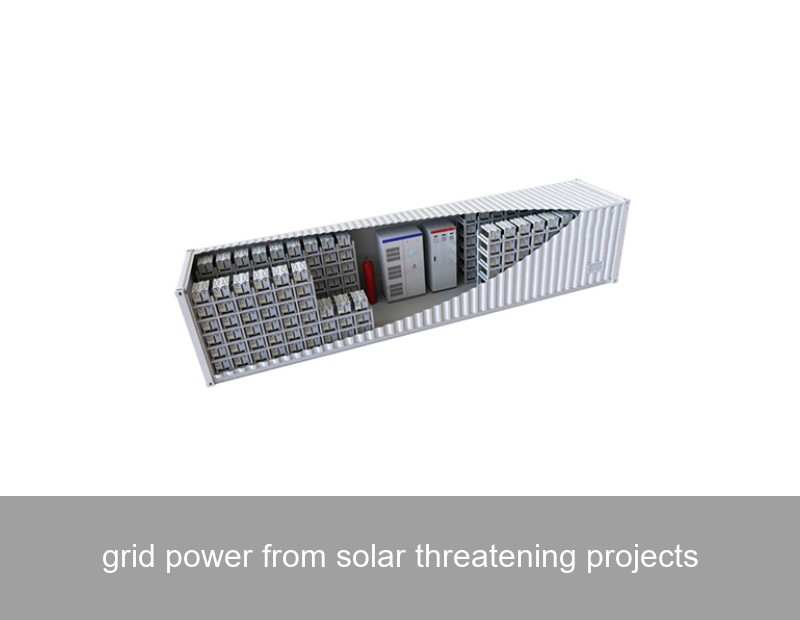
You've done everything right. You've secured the land, invested in high-efficiency panels, and navigated the permitting process. Your solar farm is ready to deliver clean, affordable energy. But then you hear a growing concern in the industry: the very grid power from solar you're producing might be threatening the long-term viability and profitability of your project. It sounds counterintuitive, doesn't it? How can the success of renewable energy become its own obstacle? Let's unpack this critical challenge facing developers and investors in Europe and the US today.
Understanding the Phenomenon: It's About Grid Stability
The issue isn't with solar power itself, but with its intermittency and the current state of our electricity grids. Traditional grids were designed for one-way power flow from large, centralized, and dispatchable power plants (like coal or gas). Solar flips this model. It generates power only when the sun shines, leading to massive surges of grid power from solar during midday, often exceeding local demand.
This creates two major technical headaches for grid operators:
- Overgeneration: Too much power on the grid can cause frequency and voltage to rise beyond safe limits, risking equipment damage and blackouts.
- The Ramp Crisis: As the sun sets, solar generation plummets just as electricity demand peaks (people returning home, turning on appliances). Grid operators must "ramp up" traditional power plants extremely quickly to cover the gap—a costly and inefficient process.
When these stability threats arise, the grid operator's only tool, short of massive infrastructure upgrades, is to curtail generation. That means they literally tell your solar project to turn off, even on a sunny day. Your asset stops earning revenue.
The Data Reality: Curtailment and Connection Queues
This isn't a theoretical future problem; it's happening now. In California, the CAISO (California Independent System Operator) grid regularly sees solar and wind curtailment. In 2023, CAISO reported over 2.4 million MWh of renewable energy curtailed—enough to power nearly 250,000 homes for a year. In Europe, countries like Germany and Spain face similar constraints.
The financial impact is direct: every megawatt-hour curtailed is a megawatt-hour not sold. This uncertainty also creates a domino effect in project development. Fearing grid instability, network operators are slowing down new connections. In the United States, the backlog of energy projects seeking grid interconnection (over 2,600 GW, mostly renewables) now exceeds the capacity of the entire existing U.S. power plant fleet according to Department of Energy reports. Projects are facing multi-year delays and skyrocketing interconnection study costs, putting many at risk of cancellation.

Image: The infamous "Duck Curve" visually represents the grid stability challenge caused by high solar penetration. Source: U.S. Department of Energy (Illustrative Example)
Case Study: California's Duck Curve in Action
Let's look at a real-world example. A 50 MW solar farm in Central Valley, California, began operations in 2021. Its financial model projected a 98% capacity factor during summer months. However, by 2023, due to massive local solar adoption and limited grid export capacity, the project faced regular midday curtailment orders from CAISO.
| Year | Estimated Annual Generation (MWh) | Actual Generation (MWh) | Curtailment Loss (%) | Estimated Revenue Loss |
|---|---|---|---|---|
| 2022 | 112,000 | 105,280 | 6% | ~$420,000 |
| 2023 | 112,000 | 98,560 | 12% | ~$840,000 |
The project's internal rate of return (IRR) was eroded by nearly 2 percentage points in two years, threatening its ability to service debt. This is a tangible example of how grid power from solar threatening projects translates from a grid operator's challenge into a developer's financial crisis.
Beyond Curtailment: The Ripple Effect on Project Viability
The threat extends beyond direct curtailment:
- Reduced Power Purchase Agreement (PPA) Prices: Off-takers are aware of curtailment risks and may offer lower prices for energy that is seen as less reliable or non-dispatchable.
- Increased Grid Service Costs: Some grids are starting to charge renewable generators for the stability services (like inertia) they don't provide, adding a new operational cost.
- Financing Hurdles: Banks and investors are increasingly factoring in "curtailment risk" into their models, potentially requiring more equity or offering less favorable loan terms.
The Intelligent Storage Solution: Shifting from Threat to Asset
The solution lies not in generating less solar power, but in intelligently managing its delivery. This is where advanced Battery Energy Storage Systems (BESS) become the indispensable ally for any utility-scale or large commercial solar project.
Think of storage as a "buffer" or a "time-shifting" device for your solar asset. Instead of pushing all your grid power from solar onto the grid at noon when it's least needed (and might be curtailed), you store a portion of it. Then, you discharge that stored energy during the precious evening peak hours when demand is high, solar generation is zero, and energy prices are at their peak.
This simple shift in strategy transforms your project's profile:
- Eliminates Curtailment Risk: You capture every photon, even if the grid can't take it immediately.
- Unlocks Higher Revenue Streams: You sell power when it's most valuable. You can also participate in lucrative grid service markets (frequency regulation, capacity).
- Enhances Grid Stability: Your project becomes part of the solution, providing dispatchable power and essential grid services, making you a favored partner for network operators.
Highjoule's Role: Delivering Grid-Forming Intelligence
This is precisely the challenge Highjoule was founded to solve. Since 2005, we've moved beyond simply providing battery containers. We deliver intelligent, integrated storage solutions that make renewable projects grid-positive.
For a solar developer facing the threat of curtailment, our GridSynk™ platform is a game-changer. It's not just an inverter or a battery management system; it's an AI-driven energy management system that makes real-time decisions. It analyzes grid conditions, price forecasts, weather data, and your PPA structure to autonomously decide: store now, discharge now, or provide grid services. Our H-Joule Cell™ technology, with its superior cycle life and degradation resilience, ensures this financial optimization doesn't come at the cost of your battery's long-term health.
Imagine your solar project equipped with a Highjoule system. During a midday oversupply warning, instead of receiving a curtailment order, your system seamlessly switches to charging mode. Later, as the sun sets and the grid scrambles, your asset dispatches stored power at a premium, turning a potential loss into your highest-margin revenue of the day. This is how you stop grid power from solar threatening projects and start making it the most reliable and profitable part of your portfolio.

Image: Solar-plus-storage systems time-shift energy to align with demand and grid needs. Source: National Renewable Energy Laboratory (NREL) (Illustrative Example)
Future-Proofing Your Solar Project: A Practical Guide
If you're in the planning stages or even operating an existing solar asset, consider these steps:
- Conduct a Storage-Feasibility Study: Model your project with and without storage, using historical curtailment and price data from your region. Highjoule's technical team provides these analyses to quantify the potential upside.
- Design for Hybridization from Day One: Even if you phase the storage deployment, design your site layout, grid connection, and permitting with a DC-coupled or AC-coupled storage system in mind. It's far more cost-effective than retrofitting later.
- Engage with Grid Operators Early: Propose your project as a "hybrid resource" or "dispatchable solar." Highlight the grid stability benefits. In many markets, this can accelerate interconnection studies.
- Re-negotiate or Structure New PPAs: Explore "solar-plus-storage" PPAs that offer a firmer, more reliable product, often commanding a better rate.
The transition to renewables is entering a new, more sophisticated phase. The question is no longer just "How much can we generate?" but "How wisely can we deliver it?"
The Final Question for Your Project
Given the clear trajectory of grid constraints, can you afford to treat storage as an optional add-on, or is it now the critical component that will define the financial success and longevity of your solar investment in the next decade?
 Inquiry
 Online Chat