


Grid Substation: How Much Does Modernization and Support Really Cost?
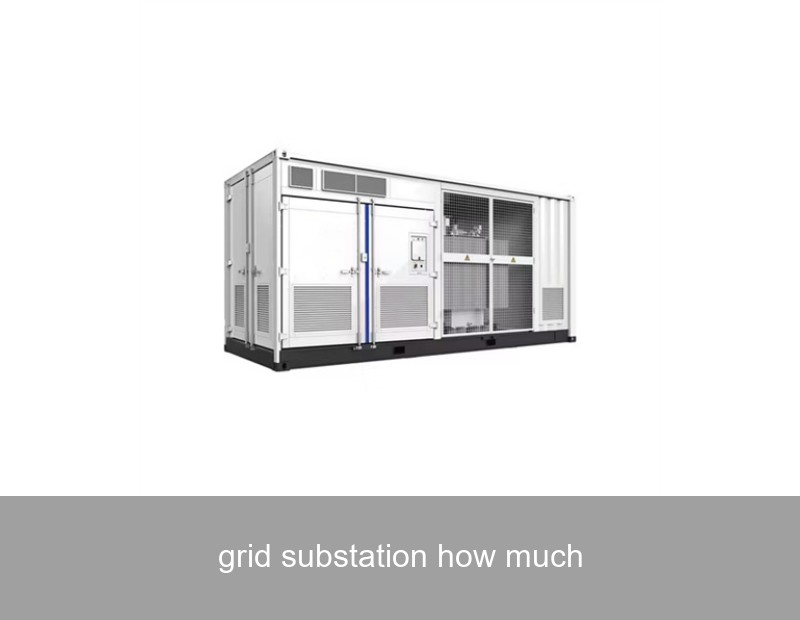
If you're a facility manager, a utility planner, or a community developer, you've likely asked the question: "Grid substation: how much?" The answer, as you might suspect, is rarely simple. The traditional cost of a new substation can easily run into the millions, involving heavy equipment, lengthy construction, and complex interconnection studies. But in today's energy landscape, defined by renewable integration and grid volatility, a more pertinent question is emerging: How much does it cost to *support, stabilize, and modernize* the grid *without* solely relying on traditional substation upgrades? The conversation is shifting from pure capacity expansion to intelligent grid-edge solutions.
Table of Contents
- The Pressure on the Grid: More Than Just Aging Infrastructure
- Beyond Capacity: The True "Cost" of Grid Congestion and Instability
- Case Study: Deferring a Substation Upgrade in California
- The Modern Approach: Distributed Energy Storage as a Grid Asset
- How Highjoule's Solutions Provide a Cost-Effective Answer
- Calculating Your Value: Beyond the Initial Quote
The Pressure on the Grid: More Than Just Aging Infrastructure
Our electrical substations are the unsung workhorses of the power grid, transforming voltage and directing electricity to our homes and businesses. For decades, the formula was straightforward: rising demand triggered a request for a new or upgraded substation. Today, the drivers are more complex. The rapid adoption of intermittent solar and wind power creates unpredictable flows that can overload circuits designed for one-way power delivery. Simultaneously, the electrification of transportation and heating is set to surge demand. According to the International Energy Agency (IEA), global grid investment needs to double to over $600 billion annually by 2030 to meet climate goals and ensure resilience.

This creates a financial and logistical bottleneck. A new substation isn't just about equipment costs ("grid substation how much for the hardware?"). It involves land acquisition, permitting, environmental reviews, and years of planning. For a community or business, the wait can stifle growth and decarbonization efforts.
Beyond Capacity: The True "Cost" of Grid Congestion and Instability
So, when we ask "grid substation: how much?" we must account for the hidden costs of *not* acting innovatively. These include:
- Demand Charges: For commercial & industrial (C&I) users, peak demand spikes can result in exorbitant monthly fees, sometimes making up 30-50% of their electricity bill.
- Renewable Curtailment: Utilities may be forced to "turn off" solar or wind farms during times of low demand or grid congestion, wasting clean energy and project revenue.
- Reliability Risks: An overstressed grid is more prone to voltage sags, brownouts, or outages, impacting operational continuity and safety.
- Delayed Projects: New housing developments, EV charging hubs, or factories can be put on hold for years awaiting grid reinforcement.
The real question evolves: How much can we save by finding alternatives to a multimillion-dollar, decade-long substation project?
Case Study: Deferring a Substation Upgrade in California
Let's look at real data. A utility in Northern California faced a classic problem. A fast-growing suburban node was projected to exceed the capacity of its existing substation within 3 years. The traditional upgrade was quoted at $4.2 million with a 4-year timeline.
Instead, the utility partnered with a developer to deploy a distributed network of behind-the-meter battery energy storage systems (BESS) at key commercial sites within the substation's footprint. The program incentivized businesses to install batteries that would discharge during regional peak hours (4-9 PM).
| Solution | Estimated Cost | Timeline | Key Outcome |
|---|---|---|---|
| Traditional Substation Upgrade | $4.2 million | 4 years | Permanent capacity increase |
| Virtual Power Plant (VPP) with Distributed BESS | $1.8 million (incentives included) | 18 months | Peak load reduced by 2.1 MW, deferring upgrade by 7+ years |
The result? The "non-wires alternative" cost less than half, was deployed in under two years, and effectively deferred the substation investment for over seven years. Participants also cut their own energy bills, creating a win-win. This case powerfully reframes "grid substation how much" to "how much value can a smarter solution deliver?"
The Modern Approach: Distributed Energy Storage as a Grid Asset
This is where advanced energy storage transforms the equation. Think of a distributed network of batteries not just as backup power, but as a dynamic shock absorber and power reservoir for the local grid. This concept, often called a Virtual Power Plant (VPP), can:
- Shave Peak Demand: Discharge during high-cost, high-stress periods to flatten the load curve.
- Provide Frequency Regulation: Inject or absorb power in milliseconds to maintain grid stability.
- Store Excess Renewables: Soak up midday solar surplus and release it in the evening.

By aggregating these distributed resources, utilities and aggregators can address the precise needs that would otherwise trigger a substation upgrade—at a fraction of the cost and time.
How Highjoule's Solutions Provide a Cost-Effective Answer
At Highjoule, we've been at the forefront of this shift since 2005. We don't build substations, but we provide the intelligent storage solutions that make them more resilient, efficient, and often, help defer costly upgrades. When you're evaluating "grid substation how much," consider our integrated approach:
For Commercial & Industrial sites, our H-Series C&I Battery Systems are designed to dramatically reduce demand charges and provide backup power. By installing a Highjoule system, your facility directly contributes to lowering the peak load on the local substation transformer, potentially saving the community from an immediate upgrade.
For Utilities and Developers, our GridMax™ VPP Platform enables the orchestration of hundreds of distributed storage assets. This turns customer-sited batteries into a reliable grid resource for peak shaving, voltage support, and renewable integration. It's a capital-light strategy for grid modernization.
Our EcoHome Residential Storage systems, when aggregated, also play a role. A neighborhood with high solar penetration and home batteries can significantly reduce net load variability on the local distribution feeder, another common trigger for substation upgrades.
In essence, Highjoule turns the question from "Grid substation: how much will it cost?" to "How can we optimize the grid we already have?"
Calculating Your Value: Beyond the Initial Quote
So, how do you start this analysis? Look beyond the hardware price tag. Engage in a holistic value assessment:
- Map Your Load & Grid Constraints: Work with your utility to understand the specific capacity or voltage issue at the substation level.
- Model Distributed Alternatives: Analyze the cost of a targeted storage deployment (like Highjoule's H-Series) in the constrained area versus the traditional upgrade. Include all soft costs.
- Quantify Stacked Value Streams: A storage system isn't just for grid support. It can generate revenue through markets, save on energy bills, and provide resilience. The National Renewable Energy Laboratory (NREL) provides tools to model these "stacked benefits."
- Consider the Time Value of Money: A solution deployed in 18 months that defers a cost for 7+ years has immense financial advantage over a solution that requires full capital outlay today.
The energy transition demands smarter investment. While the substation will always be a critical node, its evolution is now partnered with a network of intelligent, responsive batteries.
What specific grid constraint is your community or business facing, and have you explored how distributed energy storage could be the most cost-effective piece of the solution?
 Inquiry
 Online Chat